|
Getting your Trinity Audio player ready...
|
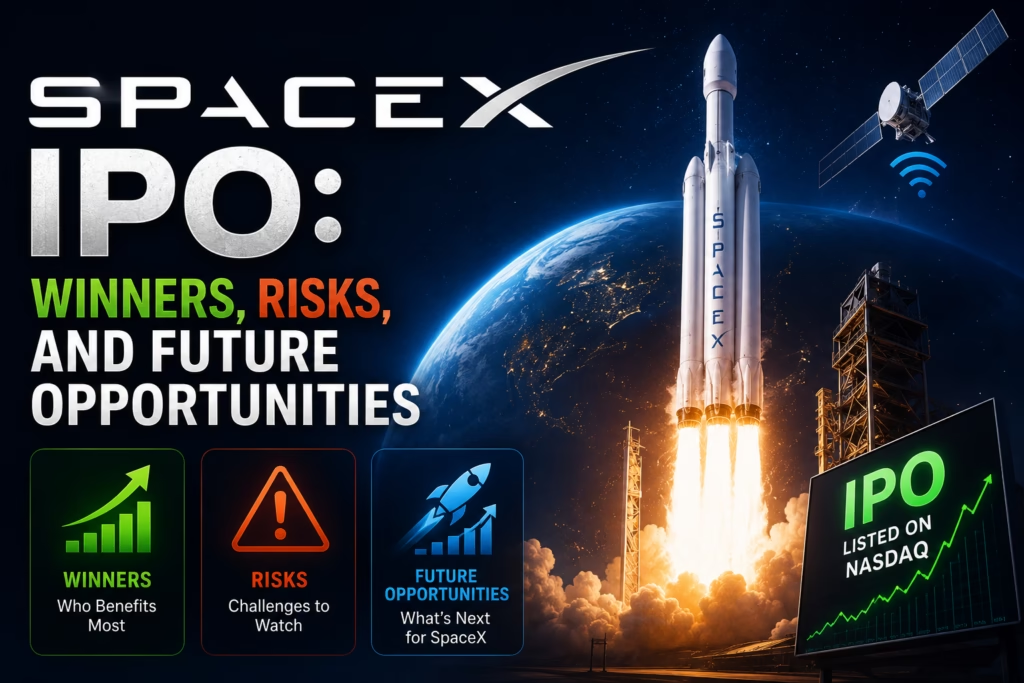
The SpaceX IPO is one of the most anticipated events in modern financial history. After years of operating as a private company, Elon Musk’s aerospace giant has officially entered the public markets with a valuation of approximately $1.75 trillion to $1.77 trillion, making it one of the largest IPOs ever recorded. The company raised around $75 billion through the offering, attracting enormous attention from institutional and retail investors worldwide.
For years, investors could only watch from the sidelines as SpaceX transformed the global space industry. From reusable rockets and satellite internet to Mars colonization plans and AI ambitions, the company built a reputation for pursuing projects that once seemed impossible.
Now that SpaceX has become publicly traded, investors face a critical question: Is this a once-in-a-generation opportunity or a stock carrying significant risks beneath the excitement?
The answer lies somewhere in between.
Why the SpaceX IPO Matters
Few companies have generated as much investor interest before going public.
Unlike many technology startups, SpaceX already operates multiple revenue-generating businesses. The company has become a dominant force in commercial space launches, satellite communications, government contracts, and increasingly, artificial intelligence-related infrastructure.
Investor demand before the IPO reportedly exceeded available shares several times over, highlighting extraordinary market enthusiasm. Some reports indicated that demand approached four times the number of shares offered.
The IPO represents more than a fundraising event.
It marks the beginning of a new era where ordinary investors can participate in the growth of a company that many believe could reshape transportation, communication, and even human civilization.
The Biggest Winners From the SpaceX IPO
Elon Musk
The most obvious winner is Elon Musk himself.
As SpaceX’s largest shareholder, Musk remains firmly in control of the company after the IPO. The public listing has dramatically increased the value of his holdings and strengthened his position as one of the wealthiest individuals in history. Reports suggest that the IPO could bring him closer to becoming the world’s first trillionaire if SpaceX continues to grow at its current pace.
Beyond personal wealth, the IPO gives Musk access to significantly more capital to fund ambitious projects such as Starship development, Mars missions, AI infrastructure, and next-generation satellite networks.
Early Investors
SpaceX’s early backers have also emerged as major winners.
Investors who supported the company during its private years have seen extraordinary gains as the valuation increased from billions to nearly two trillion dollars.
Many venture capital firms, institutional investors, and private shareholders now hold stakes worth multiples of their original investments.
Starlink
Starlink may be the biggest business winner within SpaceX itself.
The satellite internet division has become a major revenue engine. Reports indicate that Starlink serves more than 10 million users through thousands of satellites and contributes a significant portion of SpaceX’s annual revenue.
The IPO provides additional resources that can accelerate Starlink’s global expansion, helping it reach underserved regions and compete more effectively with traditional internet providers.
Retail Investors
Unlike many large IPOs that heavily favor institutional investors, SpaceX allocated a larger-than-usual portion of shares to retail investors. This gave ordinary individuals greater access to the offering and created significant excitement among small investors.
For investors who believe in SpaceX’s long-term vision, the IPO represents an opportunity that previously did not exist.
The Business Opportunities Driving SpaceX’s Future
The bullish case for SpaceX extends far beyond rockets.
Many investors view the company as a diversified technology platform rather than a traditional aerospace business.
Commercial Space Launches
SpaceX has revolutionized space transportation through reusable rocket technology.
Its Falcon 9 and Falcon Heavy rockets have significantly reduced launch costs while establishing the company as a preferred partner for commercial customers, governments, NASA, and defense agencies.
As demand for satellite launches increases globally, SpaceX remains well-positioned to benefit.
Starship
The future of SpaceX may depend heavily on Starship.
The massive next-generation spacecraft is designed to carry more than 100 metric tons into orbit and eventually support missions to the Moon and Mars. Although still under development, Starship could unlock entirely new industries and business models.
Success would dramatically expand SpaceX’s revenue potential.
Starlink Expansion
Starlink continues to represent one of the company’s strongest growth opportunities.
Millions of people worldwide still lack reliable internet access. Satellite broadband can address this challenge without requiring extensive ground infrastructure.
As Starlink expands globally, subscription revenue could become one of SpaceX’s most stable and predictable income streams.
Artificial Intelligence
One of the most interesting developments surrounding SpaceX is its growing involvement in AI.
Recent reports suggest the company sees artificial intelligence as a major future market and is investing heavily in infrastructure to support AI-related operations. Some analysts believe AI could eventually become a larger business opportunity than launches themselves.
This possibility has contributed significantly to investor enthusiasm.
The Risks Investors Cannot Ignore
Despite the excitement, SpaceX is not a risk-free investment.
Several concerns have emerged among analysts and market observers.
Extremely High Valuation
Perhaps the biggest concern is valuation.
At approximately $1.75 trillion to $1.77 trillion, SpaceX is already valued higher than many established global corporations. Critics argue that future growth expectations may already be reflected in the stock price.
Some analysts have suggested substantially lower valuations based on current fundamentals. Morningstar, for example, estimated a value closer to $780 billion, highlighting a significant gap between optimistic and conservative forecasts.
Profitability Concerns
Although revenue continues to grow, profitability remains a concern.
Recent reports indicate that SpaceX recorded a significant net loss after previous profitable periods. While growth companies often prioritize expansion over earnings, investors will eventually expect stronger financial performance.
Market Volatility
History shows that many major technology IPOs experience substantial price declines after their initial excitement fades.
Analysts have noted that large IPOs frequently suffer significant drawdowns during their first year of trading. This means investors buying at peak enthusiasm could face short-term losses even if the company succeeds long term.
Execution Risk
SpaceX’s future depends on successfully executing extremely ambitious projects.
Starship development, Mars exploration, AI infrastructure, and satellite expansion all require massive investment and technical breakthroughs.
Failure or delays in any of these areas could impact growth projections.
Competition
While SpaceX currently enjoys strong market leadership, competition continues to intensify.
Rival aerospace firms, satellite operators, AI companies, and international space programs are all investing heavily in similar opportunities.
Maintaining dominance will require continuous innovation.
Should Investors Be Bullish?
There are compelling reasons for optimism.
SpaceX has repeatedly achieved goals that many experts once considered impossible. The company transformed commercial spaceflight, built the world’s largest satellite internet network, and created a reusable launch system that changed the economics of space exploration.
Its ability to innovate remains one of its greatest strengths.
Analysts at major firms have expressed confidence in the company’s future. Some forecasts suggest meaningful upside beyond the IPO valuation if Starlink, AI initiatives, and Starship achieve their full potential.
For long-term investors who believe in transformative technologies, SpaceX offers exposure to multiple high-growth sectors simultaneously.
Should Investors Be Cautious?
The answer is also yes.
Much of SpaceX’s valuation is based on future possibilities rather than current earnings.
The company must continue delivering extraordinary growth to justify its market value.
Investors should recognize that visionary companies can still become poor investments if purchased at excessively high prices.
The excitement surrounding the IPO may create short-term volatility, making patience and disciplined investing essential.
What Could SpaceX Look Like in 2035?
If SpaceX successfully executes its strategy, the company could become much more than a space exploration business.
It could operate the world’s largest satellite communications network, lead commercial space transportation, provide critical AI infrastructure, support lunar and Martian missions, and create entirely new industries that do not yet exist.
In that scenario, today’s valuation might eventually appear reasonable.
However, achieving that future will require years of technological progress, operational excellence, and sustained investment.
Conclusion
The SpaceX IPO represents one of the most significant financial events of the decade.
The winners include Elon Musk, early investors, Starlink, and millions of retail investors who finally gained access to one of the world’s most closely watched private companies. At the same time, the IPO introduces risks tied to valuation, profitability, execution, and market volatility.
For believers in innovation, SpaceX offers a rare opportunity to invest in a company that sits at the intersection of space, telecommunications, AI, and advanced engineering.
Whether it ultimately becomes one of the greatest investments of the century or a cautionary tale about excessive expectations will depend on how successfully it converts its ambitious vision into sustainable profits.
One thing is certain: the world will be watching closely.
FAQs
What is SpaceX’s IPO valuation?
SpaceX debuted with a valuation of approximately $1.75 trillion to $1.77 trillion.
How much money did SpaceX raise through its IPO?
The company raised approximately $75 billion, making it one of the largest IPOs in history.
Why is Starlink important to SpaceX?
Starlink generates a substantial portion of SpaceX’s revenue and serves millions of internet users globally.
What are the biggest risks for investors?
High valuation, market volatility, profitability concerns, and execution risks are among the primary challenges.