
|
Getting your Trinity Audio player ready...
|
E-commerce Enters a New Global Era
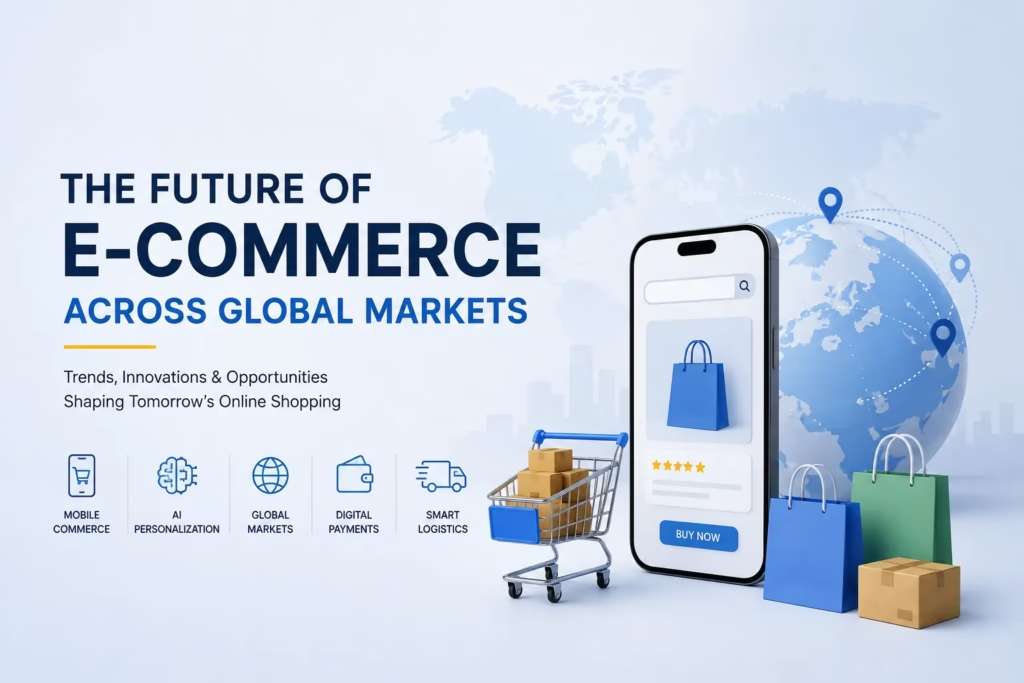
The future of e-commerce is being shaped by far more than the continued shift from physical stores to digital platforms. Online shopping has become a central part of the global economy, influencing how consumers discover products, compare brands, make payments, and expect businesses to deliver.
Rapid digital transformation, widespread smartphone adoption, changing consumer expectations, and increasingly sophisticated technology are accelerating e-commerce growth across both developed and emerging economies. At the same time, the global market is becoming more complex. A strategy that succeeds in the United States may not work in Southeast Asia, the Middle East, or Latin America.
Over the next decade, the most successful e-commerce businesses will not simply be those with the largest product catalogs or fastest websites. They will be the companies that combine technology with local understanding. Artificial intelligence, mobile commerce, social platforms, alternative digital payments, smarter logistics, and sustainability will all play important roles in defining the next phase of global e-commerce trends.
Mobile Commerce Will Become the Default
Smartphones are increasingly becoming the primary gateway to online shopping. Consumers now research products, watch reviews, compare prices, interact with brands, and complete purchases from the same device.
This shift is particularly significant in mobile-first markets, where many consumers have gained internet access through smartphones rather than desktop computers. Across Asia-Pacific, Latin America, Africa, and parts of the Middle East, mobile commerce is helping businesses reach customers who may have limited access to traditional retail infrastructure.
The future will therefore be increasingly app-driven and wallet-enabled. Businesses will need to optimize every stage of the customer journey for smaller screens, faster interactions, and simplified checkout. Digital wallets, biometric authentication, one-click purchasing, and embedded payment options will make mobile shopping more seamless.
For global brands, mobile optimization will no longer be a design preference. It will be a fundamental requirement for participating in global markets.
AI in E-commerce and the Age of Intelligent Shopping
Artificial intelligence is transforming e-commerce from a transactional experience into a more personalized and predictive one. Today, AI can improve product recommendations, automate customer support, optimize search results, detect fraud, forecast demand, and help retailers manage inventory.
The next stage will be even more significant. Generative AI is expected to make online shopping more conversational. Instead of searching through hundreds of products using keywords, consumers may increasingly ask intelligent shopping assistants to find products based on specific needs, budgets, preferences, or occasions.
For example, a shopper could ask an AI assistant to recommend sustainable running shoes for a humid climate within a particular price range. The system could compare products, explain differences, and tailor suggestions based on previous preferences.
AI in e-commerce will also allow businesses to create more dynamic storefronts. Product descriptions, marketing messages, customer support, and recommendations could increasingly adapt in real time to individual users.
However, personalization must be balanced with trust. Companies that use consumer data without transparency risk damaging customer relationships, particularly as privacy regulations become stricter worldwide.
Social Commerce and the Creator Economy
The boundaries between entertainment, social interaction, and online shopping are becoming increasingly blurred. Consumers are discovering products through short videos, live streams, creator recommendations, and online communities before they ever visit a traditional e-commerce website.
Social commerce is particularly influential among younger consumers, but its impact is expanding across demographics. Creators and influencers are becoming important parts of the customer journey because audiences often view their recommendations as more authentic than conventional advertising.
Live shopping is another area with significant future potential. Combining product demonstrations, entertainment, audience interaction, and instant purchasing creates a more engaging form of digital retail.
The creator economy will encourage brands to move away from one-way advertising toward interactive commerce. Successful businesses will increasingly build communities around products rather than simply promote products to audiences.
Cross-Border E-commerce Will Expand—But Localization Will Matter
Technology and global logistics are making cross-border e-commerce more accessible to businesses of all sizes. A small retailer can now reach customers in multiple countries through international marketplaces, localized websites, cloud-based tools, and global fulfillment partners.
This creates major opportunities, but international expansion remains complex. Customers expect local payment options, understandable pricing, reliable delivery, customer support in familiar languages, and clear information about taxes and returns.
Regulations can also vary significantly between countries. Data privacy rules, product standards, customs procedures, and consumer protection laws all create additional challenges.
The future of cross-border e-commerce will therefore belong to businesses that combine global infrastructure with local relevance. Translation alone will not be enough. Successful companies will need to adapt pricing, marketing, payments, delivery, and customer experiences to each market.
Why Global Markets Require Different Strategies
Global e-commerce trends are not developing at the same speed or in the same direction everywhere.
North America and Europe
North American consumers are likely to continue demanding convenience, fast delivery, personalization, and flexible payment choices. Competition is intense, and customer acquisition costs remain a major concern.
European markets present additional complexity because of linguistic diversity, strong consumer protection standards, and growing interest in privacy and sustainability. E-commerce businesses must often balance regional scale with country-level localization.
Asia-Pacific and the Middle East
Asia-Pacific remains one of the most innovative regions for mobile commerce, digital wallets, marketplaces, and social shopping. Consumers in many markets are highly comfortable moving between entertainment, messaging, payments, and commerce within integrated digital ecosystems.
The Middle East is also experiencing rapid digital adoption, supported by young populations, strong smartphone usage, and expanding logistics infrastructure. However, consumer preferences, language requirements, and payment habits vary considerably across the region.
Latin America and Emerging Economies
Latin America offers substantial e-commerce growth potential, driven by mobile adoption and expanding digital payments. At the same time, logistics challenges, economic volatility, and varying levels of banking access require flexible strategies.
In emerging economies across Africa and South Asia, businesses may find enormous opportunities by solving practical problems around affordability, connectivity, trust, and delivery. Mobile-first experiences and alternative payment methods can be especially important.
A one-size-fits-all global strategy will increasingly become a competitive disadvantage.
The Future of Digital Payments
Payment is one of the most important points of localization in online shopping. Consumers prefer different methods depending on where they live, their access to banking, and their level of trust in digital transactions.
Digital wallets are expected to continue growing, particularly in mobile-first economies. Instant payment systems and account-to-account transactions may reduce dependence on traditional cards in some markets. Buy Now, Pay Later services could also remain important, particularly where consumers value flexible payment options.
The future of digital payments will be defined by choice and convenience. Global retailers will need payment strategies that support local preferences while maintaining strong fraud prevention and security.
Faster, Smarter, and More Automated Logistics
Delivery has become part of the product experience. Consumers increasingly judge an e-commerce brand not only by what it sells, but also by how quickly, reliably, and transparently it delivers.
Automation and AI-powered supply chains will help businesses predict demand, position inventory closer to customers, and reduce operational inefficiencies. Warehouses are becoming more automated, while last-mile delivery is evolving through smarter routing, local fulfillment networks, lockers, and other flexible delivery models.
Same-day and rapid delivery will become a stronger competitive advantage in dense urban markets. However, speed will need to be balanced against cost and sustainability.
The most effective logistics strategies will focus on intelligence rather than simply moving products faster. Predicting what customers will order and positioning inventory accordingly may be more valuable than relying solely on increasingly expensive express delivery.
Sustainability Will Influence Consumer Choice
Environmental responsibility is becoming a more visible part of the future of e-commerce. Consumers are paying greater attention to excessive packaging, product sourcing, waste, and the environmental impact of frequent deliveries and returns.
Businesses will face increasing pressure to adopt sustainable packaging, improve supply chain transparency, offer greener delivery options, and support more responsible sourcing.
Sustainability may also change consumer behavior. Slower, consolidated deliveries could become attractive when customers are given clear environmental incentives. Brands that demonstrate genuine progress may strengthen customer loyalty, while companies accused of superficial “green” marketing could face reputational damage.
The Challenges Ahead
Despite continued e-commerce growth, significant challenges remain. Cybersecurity and data privacy will become more critical as businesses collect and process increasing amounts of customer information.
Customer acquisition costs are also rising as competition for digital attention intensifies. Global and local marketplaces continue to compete aggressively, making brand differentiation increasingly difficult.
Supply chain disruptions, geopolitical uncertainty, changing regulations, and economic volatility can also affect international operations. Businesses must therefore build more resilient and diversified supply networks.
The companies best prepared for the future will treat these challenges as strategic issues rather than temporary obstacles.
What the Next Five to Ten Years May Bring
Over the next decade, e-commerce could become more intelligent, immersive, automated, and globally connected.
AI assistants may help consumers research and purchase products. Augmented reality could allow shoppers to visualize furniture in their homes or try products digitally. Automation may make fulfillment faster and more efficient, while advanced personalization could create shopping experiences that feel unique to each customer.
At the same time, physical and digital commerce will become more connected. Stores, apps, social platforms, creators, marketplaces, and AI assistants will increasingly operate as parts of a single customer journey.
The future of e-commerce will not simply be about selling online. It will be about creating intelligent, localized, and trusted experiences wherever consumers choose to interact.
Conclusion: Adaptability Will Define the Winners
The future of e-commerce across global markets will be driven by technology, but technology alone will not determine success. Mobile commerce, AI, social shopping, digital payments, automation, and sustainability will create powerful new opportunities, yet consumer expectations will remain deeply influenced by local culture and market conditions.
Businesses that succeed will combine global scale with local relevance. They will use AI to personalize without compromising trust, offer convenient digital payments, build resilient supply chains, and adapt to changing expectations around speed and sustainability.
The next era of online shopping will reward companies that are not only technologically advanced, but also flexible enough to understand customers market by market. In a rapidly connected world, the future belongs to e-commerce businesses that can think globally, operate intelligently, and serve locally.
Frequently Asked Questions About the Future of E-commerce
1. What is the future of e-commerce across global markets?
The future of e-commerce will be driven by AI-powered personalization, mobile commerce, digital payments, social shopping, faster delivery, and expanding cross-border e-commerce opportunities.
2. Why is mobile commerce important for the future of online shopping?
Mobile commerce is becoming essential because smartphone-first consumers increasingly use mobile apps, digital wallets, and social platforms to discover, compare, and purchase products online.
3. How is AI transforming the e-commerce industry?
AI in e-commerce is transforming online shopping through personalized product recommendations, intelligent search, automated customer support, demand forecasting, and generative AI shopping assistants.
4. What are the benefits and challenges of cross-border e-commerce?
Cross-border e-commerce helps businesses reach new global markets, but success depends on managing local payments, shipping, regulations, languages, customer expectations, and international logistics.
5. Why is localization important for global e-commerce growth?
Localization is critical for global e-commerce growth because consumers in different countries have unique preferences for language, pricing, digital payments, delivery options, marketing, and customer experiences.