
|
Getting your Trinity Audio player ready...
|
In today’s connected economy, international companies can reach customers almost anywhere in the world. A business based in one country can sell products, provide digital services, and build relationships with people thousands of miles away. However, global expansion creates an important challenge: customers are often willing to try a new brand, but they will only continue buying from it if they trust it.
Trust is especially valuable in international markets because customers may have limited knowledge of a foreign company. They may worry about product quality, payment security, delivery reliability, customer support, or whether the company understands their local needs. A strong marketing campaign may attract attention, but trust is what turns first-time buyers into loyal customers.
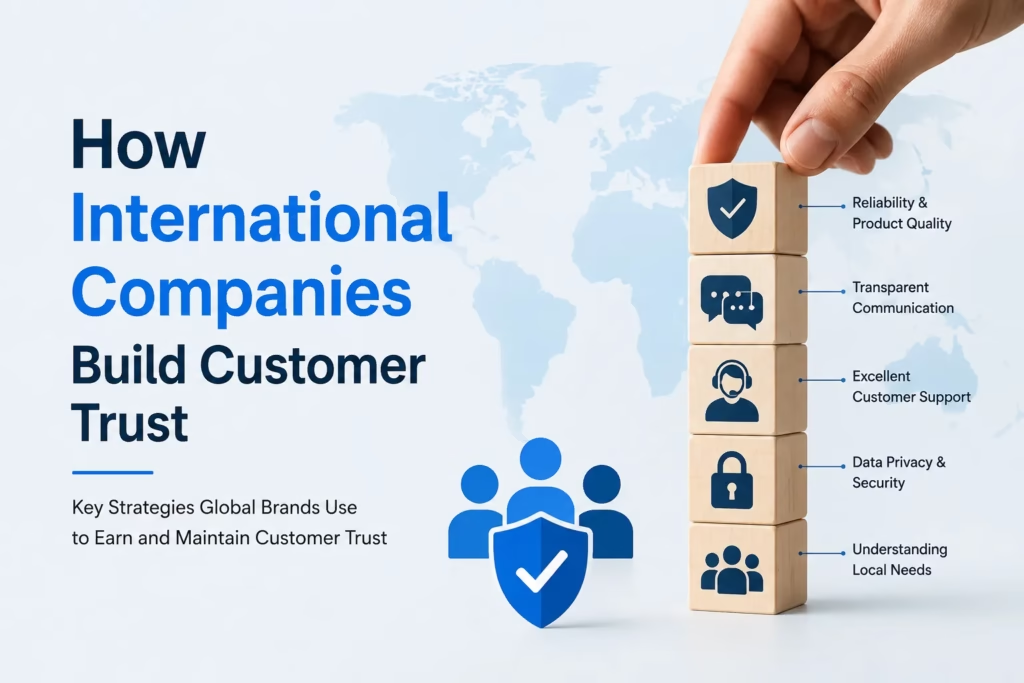
Successful global companies understand that trust cannot be created through advertising alone. It is built through consistent experiences, honest communication, reliable service, responsible business practices, and respect for the people and cultures they serve. From global technology companies to international retailers and consumer brands, the businesses that succeed over the long term are often those that make customers feel confident before, during, and after every purchase.
Why Customer Trust Matters in International Markets
Customer trust is one of the most important foundations of sustainable international growth. When people trust a company, they are more comfortable sharing personal information, making online payments, trying new products, and recommending the brand to others.
This is particularly important when a company enters a new country. Unlike a familiar local business, an international company may initially have no established relationship with potential customers. Trust helps reduce the uncertainty associated with buying from a foreign brand.
Strong trust also creates important business advantages. Loyal customers are more likely to make repeat purchases, leave positive reviews, and recommend a company to friends and family. As a result, trust can reduce the cost of acquiring new customers while strengthening long-term profitability.
For global companies, however, trust must be maintained across different legal systems, languages, cultures, and customer expectations. A strategy that works well in one country may need to be adjusted in another. The most successful companies therefore combine global consistency with local understanding.
Delivering Consistent Product and Service Quality
Consistency Creates Confidence
One of the simplest and most effective ways to build trust is to consistently deliver what customers expect. A company can make impressive promises, but customers ultimately judge it by the quality of its products and services.
Global brands such as Apple have built strong customer loyalty partly by creating consistent expectations around product design, functionality, and customer experience. Although customers may purchase products in different countries, they generally expect the same high standards associated with the brand.
Consistency is particularly important for companies operating across international supply chains. A product that meets expectations in one market but regularly fails in another can quickly damage the company’s reputation. Businesses need strong quality control systems, reliable suppliers, and clear operational standards to ensure customers receive a dependable experience.
At the same time, consistency does not mean ignoring local needs. The core promise of the brand should remain stable, while products or services may be adapted where appropriate.
Communicating with Transparency and Honesty
Customers are more likely to trust companies that communicate clearly and honestly. International businesses should provide accurate information about prices, product features, delivery times, policies, and possible limitations.
Hidden charges, misleading advertising, and unclear terms can quickly damage customer confidence. This is especially true when customers are buying online and cannot physically inspect a product before making a purchase.
Transparency becomes even more important when something goes wrong. Companies sometimes make mistakes, experience service disruptions, or face supply-chain delays. Attempting to hide these problems can create greater reputational damage than the original issue.
A trusted company communicates early, explains the situation clearly, and provides realistic information about what it is doing to solve the problem. Honest communication demonstrates respect for customers and helps protect long-term relationships.
Providing Strong and Accessible Customer Support
Support Should Feel Local, Even for a Global Company
Good customer support can transform a difficult experience into an opportunity to build trust. Customers want to know that if a product arrives damaged, a payment fails, or a service does not work properly, they can easily reach someone who will help.
International companies must consider language, time zones, communication preferences, and local expectations. A customer in Japan may expect a different level of formality from customer support than a customer in the United States or India.
Companies such as Amazon have helped shape customer expectations by making order tracking, returns, and support central parts of the buying experience. While approaches differ across markets, the broader lesson is clear: customers trust businesses that make problems easy to resolve.
Effective global support may include multilingual service teams, local contact channels, self-service tools, and clear escalation processes. The goal is not simply to answer questions quickly, but to make customers feel that the company takes responsibility for their experience.
Protecting Customer Data and Strengthening Cybersecurity
As international commerce becomes increasingly digital, trust depends heavily on data protection. Customers share names, addresses, payment information, and sometimes highly personal details with businesses. If that information is mishandled, the consequences can be serious.
International companies must invest in strong cybersecurity, secure payment systems, access controls, and responsible data management. They should also explain in understandable language what information they collect and why.
Data privacy is not only a technical or legal issue. It is a relationship issue. Customers want confidence that a company will treat their information responsibly.
A global business must also navigate different privacy regulations across markets. Rather than treating compliance as a minimum requirement, leading companies use privacy and security as part of their overall trust strategy. Clear privacy controls and transparent communication can help customers feel more comfortable engaging with a brand.
Building a Strong Global Brand Reputation
A company’s reputation often crosses borders faster than its products do. News stories, social media posts, customer reviews, and online discussions can influence how a brand is perceived in multiple countries within hours.
This makes reputation management a continuous responsibility. Global brands such as Toyota have built trust over decades by developing strong associations with reliability, quality, and long-term customer value.
A strong reputation, however, cannot be maintained through branding alone. It must be supported by real performance. If a company’s advertising presents it as responsible, reliable, and customer-focused, its everyday actions must support those claims.
Companies should also respond thoughtfully to criticism. Ignoring legitimate customer concerns can create the impression that a business does not listen. A respectful and solution-focused response can demonstrate accountability and strengthen trust.
Understanding and Respecting Local Cultures
Global Standards, Local Understanding
One of the biggest mistakes an international company can make is assuming that customers everywhere think and behave in the same way.
Successful global businesses invest time in understanding local cultures, traditions, languages, purchasing habits, and communication styles. McDonald’s provides a useful example of balancing global brand consistency with local adaptation. Its core brand and operating standards remain recognizable worldwide, while menus and offerings can be adjusted to suit local preferences.
Respecting local culture can also involve adapting marketing messages, customer service practices, packaging, and business partnerships. Translation alone is not always enough. A message that sounds effective in one language may have a different meaning or emotional impact in another.
Customers are more likely to trust companies that show genuine understanding rather than treating international markets as identical.
Using Reviews, Testimonials, and Social Proof
Before buying from an unfamiliar international company, customers often look for evidence that other people have had positive experiences. Online reviews, testimonials, ratings, and recommendations can therefore play a major role in building trust.
Social proof is particularly valuable when customers cannot personally evaluate a company before making a purchase. Positive feedback from other buyers can reduce uncertainty and encourage first-time customers to try a product or service.
However, authenticity is essential. Businesses should never rely on fake reviews or misleading testimonials. Customers and regulators increasingly recognize manipulated feedback, and dishonest practices can cause lasting reputational damage.
Companies should instead encourage genuine customers to share their experiences and respond professionally to both positive and negative feedback.
Making Delivery, Returns, and After-Sales Service Reliable
Trust does not end when a customer completes a purchase. In many industries, the experience after payment is just as important.
International companies must ensure that delivery information is accurate, products arrive as promised, and returns are not unnecessarily complicated. Customers should understand who is responsible if an item is delayed, lost, or damaged.
For global businesses, this can require strong logistics partnerships and locally appropriate return systems. A company that offers excellent products but makes returns difficult may still lose customer trust.
After-sales service is equally important for products that require installation, maintenance, repairs, or technical assistance. When customers know that a company will support them after the sale, they are more likely to feel confident making the initial purchase.
Demonstrating Social Responsibility and Ethical Business Practices
Modern customers increasingly pay attention to how companies treat employees, suppliers, communities, and the environment. International companies operate in highly visible environments, and unethical behavior in one part of the world can affect trust everywhere.
Responsible business practices can include fair labor standards, sustainable sourcing, environmental initiatives, ethical supply-chain management, and honest corporate governance.
The key is authenticity. Customers are increasingly skeptical of companies that make broad claims about sustainability or social responsibility without providing meaningful action.
Businesses build stronger trust when their policies are supported by measurable commitments and consistent behavior. Ethical decisions may sometimes require greater short-term investment, but they can protect reputation and create stronger long-term relationships with customers and communities.
Conclusion: Trust Is a Global Business Asset
Customer trust is not built through a single campaign, policy, or transaction. It develops gradually through consistent quality, honest communication, reliable support, secure data practices, cultural understanding, and responsible business behavior.
For international companies, the challenge is even greater because trust must be earned across borders and maintained among customers with different expectations and experiences. The strongest global businesses combine a dependable core brand with a genuine understanding of local markets.
Ultimately, customer trust is one of the most important assets an international company can possess. Products can be copied and competitors can enter new markets, but a strong reputation built on reliability, respect, and consistent customer experiences is far more difficult to replace. In global markets, trust is not simply a business advantage—it is the foundation for lasting growth.
Frequently Asked Questions
1. Why is customer trust important for international companies?
Customer trust encourages repeat purchases, strengthens loyalty, and helps companies build a positive reputation across global markets.
2. How do international companies build customer trust?
They build trust through consistent quality, transparent communication, reliable support, data security, and responsible business practices.
3. Why is cultural understanding important for global businesses?
Understanding local cultures helps companies communicate effectively and provide products and services that better meet customer expectations.
4. How does data privacy affect customer trust?
Strong data privacy and cybersecurity practices reassure customers that their personal and financial information is safe.
5. Can customer reviews help international companies gain trust?
Yes, genuine customer reviews and testimonials provide social proof and help new customers feel more confident about a brand.