
|
Getting your Trinity Audio player ready...
|
The Russia-Ukraine war continues to dominate global headlines in 2026. More than four years after the conflict escalated into a full-scale war, both nations remain engaged in intense military operations that are influencing global politics, defense strategies, and international security.
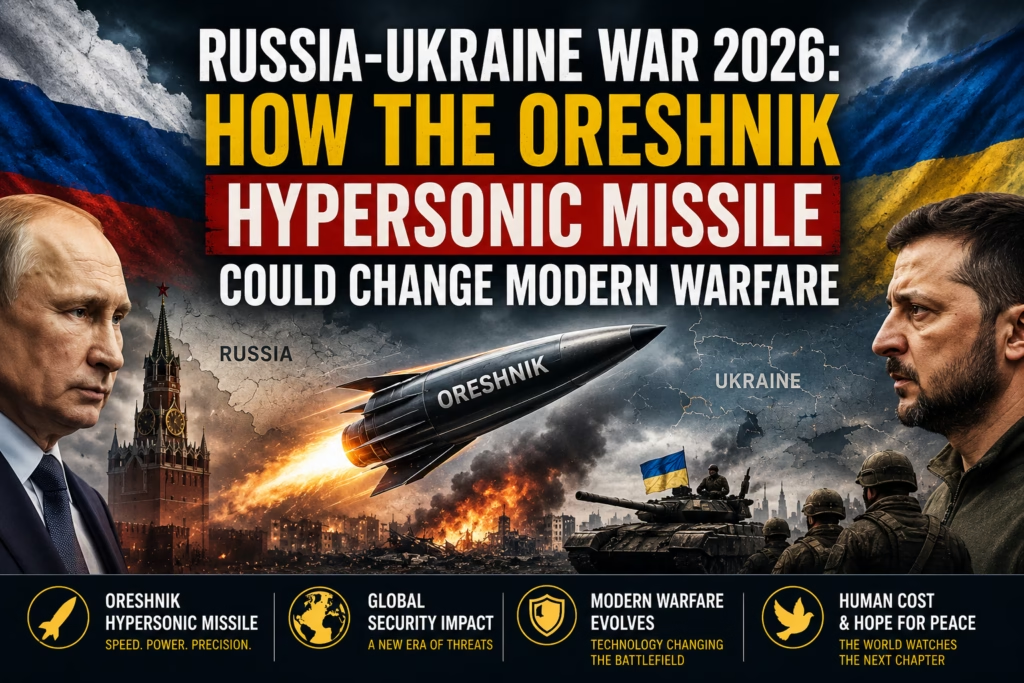
One of the most significant developments in recent months has been the reported use of Russia’s Oreshnik hypersonic missile. Military experts and world leaders have closely monitored this weapon because it represents a new generation of military technology capable of changing the nature of modern warfare.
As advanced weapons become increasingly common on the battlefield, the Russia-Ukraine conflict is providing the world with a real-time glimpse into the future of military combat.
- The Current State of the Russia-Ukraine War
- What Is the Oreshnik Hypersonic Missile?
- Why Hypersonic Weapons Are Different
- Why the Oreshnik Missile Matters in the Ukraine War
- The Global Race for Hypersonic Weapons
- Impact on Global Security
- How the War Is Reshaping Military Strategies
- Economic Consequences of the War
- The Humanitarian Impact
- What Could Happen Next?
The Current State of the Russia-Ukraine War
The conflict between Russia and Ukraine remains one of the most significant geopolitical crises of the 21st century.
Since the war began, both sides have experienced substantial military losses, economic challenges, and humanitarian consequences. Cities have suffered extensive damage, millions of people have been displaced, and global markets have faced disruptions in energy, food, and commodity supplies.
Despite numerous diplomatic efforts and international discussions, the fighting continues across multiple regions.
Military analysts believe the conflict has evolved beyond a regional war and has become a defining global security issue that affects countries far beyond Eastern Europe.
What Is the Oreshnik Hypersonic Missile?
The Oreshnik missile is one of Russia’s newest strategic weapons systems.
Unlike traditional ballistic missiles, hypersonic missiles travel at extremely high speeds while maintaining the ability to maneuver during flight. This makes them significantly more difficult to track and intercept using existing missile defense systems.
Key characteristics often associated with hypersonic missile technology include:
- Extremely high speeds
- Long-range strike capabilities
- Greater maneuverability
- Reduced interception opportunities
- Enhanced strategic deterrence
The development of such weapons reflects the growing competition among major military powers to gain technological advantages in modern warfare.
Why Hypersonic Weapons Are Different
Traditional ballistic missiles follow relatively predictable flight paths.
Hypersonic missiles, however, can travel at speeds exceeding several times the speed of sound while making course adjustments during flight. This creates significant challenges for air defense systems.
Military experts consider hypersonic weapons revolutionary because they:
Reduce Reaction Time
Defense systems have less time to detect, track, and respond to incoming threats.
Increase Strike Precision
Advanced guidance systems allow for more accurate targeting.
Challenge Existing Defenses
Many current missile defense systems were designed to counter traditional ballistic missiles rather than highly maneuverable hypersonic weapons.
Create Strategic Uncertainty
Countries must develop new defense technologies to counter these emerging threats.
Because of these factors, hypersonic weapons are becoming a major focus of military modernization programs worldwide.
Why the Oreshnik Missile Matters in the Ukraine War
The reported deployment of the Oreshnik missile represents more than just another battlefield development.
It highlights the growing role of advanced military technologies in modern conflicts.
Military analysts believe the use of hypersonic weapons serves several purposes:
- Demonstrating technological capabilities
- Testing advanced weapons under combat conditions
- Sending strategic messages to adversaries
- Increasing military pressure during critical phases of conflict
The deployment also signals how warfare is evolving beyond conventional tanks, artillery, and aircraft.
The Global Race for Hypersonic Weapons
Russia is not the only country investing heavily in hypersonic technology.
Several major powers are developing similar systems, including:
- United States
- China
- Russia
- India
- France
- United Kingdom
Governments around the world view hypersonic weapons as a critical component of future military capabilities.
As competition intensifies, defense spending on missile development and counter-hypersonic technologies continues to grow.
Many experts believe the global race for hypersonic dominance could shape international security for decades.
Impact on Global Security
The introduction of advanced hypersonic weapons raises important questions about global stability.
Security experts worry that faster and more sophisticated missiles could increase the risk of miscalculations during international crises.
Several concerns have emerged:
Arms Race Expansion
Countries may accelerate military spending to avoid falling behind technologically.
New Defense Challenges
Existing missile defense systems may require significant upgrades.
Strategic Instability
Faster weapons reduce decision-making time during emergencies.
Increased Military Competition
Nations may prioritize advanced weapon development over diplomatic solutions.
These concerns have prompted discussions among policymakers and defense organizations worldwide.
How the War Is Reshaping Military Strategies
The Russia-Ukraine conflict has become a testing ground for modern warfare concepts.
Several technologies have played major roles in the conflict:
Drones
Unmanned aerial systems have transformed reconnaissance and combat operations.
Artificial Intelligence
AI-assisted systems are increasingly supporting battlefield decision-making.
Cyber Warfare
Digital attacks have become a key component of military operations.
Satellite Intelligence
Space-based surveillance continues to play a critical role in modern conflicts.
Hypersonic Weapons
Advanced missile technologies are redefining strategic military capabilities.
Many defense analysts believe future wars will increasingly depend on technology rather than traditional military advantages alone.
Economic Consequences of the War
The Russia-Ukraine conflict continues to affect global economies.
Major impacts include:
- Rising energy prices
- Supply chain disruptions
- Increased defense spending
- Commodity market volatility
- Inflationary pressures
Countries around the world continue to monitor the conflict because of its influence on international trade and economic stability.
Energy markets, in particular, remain sensitive to developments in the region.
The Humanitarian Impact
Beyond military and economic considerations, the war has had devastating humanitarian consequences.
Millions of people have experienced displacement, infrastructure damage, and disruptions to everyday life.
Humanitarian organizations continue to provide support for affected communities while governments seek long-term solutions for refugees and reconstruction efforts.
The human cost of the conflict remains one of its most significant and tragic aspects.
What Could Happen Next?
Several possible scenarios may shape the next phase of the war:
Continued Military Escalation
Both sides could intensify operations using increasingly advanced weaponry.
Diplomatic Negotiations
International mediators may push for renewed peace discussions.
Expanded International Involvement
Additional military and financial support could alter battlefield dynamics.
Technological Warfare Evolution
Advanced systems such as AI, drones, and hypersonic missiles may play even greater roles.
While predicting the future remains difficult, experts agree that technology will continue to influence the direction of the conflict.
Lessons for the Future of Warfare
The Russia-Ukraine war is providing valuable insights into how future conflicts may unfold.
Military planners worldwide are studying:
- Battlefield technology
- Drone operations
- Missile defense systems
- Cyber warfare strategies
- Artificial intelligence applications
The lessons learned from this conflict are likely to influence defense policies for many years.
Conclusion
The emergence of the Oreshnik hypersonic missile has added a new dimension to the Russia-Ukraine war and highlighted the rapid evolution of military technology. As nations race to develop faster, smarter, and more advanced weapons, the conflict serves as a reminder that the future of warfare is being shaped today.
While the battlefield implications are significant, the broader impact extends far beyond Ukraine. The development and deployment of hypersonic weapons could redefine global security, military strategy, and international relations for decades to come.
For governments, defense experts, and citizens around the world, the Russia-Ukraine war remains a critical event that continues to shape the future of modern warfare.