|
Getting your Trinity Audio player ready...
|
AI smart glasses are becoming more popular, but their built-in cameras and microphones are also raising a major privacy question: Can smart glasses record people without their permission?
The concern has grown as AI glasses become more capable. Devices can now capture photos and videos, respond to voice commands, and use AI to understand what the wearer sees.
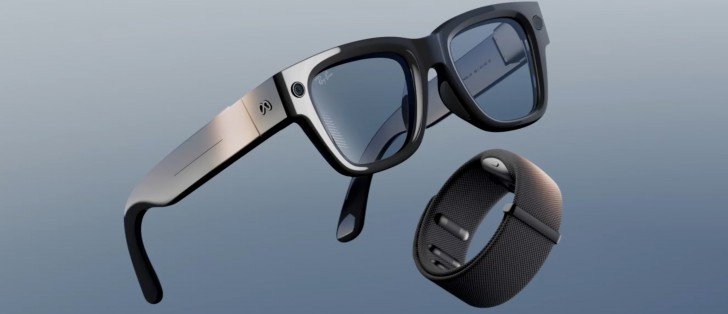
Recent privacy concerns have also pushed the industry to introduce products without cameras. Meta, for example, announced its new Ray-Ban Meta Audio glasses on September 23, 2026. The new glasses do not include a camera, while the company also announced a new generation of camera-equipped AI glasses.
Can AI Smart Glasses Record You Without Permission?
Yes, a person wearing camera-equipped smart glasses can potentially record people nearby without getting their explicit permission first.
However, whether that recording is legal depends on the location, circumstances, purpose of the recording and how someone uses the footage afterward.
The biggest concern comes from the fact that smart glasses can look almost identical to ordinary eyewear. A person standing nearby may not immediately realize that the wearer has a camera.
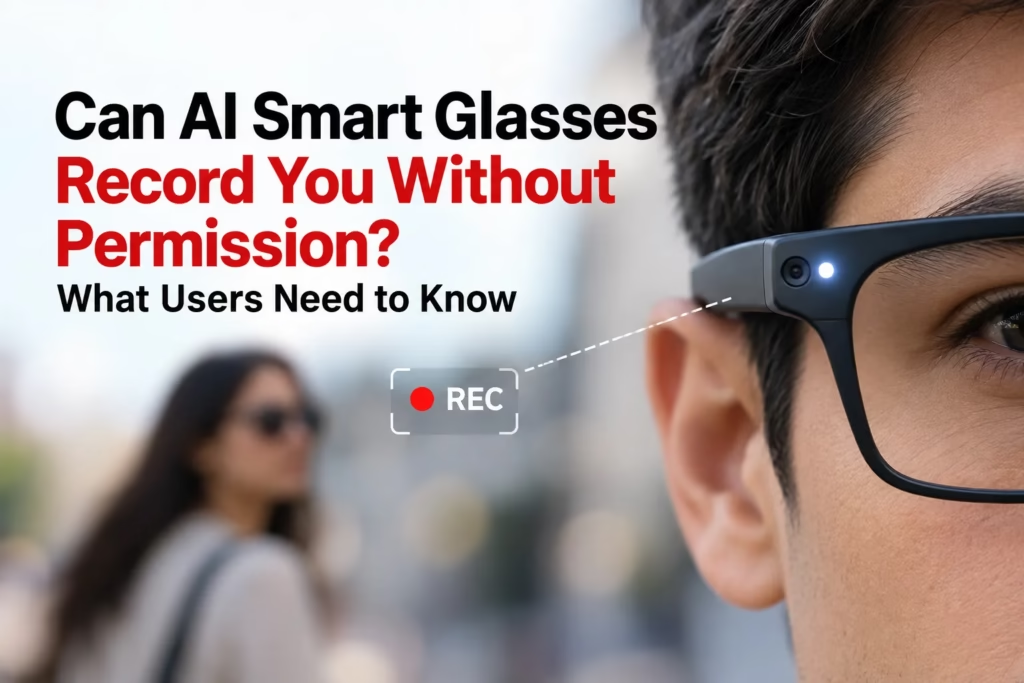
Meta says its camera-equipped AI glasses include a white capture LED on the front. The LED blinks when the glasses capture photos or videos for the wearer’s gallery.
The company also says the capture LED does not have an off switch. On newer generations, Meta says the camera automatically disables when the system detects that someone has blocked or tampered with the LED.
Why Smart Glasses Create a New Privacy Problem
Traditional cameras usually make their presence obvious. A smartphone has to point toward a person, while a conventional camera can look visibly different from normal glasses.
AI smart glasses change that dynamic.
A wearer can look directly at another person while appearing to have a normal conversation. At the same time, camera-equipped glasses can capture images or video hands-free.
AI adds another layer to the privacy issue.
Modern AI glasses can understand visual information through their cameras. That means the privacy discussion no longer focuses only on recording and saving video. It also involves how devices process visual information around the wearer.
This distinction matters because someone may not know whether an AI device is simply recording a video, analyzing something through AI, or doing both.
Meta Says Its Smart Glasses Have a Recording Indicator
Meta has publicly explained how its privacy system works.
According to Meta, its AI glasses use a front-facing capture LED to alert people when the glasses capture content for the wearer’s gallery.
The company says the light blinks briefly for photos and continues blinking during video recording.
Meta also says its second-generation glasses can disable the camera when the capture LED gets blocked. The company has also introduced measures designed to detect physical tampering with the LED.
These safeguards aim to make covert photo and video recording harder.
However, a visible recording light does not automatically answer the separate legal question of whether a person has given consent to being recorded.
AI Camera Use Is Different From Normal Video Recording
One of the most important points for users involves the difference between recording a video and using the camera for an AI feature.
AI glasses can use cameras to understand what the wearer sees. For example, an AI assistant may help identify an object, recognize a landmark or answer a question about something in front of the user.
That creates a different privacy question from ordinary video recording.
A nearby person might notice a recording indicator when the wearer saves a photo or video. But the same person may not understand when an AI system uses camera input to interpret the surrounding environment.
As AI glasses gain more features, this distinction could become increasingly important for privacy laws and consumer protection rules.
Meta Expands AI Glasses in 2026
Meta announced several new AI glasses products at its September 2026 Connect event.
The company introduced Ray-Ban Meta Audio, its first audio-only glasses. The glasses do not include a camera and focus on audio, calls and AI features.
Meta also announced Ray-Ban Meta Gen 3, which includes a 12-megapixel camera and 3K Ultra HD video recording. Meta says the new model also includes a built-in LED to alert people when the wearer takes photos or records video.
The company said the new camera-equipped glasses start at $449 in the United States, while Ray-Ban Meta Audio starts at $349.
The move shows how manufacturers are exploring different approaches to wearable AI as privacy concerns continue to grow.
What About Privacy in India?
India’s privacy framework also makes this issue increasingly relevant as smart glasses become more common.
The Digital Personal Data Protection Act, 2023 establishes rules around the processing of digital personal data. The Digital Personal Data Protection Rules, 2025, provide additional requirements around notices, consent and personal-data processing.
The law says consent, when required as the legal basis for processing, must be free, specific, informed, unconditional and unambiguous, with clear affirmative action.
However, this does not mean that every person who appears in a photo or video automatically has a right to stop every recording in every situation.
The legal position can depend on factors such as the circumstances of the recording, the nature of the information involved, the purpose of processing and other applicable laws.
That makes the simple statement “smart glasses recording you without permission is illegal” too broad.
What Should You Do If Someone Records You With Smart Glasses?
If you believe someone is recording you without your permission, consider the circumstances before taking action.
You can:
- Ask the person whether they are recording.
- Ask them to stop if you do not want to appear in the recording.
- Avoid sharing personal information while the recording continues.
- If the footage appears online, document the post and where it appears.
- Report content that violates the platform’s rules.
- If the recording involves harassment, threats, stalking, intimate content or another potentially unlawful situation, consider contacting the appropriate authorities or getting legal advice.
The situation becomes more serious when someone records private activities or distributes footage to harass, threaten or exploit another person.
How Can People Protect Their Privacy Around AI Glasses?
Consumers cannot always know whether another person carries a camera, phone or wearable device.
Still, people can take practical steps.
If you notice someone wearing smart glasses and feel uncomfortable, ask whether they are recording. In sensitive environments, businesses and organizations can also establish their own rules about cameras and recording devices.
Schools, workplaces, hospitals, private businesses and event venues can set additional restrictions where their policies or applicable laws allow them to do so.
Smart-glasses users should also respect privacy rather than relying only on the device’s technical safeguards.
The Bigger Question: Recording vs AI Surveillance
The smart-glasses debate is moving beyond a simple question about cameras.
The next privacy challenge involves AI-powered visual analysis.
A camera can capture an image. AI can then analyze that image, extract information from it and potentially connect that information with other digital services.
That creates questions about what happens to visual information after a device captures it.
Consumers therefore need to understand more than whether a smart-glasses camera has a recording light. They also need to understand how the device handles AI features, what information it processes and what happens when they share captured content.
Conclusion
AI smart glasses can record people without their explicit permission in some circumstances, but that does not automatically mean the recording is illegal.
The law can vary depending on where the recording happens and what the wearer does with the footage.
Meta says its camera-equipped AI glasses use a visible capture LED and technical safeguards to make covert photo and video recording harder. At the same time, the growing use of AI-powered camera features raises a broader question about how people know when a wearable device is analyzing their surroundings.
As AI glasses become more common, smart glasses privacy, AI camera recording, consent and personal data protection will likely remain important issues for consumers, businesses and regulators.