
|
Getting your Trinity Audio player ready...
|
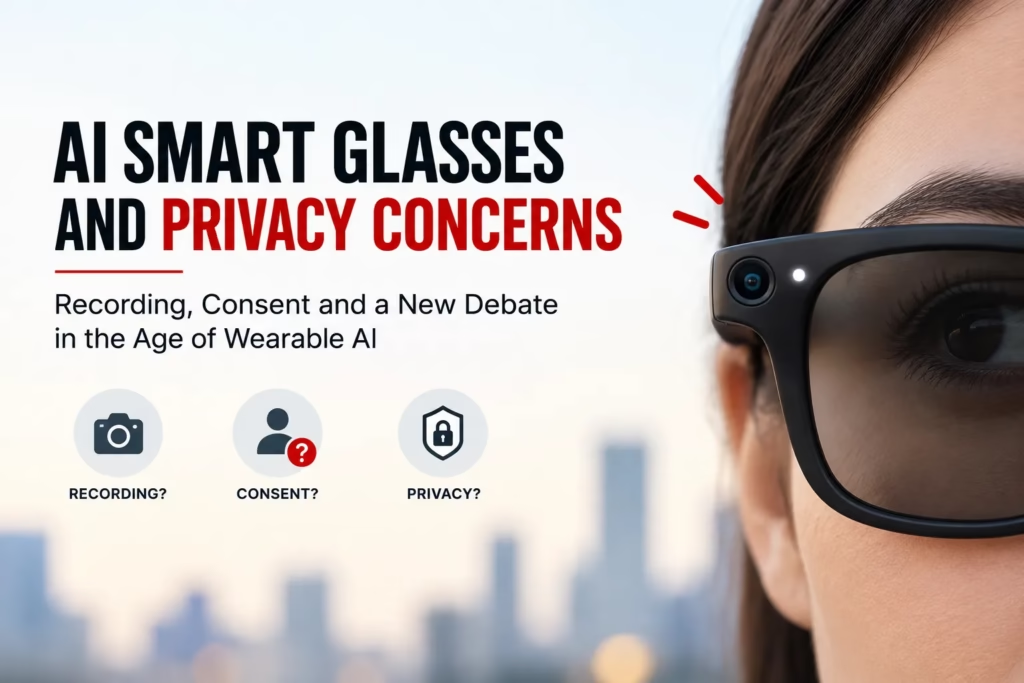
AI smart glasses privacy concerns are gaining attention as wearable technology raises questions about recording, consent and personal data protection. Recent developments have brought renewed scrutiny to camera-equipped glasses, including Meta’s Ray-Ban smart glasses.
AI Smart Glasses Raise New Privacy Questions
AI smart glasses allow users to capture photos, record videos and interact with artificial intelligence without taking out a smartphone. These features offer convenience, but they also create challenges for people who appear in recordings without knowing it.
Unlike traditional cameras, smart glasses can look like ordinary eyewear. As a result, people nearby may not immediately realise that someone is recording them.
The growing use of these devices has renewed discussions about privacy, responsible technology and the right to control personal images.
Meta Smart Glasses Face Growing Privacy Scrutiny
Meta’s AI-powered Ray-Ban smart glasses have become a central part of the debate. The devices combine a wearable camera with AI features, allowing users to capture moments and interact with a digital assistant.
However, privacy concerns have increased following reports of covert recording and the alleged misuse of footage. These incidents have raised questions about whether existing safeguards can adequately protect people who appear in recordings.
Meta has included a recording indicator light on its glasses to alert people when the camera captures content. However, critics question whether a small light provides enough notice in every situation.
Recording Without Consent Becomes a Major Concern
One of the biggest concerns surrounding AI smart glasses involves recording people without their knowledge or permission.
Users can capture footage during everyday activities, including conversations, social gatherings and visits to public places. People in these situations may not expect a wearable device to record them.
The problem becomes more serious when someone shares footage online without considering the privacy of the people featured in it.
Privacy experts and regulators continue to examine how existing laws apply to wearable cameras, particularly when recordings involve sensitive situations or personal information.
What Happens to Data Captured by AI Glasses?
Recording is only one part of the privacy debate. Data storage, cloud processing and access to captured content also matter.
Depending on the device and its settings, AI glasses may process information locally or send certain data to connected services. Users should understand what information their devices collect, how companies handle it and what options they provide for deletion.
Concerns about human review of recordings have also attracted attention. Reports about sensitive footage reaching human reviewers have raised questions about transparency and data protection.
Companies need to explain these processes clearly so users can make informed decisions about wearable AI.
Governments and Public Venues Respond to Privacy Concerns
The debate has moved beyond technology companies. Public venues and authorities have also started examining restrictions on camera-equipped smart glasses.
In September 2026, reports described restrictions on smart glasses in some council-operated facilities in Sydney. The developments reflect growing concerns about recording in places where people expect greater privacy.
However, these measures do not represent a universal ban on AI smart glasses. Rules differ between locations, and authorities continue to consider how privacy protections should apply to emerging wearable technology.
Can AI Smart Glasses Protect Privacy?
Manufacturers can introduce safeguards that help reduce privacy risks. Clear recording indicators, stronger controls against tampering, transparent data policies and accessible deletion options can help users understand how their devices work.
Users also have a responsibility to respect other people’s privacy. Asking permission before recording private conversations or sharing identifiable footage can help prevent unwanted exposure.
At the same time, smart glasses offer potential benefits for accessibility, hands-free communication and everyday assistance. Any response to privacy concerns must consider these uses alongside the risks.
The Future of Wearable AI and Personal Privacy
AI smart glasses are changing how people capture and interact with information. Their growing capabilities also raise important questions about consent, transparency and the protection of personal data.
As manufacturers develop new wearable AI products, privacy safeguards will remain an important part of public discussion. Clearer policies, responsible use and effective protections can help address concerns while allowing people to benefit from the technology.
The future of AI smart glasses will depend not only on their features, but also on how well companies and users respect the privacy of people around them.