
|
Getting your Trinity Audio player ready...
|
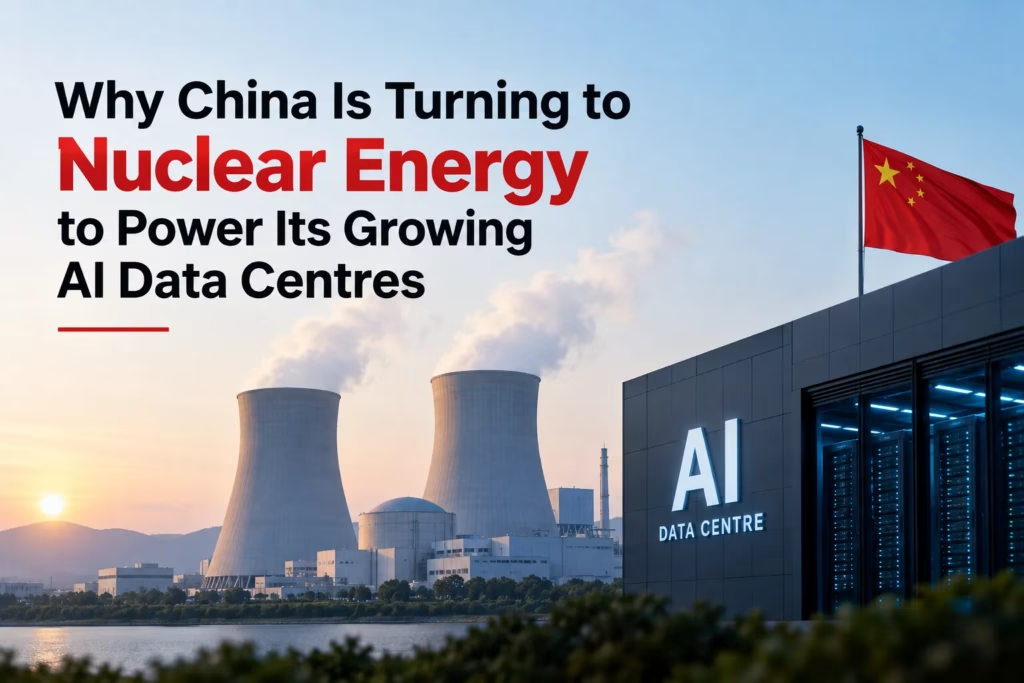
China is expanding its nuclear energy programme as rising artificial intelligence (AI) demand increases the need for reliable electricity. Small modular reactors and advanced nuclear technologies are attracting attention as the country strengthens its energy infrastructure.
China is accelerating its artificial intelligence ambitions, and its growing data centre industry is creating new demands on the country’s electricity supply. Nuclear energy is emerging as one potential solution, with investment in conventional reactors, small modular reactors (SMRs) and nuclear fusion research.
The growing connection between AI and nuclear power highlights China’s efforts to strengthen energy security while supporting its expanding digital economy.
Why AI Data Centres Need More Electricity
AI data centres use powerful processors to train and operate large AI models. These facilities also require electricity for cooling, networking and other infrastructure.
As companies expand their AI computing capacity, they need reliable electricity supplies that can support operations throughout the day and night.
China is investing in different energy sources to meet this demand. Nuclear power offers continuous electricity generation and can complement renewable sources such as solar and wind.
China Expands Its Nuclear Energy Programme
China has become a major player in global nuclear power development. More than half of the 58 nuclear power plants under construction worldwide are in China, according to a recent report.
The country is also exploring small modular reactors, which could offer alternative options for future power infrastructure. These reactors may eventually support industrial facilities and energy-intensive computing operations, depending on project design and deployment.
However, new nuclear projects require substantial investment, regulatory approvals and construction time. They cannot provide an immediate solution to every data centre’s electricity needs.
Small Modular Reactors Attract Attention
Small modular reactors are designed to generate less electricity per unit than conventional large nuclear reactors. Their modular design could offer greater flexibility in how developers build and deploy nuclear facilities.
China’s interest in SMRs reflects its wider effort to develop nuclear technology and expand domestic energy capabilities.
Some developers are exploring the possibility of using former coal power plant sites for future nuclear projects. Such proposals could potentially make use of existing infrastructure, although each project would require its own approvals and engineering work.
Commercial deployment timelines and the actual use of SMRs for AI data centres remain important developments to watch.
Nuclear Fusion Research Continues
China is also investing in nuclear fusion research, a technology that aims to generate energy by combining atomic nuclei.
Fusion differs from conventional nuclear power, which relies on nuclear fission. While fission reactors already generate commercial electricity, fusion has not yet reached widespread commercial power generation.
China’s fusion research reflects its interest in developing advanced energy technologies for the future. However, fusion should not be described as an existing source of electricity for the country’s AI data centres.
China’s AI Expansion Adds to Energy Demand
China’s technology industry continues to invest in AI models, semiconductor development and data centre infrastructure.
Alibaba recently announced plans to expand its cloud data centre capacity to more than 20 gigawatts by 2032. The company also unveiled a new AI chip and outlined plans for a larger AI model.
These developments illustrate the scale of China’s AI ambitions and the potential need for additional electricity infrastructure.
However, Alibaba’s data centre target does not establish that its facilities will use nuclear power directly.
What China’s Nuclear Push Means for the Future
China’s growing interest in nuclear energy reflects the challenge of supplying reliable electricity to an expanding AI industry.
Nuclear power could help support data centre growth while complementing renewable energy. Its contribution will depend on construction schedules, operating costs, grid connections and the availability of suitable projects.
For now, conventional nuclear power offers an established source of electricity, while small modular reactors and nuclear fusion represent different stages of technological development.
As China expands its AI infrastructure, the relationship between electricity supply, nuclear investment and computing capacity will remain an important part of its technology and energy strategy.
The key development to watch is whether China can turn its nuclear investment and AI infrastructure plans into operating projects that deliver reliable electricity at scale.