
|
Getting your Trinity Audio player ready...
|
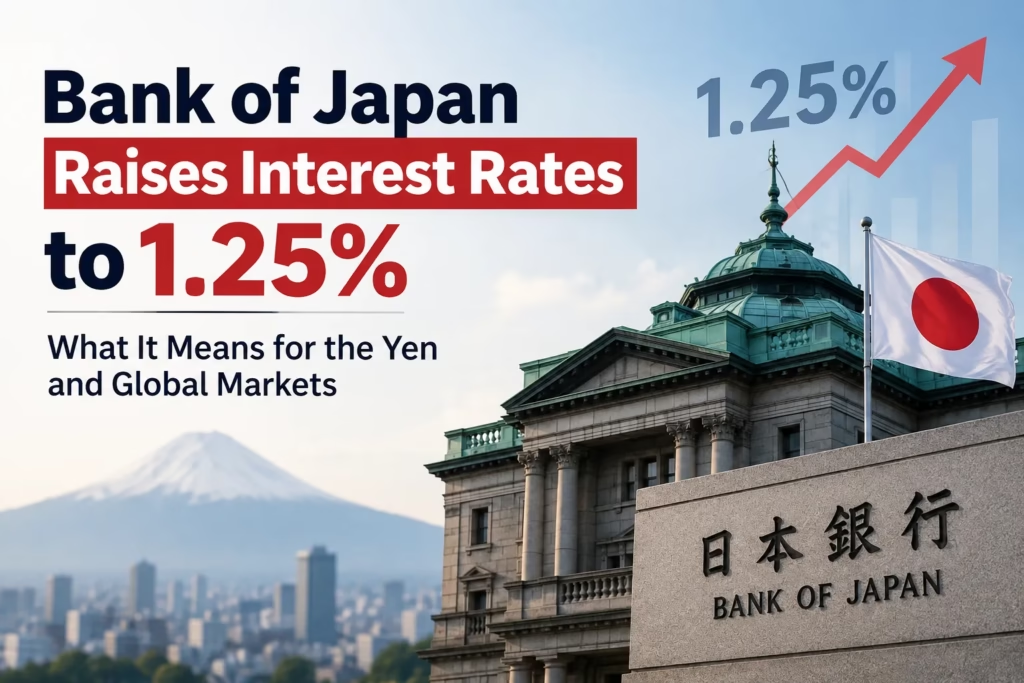
The Bank of Japan (BOJ) raised its benchmark interest rate to 1.25% on September 18, 2026, marking its highest level in 31 years. The central bank increased the rate from 1% as it responds to inflation risks and rising energy costs.
The decision could affect the Japanese yen, government bond yields, international investments and global financial markets.
Bank of Japan Raises Interest Rates to 1.25%
The BOJ approved a 0.25 percentage point increase at the end of its two-day monetary policy meeting. The decision passed with a 7–2 vote, with two board members opposing the increase.
The latest move continues Japan’s shift away from years of ultra-low interest rates. The central bank aims to manage inflation while monitoring economic conditions.
The rate increase also reflects concerns about rising import costs and energy prices.
Why Did the BOJ Increase Interest Rates?
Japan faces continued inflationary pressure, particularly from higher energy and import costs.
A weaker yen can make imported goods more expensive because businesses need more yen to purchase products priced in foreign currencies.
By increasing interest rates, the BOJ can make borrowing more expensive and influence spending, investment and inflation.
However, policymakers must also consider the impact of higher borrowing costs on households and businesses.
Japanese Yen Weakens After the Rate Hike
Despite the interest rate increase, the Japanese yen weakened against the US dollar after the announcement.
The dollar climbed above 157 yen as investors assessed the BOJ’s decision and its outlook for future monetary policy.
Markets had widely anticipated the rate increase. As a result, investors focused on whether the central bank would continue raising rates in the coming months.
The divided vote also raised questions about the pace of future tightening.
A higher interest rate can support a currency, but the actual market reaction also depends on expectations, economic conditions and interest rates in other countries.
What the BOJ Rate Hike Means for Global Markets
1. Yen Carry Trades
Investors have often borrowed yen at relatively low interest rates to invest in assets with higher returns elsewhere.
Higher Japanese interest rates can reduce the appeal of this strategy. If investors unwind these positions, currency and financial markets could experience increased volatility.
2. Japanese Government Bonds
Higher interest rates can influence Japanese government bond yields and borrowing costs.
Investors will watch how bond markets respond to the BOJ’s next policy decisions and changes in inflation expectations.
3. US Treasuries and Global Investments
Japanese investors hold substantial overseas investments, including US government bonds.
If domestic Japanese yields become more attractive, some investors may reconsider their international portfolios. However, a major shift in overseas investments is not guaranteed.
Currency movements, hedging costs and differences in bond yields will also influence investment decisions.
4. Global Stock Markets
The BOJ’s decision comes amid wider concerns about inflation and central bank policy.
Asian stocks rose after the announcement, while Japan’s Nikkei 225 also recorded gains during Friday’s trading session.
The market response shows that investors consider several factors, including energy prices, corporate earnings and global interest rate expectations.
Will the Bank of Japan Raise Rates Again?
The BOJ has not committed to a specific date for its next rate increase.
Investors will monitor inflation data, wage growth, economic activity and the yen’s performance for clues about future policy decisions.
Further increases could support the yen over time, particularly if Japan’s interest rate gap with other economies narrows. However, the timing and size of future moves remain uncertain.
Conclusion
The Bank of Japan’s decision to raise interest rates to 1.25% marks a significant development in Japan’s monetary policy.
Although the increase could influence the yen, bond yields and global investment flows, the currency’s immediate decline highlights the importance of market expectations.
Investors will now focus on the BOJ’s next policy signals and how inflation, energy prices and global interest rates shape Japan’s economic outlook.
For verification, the primary official source is the Bank of Japan official website.