
|
Getting your Trinity Audio player ready...
|
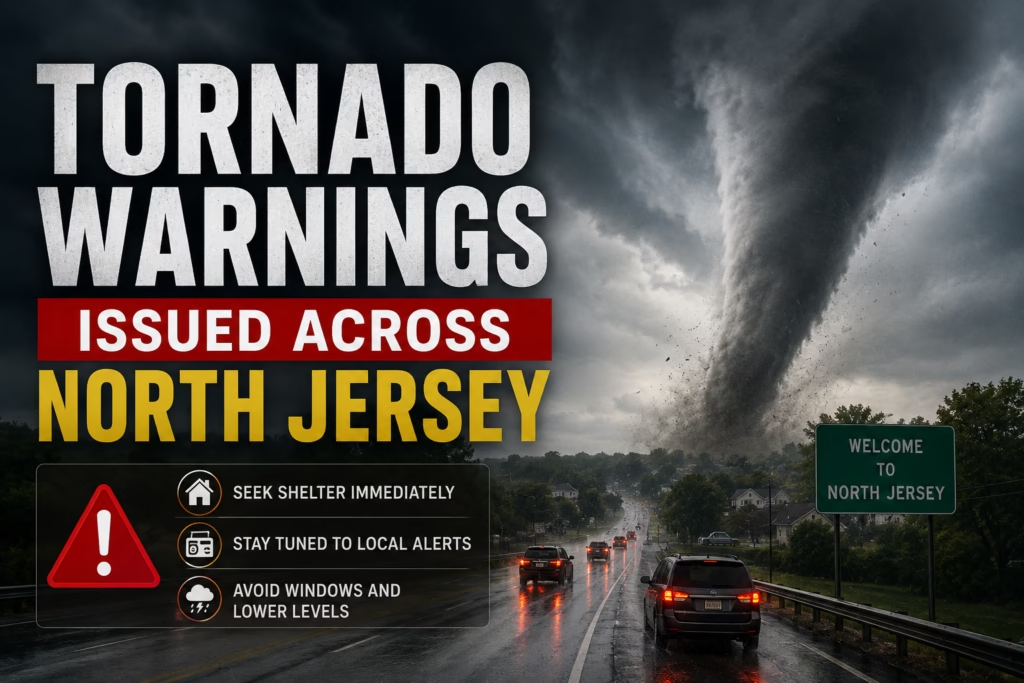
Residents across North Jersey experienced a tense start to the week as severe thunderstorms moved through the region, prompting tornado warnings, heavy rainfall, damaging wind gusts, frequent lightning, and the threat of flash flooding.
The National Weather Service (NWS) warned that atmospheric conditions were favorable for rotating thunderstorms capable of producing tornadoes. While not every warned storm produced a confirmed tornado, officials urged residents to take immediate shelter whenever a warning was issued, as radar-indicated rotation can quickly become dangerous.
The storm system affected thousands of residents across northern New Jersey and nearby areas, with meteorologists closely monitoring rapidly changing weather conditions throughout the day. Here’s everything you need to know about the severe weather event, why tornado warnings were issued, which areas were affected, and how to stay safe during future storms.
What Triggered the Tornado Warnings?
The severe weather developed as a combination of hot, humid air, an approaching cold front, and strong upper-level winds created an environment favorable for severe thunderstorms.
Meteorologists explained that these ingredients increased atmospheric instability, allowing some storms to rotate. Rotating thunderstorms, also known as supercells, have the potential to produce tornadoes, large hail, and damaging straight-line winds.
Although tornadoes remain relatively uncommon in New Jersey compared with parts of the Midwest, the state has experienced an increasing number of tornado warnings and confirmed tornadoes in recent years.
Difference Between a Tornado Watch and a Tornado Warning
Many people confuse these two weather alerts.
| Alert | Meaning | What You Should Do |
|---|---|---|
| Tornado Watch | Conditions are favorable for tornado development | Stay alert and prepare to take shelter |
| Tornado Warning | A tornado has been spotted or indicated by weather radar | Take shelter immediately |
A tornado warning requires immediate action because the threat is either already occurring or expected very soon.
Areas Impacted in North Jersey
According to weather reports, the severe weather threat extended across several counties in northern New Jersey.
Communities in and around the following areas were under heightened weather alerts:
- Bergen County
- Essex County
- Passaic County
- Hudson County
- Morris County
- Union County
- Parts of Sussex and Warren counties
Some warnings also extended into neighboring New York communities as the storm system moved northeast.
Timeline of the Storm System
Morning
Weather forecasters began warning residents that atmospheric conditions were becoming increasingly favorable for severe thunderstorms later in the day.
Afternoon
Thunderstorms rapidly intensified as they crossed parts of Pennsylvania and entered New Jersey.
The National Weather Service issued tornado warnings for several locations after Doppler radar detected rotation within individual storm cells.
Evening
Storms continued moving eastward while producing:
- Heavy rainfall
- Frequent lightning
- Strong wind gusts
- Localized flooding
- Downed tree branches
- Power outages in isolated areas
By late evening, many warnings expired as storms weakened and exited the region.
Weather Hazards Reported
Residents faced multiple severe weather threats during the event.
Damaging Winds
Straight-line wind gusts exceeding 60 mph were possible in stronger thunderstorms, capable of bringing down trees, damaging roofs, and causing power outages.
Heavy Rainfall
Slow-moving thunderstorms produced intense rainfall rates that increased the risk of localized flash flooding, especially in low-lying and urban areas.
Motorists were advised not to drive through flooded roads, as even shallow water can be dangerous.
Lightning
Frequent cloud-to-ground lightning accompanied many storms, posing an additional risk to anyone outdoors.
Tornado Potential
While not every warning results in a confirmed tornado, radar signatures indicated enough rotation for the National Weather Service to issue tornado warnings and urge residents to seek shelter immediately.
Why Tornado Warnings Matter
Modern Doppler radar allows meteorologists to identify rotation inside thunderstorms before a tornado reaches the ground.
This means warnings are sometimes issued before anyone actually sees a tornado.
Although some warnings may ultimately prove to be precautionary, meteorologists emphasize that residents should always treat every tornado warning as a real emergency because conditions can change within minutes.
Safety Tips During a Tornado Warning
If a tornado warning is issued for your area:
- Move immediately to the lowest floor of a sturdy building.
- Stay in an interior room without windows.
- Protect your head and neck using blankets, pillows, or a mattress.
- Avoid elevators.
- Stay away from glass doors and windows.
- Continue monitoring official weather updates.
- Do not attempt to watch the storm from outside.
If you’re driving, never try to outrun a tornado. Instead, seek shelter in a substantial building if it is safe to do so.
How Climate Patterns Are Influencing Severe Weather
Scientists have observed that warmer atmospheric conditions can hold more moisture, increasing the potential for intense rainfall and stronger thunderstorms.
While no single storm can be directly attributed to climate change, many researchers believe that changing climate patterns may contribute to more frequent heavy rainfall events and severe weather in parts of the northeastern United States.
What Residents Should Do After Severe Storms
Even after storms pass, hazards may remain.
Residents are encouraged to:
- Avoid downed power lines.
- Report storm damage to local authorities.
- Stay away from flooded roads and streams.
- Check weather forecasts before traveling.
- Recharge emergency devices if power is restored.
- Inspect homes carefully for structural damage.
Emergency officials also advise keeping an emergency kit with flashlights, batteries, medications, drinking water, and important documents ready during severe weather season.
Preparing for Future Severe Weather
The best way to stay safe is to prepare before storms arrive.
Consider these preparedness steps:
| Preparation | Why It Matters |
|---|---|
| Weather alert app | Receive instant warnings |
| Emergency kit | Supplies during outages |
| Battery-powered radio | Updates if internet fails |
| Flashlights | Safe lighting during blackouts |
| Family emergency plan | Faster response during emergencies |
| Backup phone charger | Maintain communication |
Latest Forecast
Forecasters indicated that while the strongest storms gradually moved out of the region, residents should continue monitoring local forecasts, as additional rounds of showers and thunderstorms may develop if unstable weather conditions persist. Weather patterns can change rapidly, particularly during the summer severe weather season.
Conclusion
The tornado warnings issued across North Jersey served as a reminder that severe weather can develop quickly, even in regions where tornadoes are relatively uncommon. Thanks to advances in weather radar and forecasting, many residents received timely warnings that allowed them to take shelter before the strongest storms arrived.
Whether or not a tornado ultimately touches down, every tornado warning should be treated as a serious emergency. Staying informed through official weather alerts, preparing an emergency plan, and knowing where to take shelter can significantly reduce the risk of injury during severe weather events.
As weather systems continue to evolve throughout the season, residents are encouraged to remain vigilant and follow guidance from the National Weather Service and local emergency management officials.
FAQs
What is the difference between a tornado watch and a tornado warning?
A tornado watch means conditions are favorable for tornadoes, while a tornado warning means a tornado has been detected by radar or observed and you should seek shelter immediately.
Which areas of North Jersey were affected?
The severe weather threat covered multiple northern New Jersey counties, including Bergen, Essex, Passaic, Hudson, Morris, Union, and surrounding areas.
What should I do during a tornado warning?
Move to the lowest level of a sturdy building, stay in an interior room away from windows, and monitor official weather updates until the warning expires.
Can tornadoes occur in New Jersey?
Yes. Although less common than in Tornado Alley, New Jersey experiences tornadoes and tornado warnings, particularly during severe thunderstorm outbreaks.
Are tornado warnings always followed by a tornado?
Not always. Many warnings are issued based on radar-detected rotation to provide advance notice. Even if a tornado does not form, the warning should always be taken seriously.