|
Getting your Trinity Audio player ready...
|
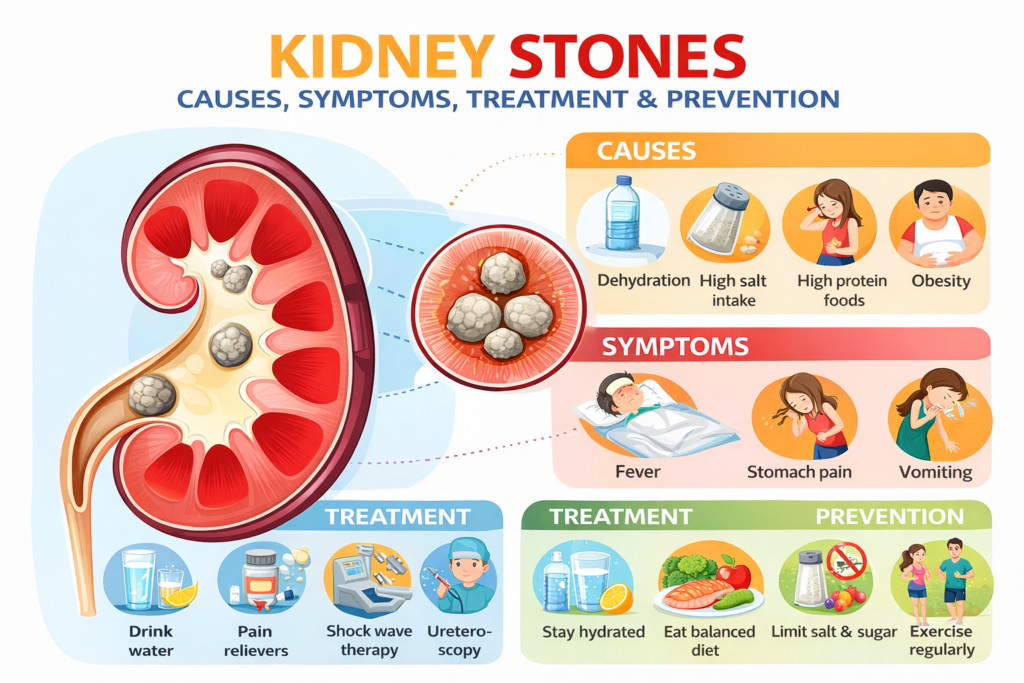
Kidney stones are hard mineral and salt deposits that form inside the kidneys. These stones develop when substances such as calcium, oxalate, and uric acid become concentrated in urine and crystallize over time. As these crystals grow, they can stick together and form solid masses known as kidney stones.
Kidney stones are common and can affect people of all ages. Some stones remain small and pass out of the body without causing much discomfort, while others grow large and cause severe pain, urinary problems, and complications.
What makes this dangerous is that many people do not realize they have them until they move through the urinary tract. The pain can be sudden, intense, and overwhelming.
This blog explains in detail, including their symptoms, causes, common rumors, scientific research, cure possibilities, treatment options, home remedies, prevention strategies, and frequently asked questions.
What Are Kidney Stones?
Kidney stones are solid masses formed from crystals that separate from urine and build up inside the kidneys. Normally, urine contains chemicals that prevent crystals from forming. But when these chemicals are out of balance, stones can develop.
It can vary in size—from tiny grains of sand to stone as large as a golf ball. Their size determines how painful and dangerous they can be.
Types
Different types of stones form for different reasons:
Calcium Stones
The most common type, usually made of calcium oxalate.
Uric Acid Stones
Form when urine is too acidic.
Struvite Stones
Develop due to infections in the urinary tract.
Cystine Stones
Caused by a rare genetic disorder.
Symptoms
Small stones may not cause symptoms. Larger stones can cause severe and sudden pain.
Common Symptoms
- Sharp pain in the lower back or side
- Pain that spreads to the abdomen or groin
- Burning sensation while urinating
- Frequent urge to urinate
- Blood in urine
- Cloudy or foul-smelling urine
- Nausea and vomiting
- Fever and chills (if infection is present)
Pain may come in waves and vary in intensity.
Causes
It develop when urine becomes concentrated, allowing minerals to crystallize.
Common Causes
- Not drinking enough water
- High salt intake
- Excessive protein consumption
- High oxalate foods
- Obesity
- Digestive disorders
- Family history
- Certain medications
- Recurrent urinary infections
Rumors and Myths
Myth 1: Kidney stones happen only to older people
False. They can occur at any age.
Myth 2: Only calcium causes kidney stones
False. There are many types of stones.
Myth 3: Drinking milk causes stones
False. Dietary calcium may actually help prevent certain stones.
Myth 4: Once you get a stone, you’ll never get one again
False. Recurrence is common without lifestyle changes.
Myth 5: Kidney stones always need surgery
False. Many stones pass naturally.
What Research Says
Research shows that dehydration is one of the biggest risk factors for it. Studies also confirm that high sodium intake increases calcium in urine, raising stone risk.
Modern medical research focuses on:
- Stone composition analysis
- Genetic factors
- Dietary influences
- Metabolic disorders
Early detection and personalized treatment plans significantly reduce recurrence.
Cure
There is no single permanent cure that guarantees it will never return. However, most can be:
- Dissolved (in specific cases)
- Passed naturally
- Removed through medical procedures
- Prevented from recurring
Long-term prevention is the closest thing to a “cure.”
Treatment Options
Treatment depends on the stone’s size, type, and location.
For Small Stones
- Drinking lots of water
- Pain relievers
- Medications to relax urinary muscles
For Larger Stones
- Shock wave therapy
- Laser treatment
- Ureteroscopy
- Surgical removal
If Infection Is Present
- Antibiotics
- Hospital monitoring
Home Remedies for Kidney Stones
Home remedies can help prevent stones and support small stone passage.
Helpful Natural Practices
- Drink plenty of water
- Add lemon or citrus to water
- Reduce salt intake
- Eat balanced meals
- Avoid excessive animal protein
Supportive Foods
- Fruits and vegetables
- Whole grains
- Hydrating foods
- Fiber-rich foods
These remedies support kidney health but should not replace medical care.
Prevention of Kidney Stones
Prevention is the most effective strategy.
- Drink 2–3 liters of water daily
- Limit salt intake
- Eat balanced calcium
- Reduce sugary drinks
- Maintain healthy weight
- Avoid excessive supplements
- Follow doctor-advised diet plans
Possible Complications
If untreated, it can lead to:
- Urinary infections
- Kidney damage
- Blocked urine flow
- Recurrent stones
- Chronic pain
FAQs
Can kidney stones go away on their own?
Yes, small stones can pass naturally.
Are kidney stones life-threatening?
Rarely, but complications can be serious.
Can stress cause kidney stones?
Indirectly, through dehydration and poor habits.
Do kidney stones always cause pain?
No, some remain silent.
Can kidney stones return?
Yes, recurrence is common without prevention.
Conclusion
Kidney stones are painful but highly manageable. With early detection, proper treatment, and consistent lifestyle changes, most people recover fully and prevent future stones. Hydration, diet, and awareness are your strongest defenses.