|
Getting your Trinity Audio player ready...
|
Space tourism has transitioned from fantasy to one of the most revolutionary industries of the 21st century. For decades, space was a restricted domain — only astronauts with years of training could break Earth’s boundaries. Today, private companies are making space accessible to ordinary civilians willing to explore the final frontier.
This industry is more than an adventure sport. It is redefining travel, accelerating technological progress, and shaping humanity’s path toward a multi-planet future.
How Space Tourism Began
The idea took off when private companies realized two things:
- Space exploration shouldn’t be limited to government agencies.
- Reusable rockets could make space travel commercially viable.
The creation of reusable spacecraft changed the economics of space forever. What once cost billions per trip now costs a fraction, enabling the birth of the space tourism industry.
Types of Space Tourism
Space tourism is evolving into multiple categories:
1. Suborbital Flights
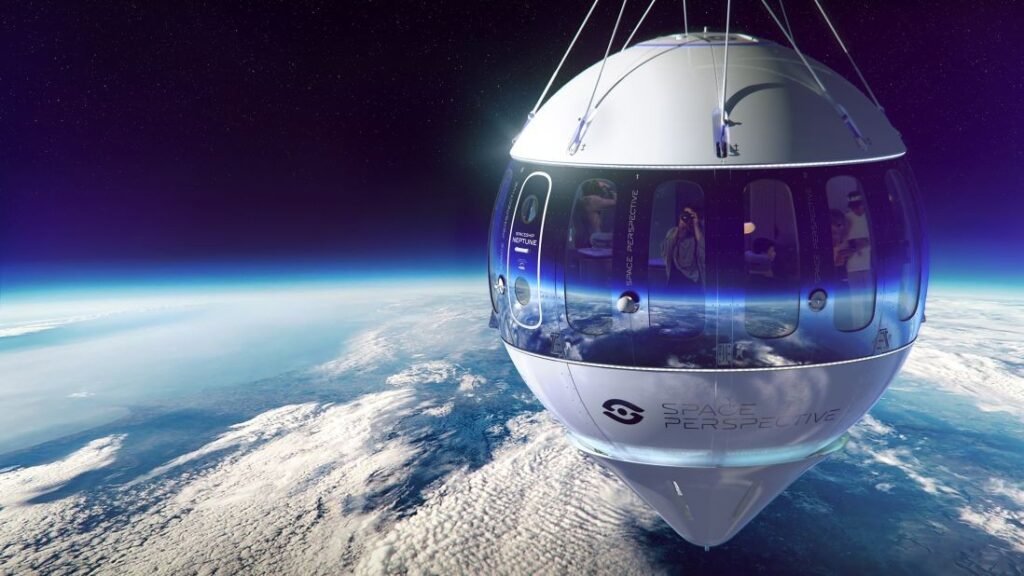
Passengers reach the edge of space, experience weightlessness, and view Earth’s curvature.
2. Orbital Trips
A full orbit around the planet — far more advanced and immersive.
3. Lunar Tourism (Future)
Concepts of Moon flybys and lunar surface visits are already in development.
4. Space Hotels (Concept Stage)
Companies are designing orbital resorts with 360-degree Earth views.
Why Space Tourism Matters
1. Human Curiosity
Humans are natural explorers. Space is the ultimate frontier.
2. Commercial Innovation
Space tourism drives innovation in:
- Rocket engineering
- Safety systems
- Propulsion technology
- Space habitats
These advancements will support future missions to Mars and beyond.
3. Economic Impact
New industries are emerging:
- Spaceports
- Astronaut training academies
- Luxury spacecraft design
- Space entertainment and research
The space economy is projected to grow massively in the coming decades.
The Experience: What Tourists Actually Get
A civilian spaceflight includes:
- Pre-flight training
- Safety and microgravity preparation
- Launch in a specialized spacecraft
- Minutes or hours of zero gravity
- Unmatched views of Earth from space
It’s a life-changing emotional and sensory experience. Seeing Earth from above creates a new understanding of environmental unity and human fragility.
Space Tourism Inspiring the Next Generation
The industry is reigniting global interest in:
- Astronomy
- Physics
- Aerospace engineering
- Robotics
- Planetary science
Children watching today’s rocket launches may become tomorrow’s space architects.
Challenges and Criticisms
Every new technology has resistance, and space tourism is no exception.
Major concerns include:
- High cost
- Safety risks
- Environmental impact
- Limited accessibility
But history shows that cost and exclusivity eventually fade. Early air travel was also expensive and elite. Today, it’s normal. Space tourism will follow the same curve.
The Future of Space Travel
The upcoming decades will be game-changing.
What’s coming next:
- Space hotels for multi-day stays
- Lunar tourism packages
- Mars orbit tours
- Space sports and entertainment
- Scientific missions funded by tourism revenue
The industry will evolve from short trips to full-scale space vacations.
Conclusion
Space tourism represents humanity’s next step forward. It is a bold declaration that Earth is not our limit. As technology improves and costs drop, space travel will shift from a luxury experience to a global industry — one that inspires innovation, accelerates exploration, and pushes humanity toward its future among the stars.
The rise of space tourism is not just about travel. It’s about expanding our understanding of what is possible.