|
Getting your Trinity Audio player ready...
|
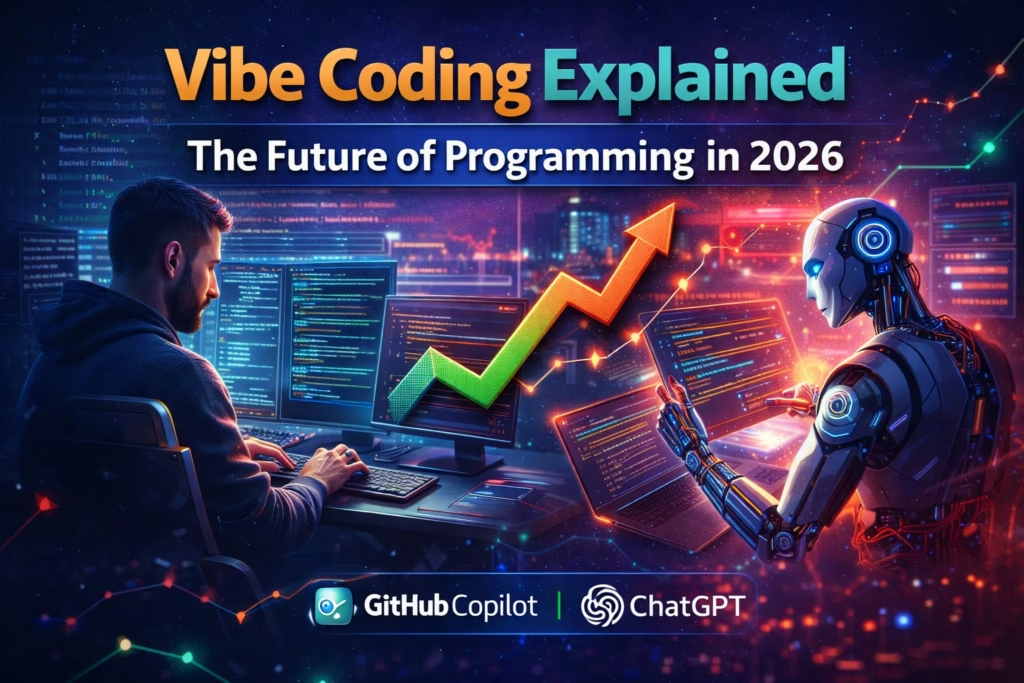
Coding is no longer just about syntax, logic, and debugging.
Something new is emerging — and it’s changing how developers think, build, and ship products.
It’s called Vibe Coding.
At first, the term sounds vague. Almost like a buzzword. But look closer, and you’ll realize it represents a major shift in how software is created in 2026.
Developers are no longer just writing code — they’re feeling their way through it, using AI, intuition, and rapid experimentation to build faster than ever before.
So, what exactly is vibe coding? And why is everyone suddenly talking about it?
Let’s break it down.
What is Vibe Coding?
Vibe Coding is a modern development approach where programmers rely on:
- Intuition
- Flow state
- AI-assisted tools
- Rapid iteration
Instead of strictly planning every line, developers build dynamically, adjusting as they go.
It’s less about rigid structure — and more about momentum and creativity.
Think of it like this:
Traditional coding = Engineering
Vibe coding = Engineering + Creativity + AI acceleration
Why Vibe Coding is Trending Right Now
This isn’t happening randomly.
1. Rise of AI Coding Tools
Tools like:
- GitHub Copilot
- ChatGPT
- Codeium
…have completely changed development workflows.
Developers don’t need to memorize everything anymore. They can generate, test, and refine code instantly.
2. Faster Product Cycles
Startups and creators don’t have time for slow development.
They want:
- MVPs in days
- Features shipped instantly
- Constant iteration
Vibe coding supports this speed.
3. Shift from Perfection to Execution
Earlier, developers focused on:
- Clean architecture
- Perfect code
- Long planning cycles
Now?
Execution matters more than perfection.
Ship fast. Improve later.
How Vibe Coding Actually Works
Let’s be real — vibe coding isn’t chaos. It still follows a pattern.
Step 1: Start with an Idea
No overthinking. Just begin.
Step 2: Use AI to Generate Code
Instead of writing everything manually, developers:
- Prompt AI
- Generate snippets
- Modify instantly
Step 3: Iterate in Real-Time
Build → Test → Fix → Repeat
This loop happens rapidly.
Step 4: Trust Your Flow
Developers rely on momentum instead of rigid planning.
Benefits of Vibe Coding
1. Massive Speed Boost
You can build in hours what used to take days.
2. Lower Mental Load
You don’t need to remember every syntax detail.
3. More Creativity
Developers experiment more and explore ideas freely.
4. Beginner-Friendly
Even non-developers can build projects using AI assistance.
The Dark Side of Vibe Coding
Let’s not pretend it’s perfect.
1. Messy Codebases
Fast coding often leads to poor structure.
2. Over-Reliance on AI
Developers may lose deep technical understanding.
3. Debugging Nightmares
Quick builds can create hidden bugs.
4. Scalability Issues
What works fast may not work long-term.
Vibe Coding vs Traditional Coding
| Feature | Traditional Coding | Vibe Coding |
|---|---|---|
| Approach | Structured | Flexible |
| Speed | Slow | Fast |
| Planning | High | Minimal |
| Tools | Manual | AI-driven |
| Creativity | Limited | High |
Who Should Use Vibe Coding?
✅ Best for:
- Startups
- Indie developers
- Content creators
- Hackathon participants
❌ Not ideal for:
- Enterprise systems
- Critical infrastructure
- Security-heavy applications
Is Vibe Coding the Future?
Short answer: Yes — but not alone.
The smartest developers in 2026 are not choosing between:
- Traditional coding
- Vibe coding
They’re combining both.
Hybrid Approach = The Real Future
- Use vibe coding for speed
- Use traditional coding for structure
This balance is where the industry is heading.
Real-World Impact of Vibe Coding
We’re already seeing:
- Faster startup launches
- Solo developers building full products
- AI-powered development workflows
The barrier to entry is collapsing.
Anyone with an idea can build.
Conclusion
Vibe coding isn’t just a trend — it’s a shift in mindset.
It challenges the old way of thinking that coding must be slow, rigid, and perfect.
Instead, it promotes:
- Speed
- Creativity
- Experimentation
But here’s the truth — if you rely only on vibes without discipline, you’ll crash.
The real power lies in balance.
Use the vibe. But don’t lose the fundamentals.
FAQs
1. What is vibe coding in simple terms?
It’s a fast, AI-assisted coding style focused on flow, speed, and creativity.
2. Is vibe coding good for beginners?
Yes, it makes coding more accessible with AI support.
3. Does vibe coding replace traditional programming?
No, it complements it. Both are needed.
4. What tools are used in vibe coding?
AI tools like ChatGPT, GitHub Copilot, and Codeium.
5. Is vibe coding safe for production apps?
Not always — it needs proper structure and testing before deployment.