|
Getting your Trinity Audio player ready...
|
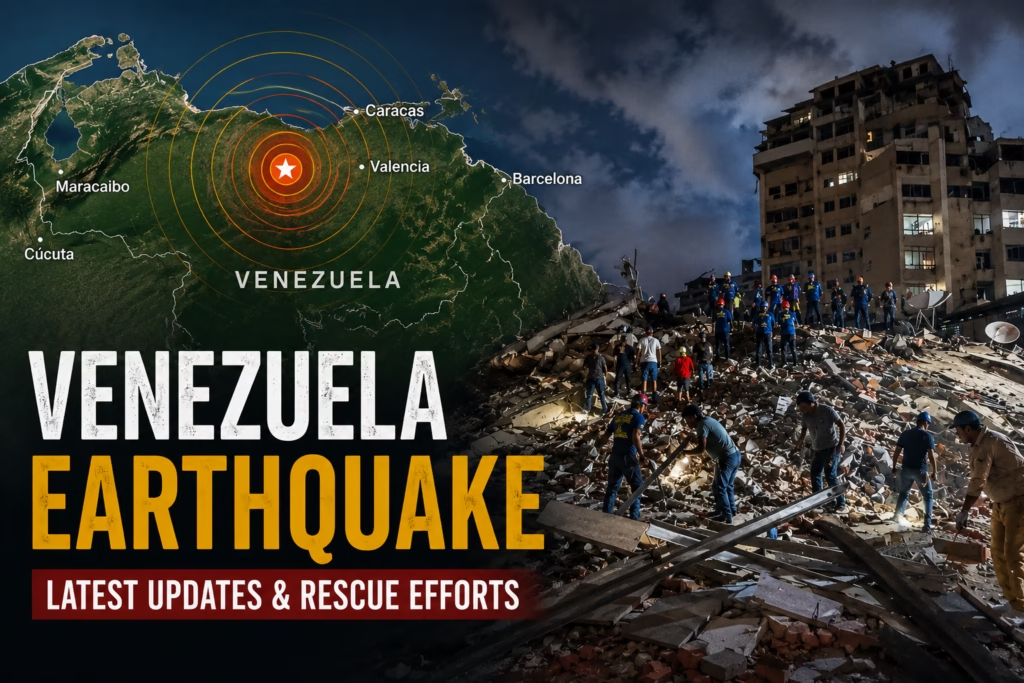
Venezuela is facing one of the worst natural disasters in its modern history after two powerful earthquakes struck the country on 24 June, causing widespread destruction, thousands of casualties, and a massive humanitarian crisis. What began as a major seismic event quickly turned into a national tragedy as buildings collapsed, roads cracked, power systems failed, and tens of thousands of people were left homeless. Rescue teams from around the world are still searching through the rubble as hopes of finding more survivors continue to fade.
When Did the Venezuela Earthquake Happen?
The disaster occurred on the evening of 24 June when two major earthquakes struck within less than a minute of each other.
According to the United States Geological Survey (USGS), the first earthquake measured 7.2 magnitude and was followed approximately 39 seconds later by a stronger 7.5 magnitude quake. The epicentre was located around 160 kilometres west of Caracas, Venezuela’s capital city. The event was so powerful that tremors were felt in neighbouring countries including Colombia and parts of northern Brazil.
Why Were These Earthquakes So Destructive?
Experts describe the event as a “seismic doublet”, a rare phenomenon where two powerful earthquakes occur almost back-to-back along the same fault system.
Because the second earthquake struck before structures weakened by the first tremor could stabilise, damage was dramatically amplified. Buildings that survived the first quake often collapsed during the second. This combination significantly increased casualties and destruction.
Areas Most Affected
The hardest-hit regions include:
- Caracas
- La Guaira
- Falcon State
- Morón region
- Several northern coastal communities
Among all affected areas, La Guaira suffered the most severe damage. Hundreds of buildings collapsed, roads were blocked, communication systems failed, and thousands of residents were trapped beneath rubble. The region’s proximity to the coast and concentration of residential buildings contributed to the scale of devastation.
Death Toll and Casualties
The number of casualties has continued to rise as rescue workers gain access to damaged areas.
Latest reports indicate:
- Nearly 1,500 deaths
- More than 3,150 injured
- Over 12,700 displaced people
- Tens of thousands reported missing or unaccounted for
- Hundreds of collapsed buildings
Officials believe the final death toll could rise further as many areas remain inaccessible and numerous people are still believed to be trapped under debris. Some predictive models have suggested that total casualties could increase significantly as recovery operations continue.
The First 24 Hours
Immediately after the earthquakes, emergency services struggled to respond due to damaged infrastructure and communication breakdowns.
Several apartment complexes, office buildings, schools, and commercial structures collapsed. Hospitals quickly became overwhelmed with injured residents, while emergency shelters were established to accommodate those who lost their homes.
The government declared a state of emergency, suspended classes, and mobilised military and rescue resources to affected regions.
Rescue Operations
Search-and-rescue teams from Venezuela and multiple international partners launched one of the largest rescue efforts in the country’s history.
Rescuers have used:
- Thermal imaging equipment
- Search cameras
- Rescue dogs
- Heavy excavation machinery
- Medical response teams
Thousands of emergency personnel have been deployed across the disaster zone. Despite challenging conditions, dozens of people have been pulled alive from collapsed buildings days after the earthquakes struck.
Miraculous Survivors
Several remarkable rescue stories have emerged amid the tragedy.
One of the most emotional rescues involved a father and son who were found alive after spending four days trapped beneath a collapsed structure in La Guaira. International rescue teams worked for more than 12 hours to carefully remove debris and free them.
Another widely reported rescue involved a mother and her nine-month-old baby, who survived for days beneath rubble before being safely extracted. These rescues have provided hope to families still searching for missing loved ones.
Aftershocks Continue
The situation remains dangerous because of ongoing aftershocks.
More than 190 aftershocks have reportedly been recorded since the initial earthquakes. Some of these tremors have been strong enough to create additional structural damage and force temporary suspension of rescue operations.
Authorities continue to warn residents against returning to damaged buildings until safety inspections are completed.
International Aid Arrives
The scale of the disaster prompted a rapid international response.
Countries and organisations providing assistance include:
- United States
- India
- Mexico
- Spain
- Canada
- Brazil
- United Nations agencies
International support includes:
- Search-and-rescue teams
- Medical personnel
- Emergency shelters
- Food supplies
- Water purification systems
- Mobile hospitals
India launched Operation Amistad, sending medical teams, field hospitals, medicines, and humanitarian relief supplies to assist recovery efforts.
Why Is Venezuela Vulnerable to Earthquakes?
Venezuela lies along several active fault systems associated with the interaction of the Caribbean and South American tectonic plates.
According to geological experts:
- Around 80% of Venezuela’s population lives near active fault zones.
- The country has a long history of seismic activity.
- Many older buildings were not designed to withstand earthquakes of this magnitude.
- Urban density in northern cities increases vulnerability.
The June earthquake sequence is considered among the strongest seismic events to affect Venezuela in more than a century.
Humanitarian Challenges
Beyond the immediate destruction, the disaster has created a major humanitarian challenge.
Relief agencies report:
- Overcrowded emergency shelters
- Limited access to clean water
- Shortages of medical supplies
- Disrupted electricity services
- Thousands of families searching for missing relatives
Many survivors have lost homes, businesses, and personal belongings. The recovery process is expected to take months, if not years.
What Happens Next?
The focus now remains on:
- Finding survivors.
- Recovering victims.
- Providing emergency shelter.
- Restoring infrastructure.
- Assessing damaged buildings.
- Rebuilding affected communities.
Experts believe the reconstruction effort will be one of the largest in Venezuela’s recent history, requiring substantial international support and long-term investment.
Conclusion
The Venezuela earthquake has become one of the most devastating disasters in Latin America in recent years. The twin earthquakes of magnitude 7.2 and 7.5 struck with extraordinary force, causing widespread destruction across Caracas, La Guaira, and surrounding regions. Nearly 1,500 people have lost their lives, thousands have been injured, and countless families remain displaced.
While rescue teams continue their work and international aid flows into the country, the tragedy serves as a reminder of the immense power of nature and the importance of disaster preparedness. Even amid the devastation, stories of survival, courage, and global solidarity continue to offer hope to those affected.
FAQs
How strong was the Venezuela earthquake?
Two earthquakes struck Venezuela, measuring 7.2 and 7.5 magnitude respectively.
When did the earthquake occur?
The twin earthquakes struck on 24 June and occurred less than a minute apart.
Which area was worst affected?
La Guaira experienced the most severe destruction, with hundreds of collapsed buildings and significant loss of life.
How many people have died?
The death toll has risen to nearly 1,500, with thousands more injured and many still missing.
Are rescue operations still continuing?
Yes. Venezuelan and international teams remain on the ground searching for survivors and providing humanitarian as