
|
Getting your Trinity Audio player ready...
|
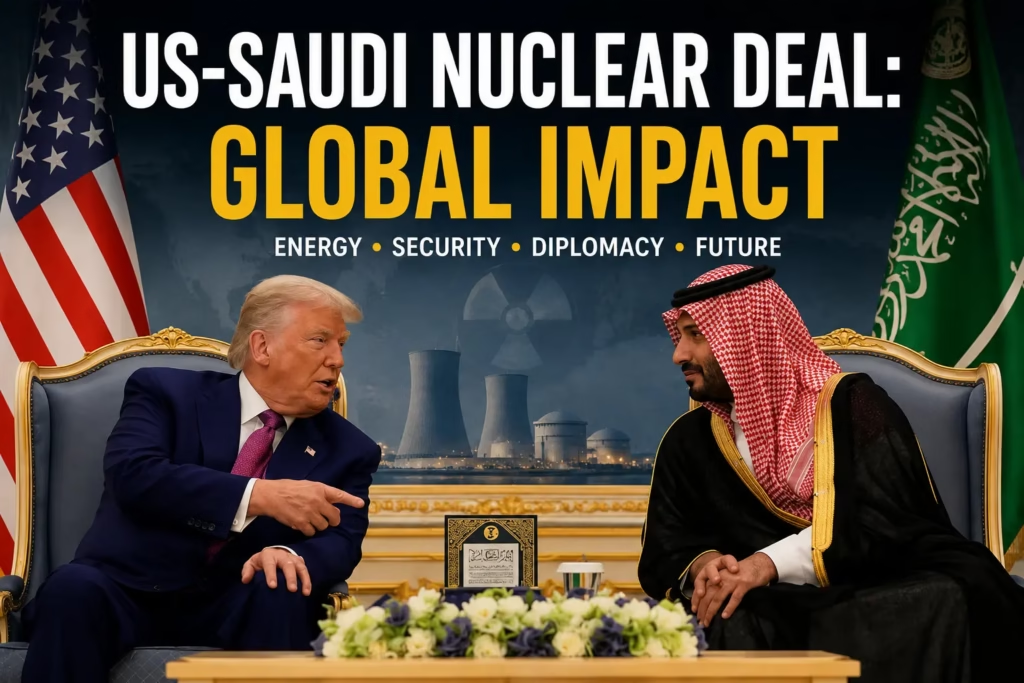
The let’s proposed the US-Saudi Nuclear Deal has provoked heated debates among international communities in 2026. While some believe the deal offers a great opportunity to enhance the energy cooperation between the US and Saudi Arabia, there are other who worry that the proposed deal implies the shift of power position in Middle East and the potential problems from the nuclear safety and security.
Nuclear energy is not new in itself. A number of countries around the world use it to produce electricity, trying to avoid reliance on fossil fuels. When the nuclear agreements are with countries of strategic significance, such as Saudi Arabia, then the negotiations are about more than just electricity.
Here you can read about the target of the United States and Saudi Arabia making an agreement about peace and security that is described in an easy language. In this information you will know the reason why the US and the Saudi would want to get this agreement, the analysis of the advantages and risks of this peace and security,, and the possible consequences to the rest of the world and the Middle East.
What Is the US-Saudi Nuclear Deal?
US-Saudi Nuclear Deal-A planned US agreement to assist Saudi Arabia in establishing a nuclear energy development program
The sole aim is to try and make Saudi Arabia generate electricity by nuclear powered rather than totally depending on oil and natural gas.
The agreement may include:
- Nuclear technology sharing
- Reactor construction support
- Technical training
- Safety standards
- Nuclear fuel management
- Long-term cooperation in energy
The deal focuses on peaceful use of nuclear energy rather than military purposes.
Why Does Saudi Arabia Want Nuclear Energy?
Saudi Arabia is one of the world’s biggest oil producers, but it is also trying to diversify its economy under Vision 2030.
The country wants to:
- Produce clean electricity
- Reduce domestic oil consumption
- Meet rising electricity demand
- Support industrial growth
- Cut carbon emissions
- Prepare for a future beyond oil
Nuclear energy can provide stable electricity throughout the year, unlike solar or wind power, which depend on weather conditions.
Why Is the United States Interested?
The United States has several strategic reasons to support Saudi Arabia.
Strengthening Relations
Saudi Arabia remains an important partner in the Middle East. A nuclear agreement could strengthen diplomatic ties between both countries.
Countering China’s Influence
China has been increasing its investments and influence in the Gulf region. If the US does not participate, Saudi Arabia could seek nuclear cooperation from China or Russia.
Business Opportunities
American companies could receive contracts worth billions of dollars for building reactors, supplying equipment, and providing technical expertise.
Maintaining Regional Influence
The agreement allows Washington to remain an important strategic partner in one of the world’s most sensitive regions.
Why Is the Deal Controversial?
Although the deal promises economic and energy benefits, it has also created serious concerns worldwide.
Nuclear Weapon Concerns
One of the biggest fears is that nuclear technology could eventually be used for weapons production.
Even if the agreement is for peaceful purposes, experts worry that uranium enrichment technology could someday be diverted toward military use.
Regional Arms Race
Countries like Iran, Turkey, and Egypt may decide to expand their own nuclear programs if Saudi Arabia develops advanced nuclear capabilities.
This could increase tensions across the Middle East.
International Safeguards
Many experts believe strict inspections and monitoring must remain in place to ensure nuclear material is used only for civilian purposes.
How Could It Affect the Middle East?
The Middle East is already one of the world’s most politically sensitive regions.
A major nuclear agreement involving Saudi Arabia could affect:
- Regional alliances
- Military strategies
- Diplomatic relations
- Energy markets
- Security cooperation
Countries will closely monitor every stage of the agreement.
Possible Benefits of the Agreement
If implemented properly, the deal could offer several advantages.
Cleaner Energy
Nuclear power produces electricity with very low carbon emissions.
This supports global climate goals.
Energy Security
Saudi Arabia can reduce dependence on burning oil for electricity and instead export more crude oil.
Economic Growth
Construction of nuclear plants creates thousands of skilled jobs.
It also attracts investments in engineering, technology, and education.
Scientific Development
The agreement could help Saudi Arabia develop expertise in advanced science and engineering.
Risks That Cannot Be Ignored
Despite the advantages, several risks remain.
Nuclear Proliferation
More countries possessing sensitive nuclear technology could increase long-term security challenges.
Political Instability
Future political changes may affect how nuclear technology is managed.
Security Threats
Nuclear facilities could become targets during regional conflicts.
Environmental Risks
Although modern reactors are safer than older designs, accidents can never be completely ruled out.
Impact on Global Energy Markets
The agreement may not immediately change global oil prices.
However, over time:
- Saudi Arabia could use less oil for domestic electricity.
- More oil may become available for export.
- Global energy markets could become more stable.
- Nuclear energy may become a larger part of Saudi Arabia’s long-term energy mix.
Impact on International Diplomacy
The deal could influence relationships among major global powers.
United States
The agreement strengthens American influence in the Gulf.
China
China may lose an opportunity to become Saudi Arabia’s primary nuclear partner.
Russia
Russia has also been expanding its nuclear exports globally.
The agreement could increase competition between major powers.
Europe
European countries are likely to focus on ensuring strict nuclear safety and international monitoring.
What Does International Law Say?
Peaceful nuclear cooperation is allowed under international agreements.
However, countries are generally expected to follow safeguards monitored by international organizations to ensure nuclear materials are not diverted for military purposes.
Strong verification measures are considered essential for maintaining global confidence.
Could This Increase Tensions with Iran?
Iran will likely watch the agreement very carefully.
Since Iran already has a controversial nuclear program, any advanced nuclear cooperation with Saudi Arabia could increase regional mistrust.
Some experts believe both countries may become more competitive in strategic planning.
Others argue that transparent international safeguards could reduce misunderstandings.
Environmental Perspective
Supporters say nuclear energy helps reduce greenhouse gas emissions.
Critics point out challenges such as:
- Radioactive waste management
- High construction costs
- Long project timelines
- Safe disposal of spent nuclear fuel
Both sides agree that strict safety standards are essential.
How Could the Global Economy Benefit?
If the agreement moves forward successfully:
- Engineering industries may grow.
- High-tech manufacturing could increase.
- Skilled employment opportunities may expand.
- International investment may rise.
- Energy infrastructure projects could receive significant funding.
What Happens Next?
The agreement still requires detailed negotiations and final approvals.
Important issues include:
- Nuclear fuel arrangements
- International inspections
- Technology transfer rules
- Safety regulations
- Long-term monitoring
The final structure of the agreement will determine how the international community responds.
Why Is the World Paying Close Attention?
Few agreements combine energy, diplomacy, economics, and security as closely as the US-Saudi Nuclear Deal.
Its outcome could influence:
- Middle East stability
- Global energy markets
- Nuclear non-proliferation efforts
- International diplomacy
- Relations among the US, China, Russia, and Gulf nations
Because of these factors, governments, analysts, and investors across the world are following every development closely.
Conclusion
The US-Saudi Nuclear Deal is not simply an energy deal. This is a gamble on a new strategic direction that will determine world politics in the coming decades.
If stronger safeguards, openness and international monitoring are implemented, this pact could could help the Saudi Arabia to expand its energy mix and intensify its collaboration with the U. S.
However, if this settlement is not progressed into areas like nuclear technology, regional governance and security, it could in turn generate new security risks in geopolitics.
While these negotiations continue, the rest of the world has a crucial role to play in whether this partnership becomes a blueprint for peaceful nuclear cooperation-or actually boosts the potential for regional tensions.
FAQs
What is the US-Saudi Nuclear Deal?
It is a proposed agreement under which the United States would support Saudi Arabia in developing a civilian nuclear energy program with cooperation on technology, training, and safety.
Why does Saudi Arabia want nuclear energy?
Saudi Arabia wants to diversify its energy sources, reduce dependence on oil for domestic electricity, support economic growth, and achieve its Vision 2030 goals.
Why is the deal controversial?
Critics worry about nuclear proliferation, regional security, and whether sensitive nuclear technology could eventually increase military risks if safeguards are weakened.
How could this deal affect the Middle East?
The agreement could reshape regional alliances, influence energy policies, affect relations with Iran, and encourage other countries to strengthen their own nuclear programs.
Will the US-Saudi Nuclear Deal impact global energy markets?
Over the long term, it could allow Saudi Arabia to export more oil while meeting more of its domestic electricity needs through nuclear power, potentially influencing global energy supply and market stability.