|
Getting your Trinity Audio player ready...
|
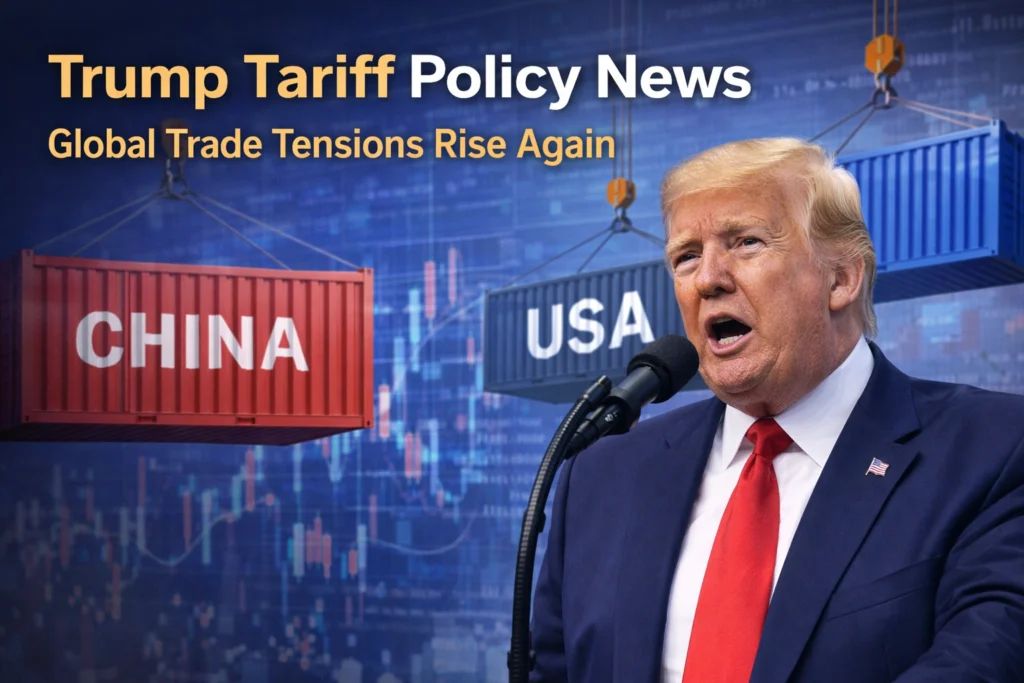
Global trade dynamics are once again under scrutiny as fresh developments around Donald Trump’s tariff policies dominate international economic headlines. The renewed focus on tariffs signals a possible return to aggressive protectionist trade measures that could reshape supply chains, disrupt global markets, and directly influence emerging economies like India. As geopolitical competition intensifies, the implications of Trump’s tariff-driven strategy extend far beyond the United States, affecting manufacturing, technology trade, and cross-border investments worldwide.
- The Return of Protectionist Trade Narratives
- Impact on Global Supply Chains
- Strategic Targeting of Key Industries
- Implications for India’s Trade and Export Economy
- Currency Markets and Investment Flows
- Geopolitical Signaling Through Tariffs
- Potential Ripple Effects on Global Inflation
- The Political Dimension of Tariff News
- Future Outlook: Trade Wars or Strategic Realignment?
The Return of Protectionist Trade Narratives
Donald Trump’s economic approach has long centered on the concept of economic nationalism. His renewed tariff rhetoric reflects a broader intention to prioritize domestic manufacturing, reduce trade deficits, and counter strategic rivals, particularly China. By proposing higher import duties on key sectors, Trump aims to create incentives for companies to relocate production back to the United States.
However, such measures rarely remain confined within national borders. Tariffs tend to trigger retaliatory duties, escalating trade tensions between major economies. Consequently, global trade stability becomes vulnerable, and multinational corporations must adapt rapidly to changing policy environments.
This renewed tariff focus also signals a deeper shift in global trade ideology. Free trade, once considered the default economic model, now faces increasing resistance as nations prioritize domestic industries, employment generation, and technological sovereignty.
Impact on Global Supply Chains
One of the most immediate consequences of tariff hikes is disruption in global supply chains. Over the last decade, manufacturing networks have evolved into highly interconnected ecosystems spread across Asia, Europe, and North America. Any sharp increase in tariffs forces companies to reconsider sourcing strategies, production hubs, and distribution routes.
For instance, higher tariffs on Chinese goods could accelerate the “China+1” strategy, where companies diversify manufacturing bases to countries like India, Vietnam, and Mexico. While this shift may create new opportunities for emerging economies, it also introduces uncertainty and short-term volatility.
Moreover, industries dependent on imported raw materials, such as electronics, automobiles, and renewable energy equipment, may face cost escalations. These rising costs often trickle down to consumers, leading to inflationary pressures in multiple economies simultaneously.
Strategic Targeting of Key Industries
Trump’s tariff discourse frequently targets strategic industries such as semiconductors, steel, pharmaceuticals, and electric vehicles. These sectors represent the backbone of future economic and technological dominance. Therefore, tariff policies are not merely economic tools; they serve as geopolitical instruments aimed at controlling critical supply chains.
The semiconductor sector, in particular, stands at the center of this policy shift. By imposing tariffs on imported chips or related components, the United States seeks to encourage domestic fabrication and reduce reliance on foreign technology ecosystems. However, such moves may also slow down global innovation cycles and raise production costs for tech companies worldwide.
Similarly, tariffs on green energy components could reshape the global renewable energy market. Countries investing heavily in solar and electric mobility infrastructure may experience cost volatility if trade barriers intensify.
Implications for India’s Trade and Export Economy
For India, Trump’s tariff-driven trade policies present both risks and opportunities. On one hand, higher tariffs on Chinese goods could open new export avenues for Indian manufacturers in textiles, pharmaceuticals, engineering goods, and IT hardware. India’s expanding manufacturing ecosystem could benefit from companies seeking alternative production hubs.
On the other hand, increased global trade tensions may dampen overall export demand, particularly if retaliatory tariffs slow global economic growth. India’s export-oriented sectors must remain agile, focusing on diversification of markets and strengthening domestic value chains to withstand potential shocks.
Additionally, India’s ongoing push for self-reliance through initiatives like “Make in India” aligns with the broader global trend toward localized production. Therefore, while tariff wars pose short-term risks, they also reinforce the strategic importance of domestic manufacturing capabilities.
Currency Markets and Investment Flows
Tariff announcements often trigger immediate reactions in currency markets and foreign investment flows. Protectionist policies tend to strengthen domestic currency sentiment in the short term but may lead to volatility as investors reassess global trade prospects.
For emerging markets like India, sudden shifts in global capital flows can impact stock markets, bond yields, and exchange rates. If tariff tensions escalate into prolonged trade disputes, foreign institutional investors may adopt a cautious approach, temporarily reducing exposure to export-dependent economies.
However, investors also seek stability and long-term growth opportunities. Countries demonstrating policy clarity, strong domestic demand, and robust digital infrastructure are likely to remain attractive investment destinations despite global trade uncertainties.
Geopolitical Signaling Through Tariffs
Beyond economics, tariffs increasingly function as geopolitical signaling tools. They communicate strategic intent, negotiate leverage, and influence diplomatic negotiations between rival powers. Trump’s tariff announcements often carry broader implications related to national security, technology competition, and global influence.
This trend reflects the merging of economic policy with strategic diplomacy. Trade decisions now shape alliances, defense cooperation, and technological collaboration agreements. Consequently, tariff policies must be analyzed not only through an economic lens but also through geopolitical foresight.
For India, maintaining a balanced foreign policy becomes crucial in such an environment. As major powers engage in trade confrontations, India must protect its economic interests while preserving strong diplomatic ties with all key partners.
Potential Ripple Effects on Global Inflation
Another critical aspect of tariff-driven trade tensions is their impact on global inflation trends. Import duties raise production costs, which businesses often pass on to consumers. Therefore, sustained tariff hikes could contribute to persistent inflation across major economies.
Central banks may respond by maintaining tighter monetary policies, affecting borrowing costs, investment cycles, and overall economic growth. For developing nations, this scenario presents a dual challenge: managing inflation while sustaining growth momentum in uncertain global conditions.
The Political Dimension of Tariff News
Tariff announcements are not purely economic decisions; they carry strong political undertones. They resonate with domestic voters concerned about job losses, industrial decline, and economic security. Trump’s tariff narrative appeals directly to these concerns, positioning protectionism as a solution to globalization-driven inequalities.
This political-economic strategy often influences election narratives, legislative debates, and policy direction. As a result, tariff news frequently becomes a central theme in political campaigns and policy discussions, shaping voter sentiment and economic expectations.
Future Outlook: Trade Wars or Strategic Realignment?
Looking ahead, the global economy faces two possible scenarios. The first involves an escalation of trade wars, characterized by reciprocal tariffs, supply chain fragmentation, and slower global growth. The second scenario points toward strategic realignment, where nations diversify trade partnerships and build resilient regional trade networks.
India stands at a strategic crossroads in this evolving landscape. By strengthening domestic manufacturing, expanding export competitiveness, and investing in technology-driven sectors, India can transform tariff disruptions into long-term strategic advantages.
Furthermore, proactive trade diplomacy, bilateral agreements, and participation in global supply chain alliances will determine how effectively India navigates the shifting global trade order.
Conclusion
The latest developments surrounding Trump’s tariff policies highlight a renewed era of economic protectionism with far-reaching global implications. From supply chain disruptions and inflationary pressures to geopolitical signaling and investment volatility, tariffs now shape the trajectory of international trade more than ever before.
For India and other emerging economies, the challenge lies in balancing opportunity with caution. While tariff tensions may open new export pathways, they also demand stronger domestic manufacturing ecosystems and diversified trade strategies.
Ultimately, Trump’s tariff-driven trade approach reflects a larger transformation in global economic thinking—one where strategic autonomy, national security, and technological leadership increasingly define trade policy decisions.