

|
Getting your Trinity Audio player ready...
|
The automobile industry has always been driven by innovation, but not every innovation looks normal. Over the years, manufacturers have created some truly unusual vehicles that challenge traditional car design.
These weird cars may look strange, but each one was built with a purpose — whether it was improving efficiency, reducing costs, or experimenting with futuristic technology.
In this blog, we explore the top 10 weirdest cars in the world, including their brand, year, price, and the reason behind their unique design.
1. Peel P50 (1962)
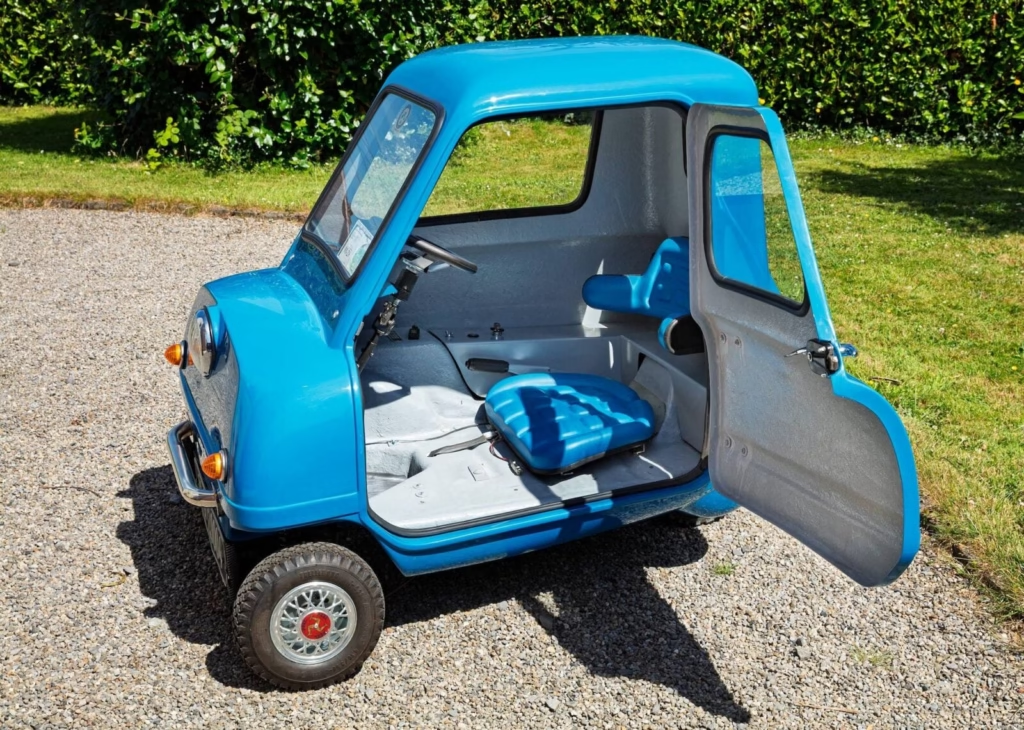
- Brand: Peel Engineering
- Other Cars by Brand: Peel Trident
- Year: 1962
- Price (Current Value): Around $100,000+ (collector market)
- Type: Microcar
The Peel P50 is officially the smallest production car ever made. It has one seat, one door, and no reverse gear.
Reason Behind the Design:
It was created as a compact city vehicle for short-distance travel in crowded urban areas, focusing on simplicity and space efficiency.
2. BMW Isetta (1955)
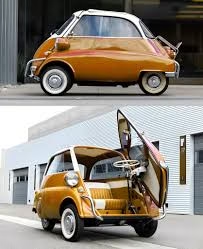
- Brand: BMW
- Other Cars by Brand: 3 Series, 5 Series, i8
- Year: 1955
- Price (Original): Budget-friendly microcar
- Type: Bubble Car
The BMW Isetta is known for its front-opening door and egg-shaped design.
Reason Behind the Design:
After World War II, there was a demand for cheap and fuel-efficient transportation, and the Isetta was designed to meet that need.
3. Peel Trident (1965)
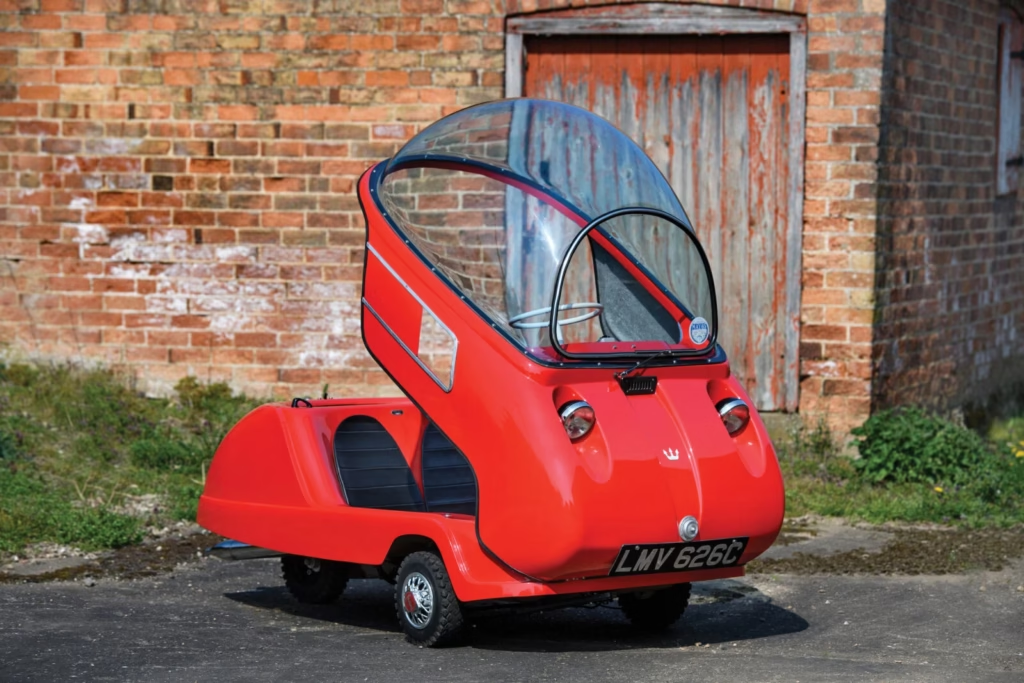
- Brand: Peel Engineering
- Other Cars by Brand: Peel P50
- Year: 1965
- Price: $15,000–$20,000 (modern replicas)
The Peel Trident features a transparent dome roof and a futuristic look.
Reason Behind the Design:
It was designed as a compact urban vehicle with a futuristic appearance and maximum visibility for drivers.
4. Aptera 2e (2010)
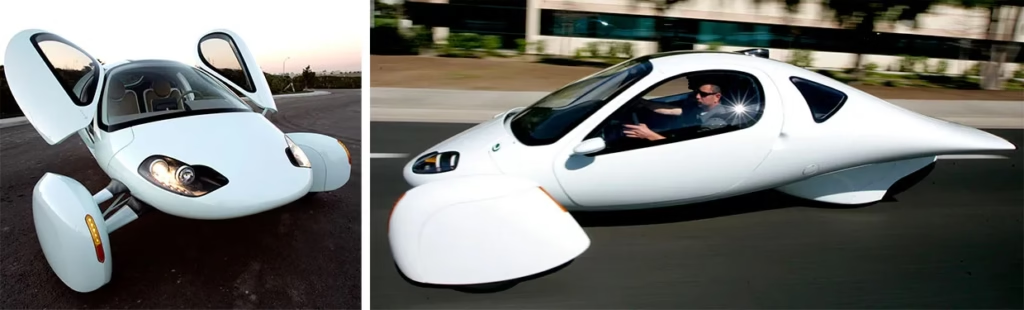
- Brand: Aptera Motors
- Other Cars by Brand: Aptera Solar EV
- Year: 2010
- Price: Estimated $25,000–$40,000
- Type: Electric 3-wheeler
The Aptera 2e has an aircraft-like body and only three wheels.
Reason Behind the Design:
It was built to achieve extremely high fuel efficiency by reducing air resistance through aerodynamic design.
5. Urbee 2 (2013)
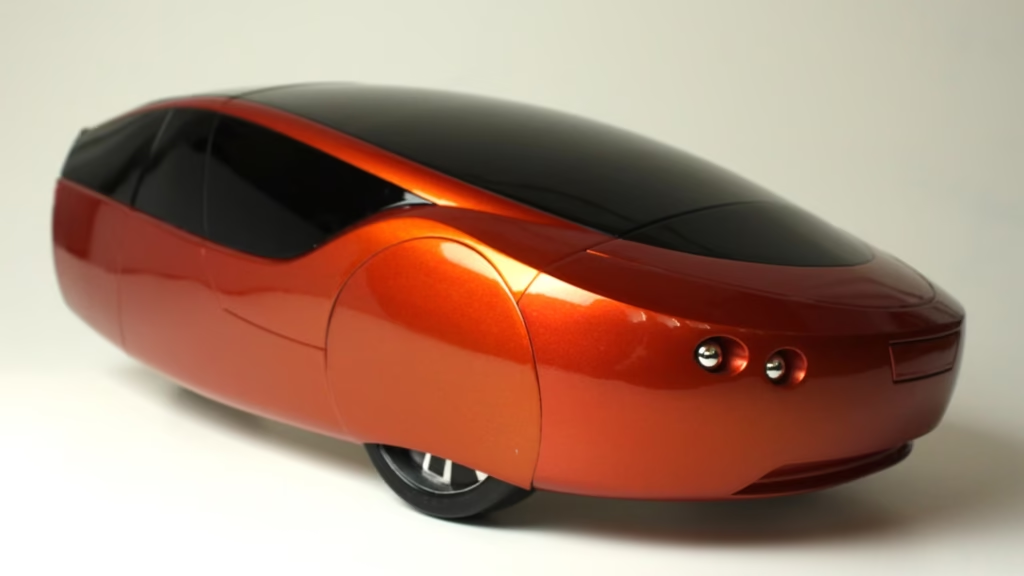
- Brand: KOR Ecologic
- Other Innovations: 3D printing technology
- Year: 2013
- Price: Prototype stage
- Type: Hybrid
Urbee 2 is the world’s first 3D-printed car.
Reason Behind the Design:
The goal was to create an environmentally friendly vehicle with minimal material waste and high efficiency.
6. Pininfarina B0/9 (1990)
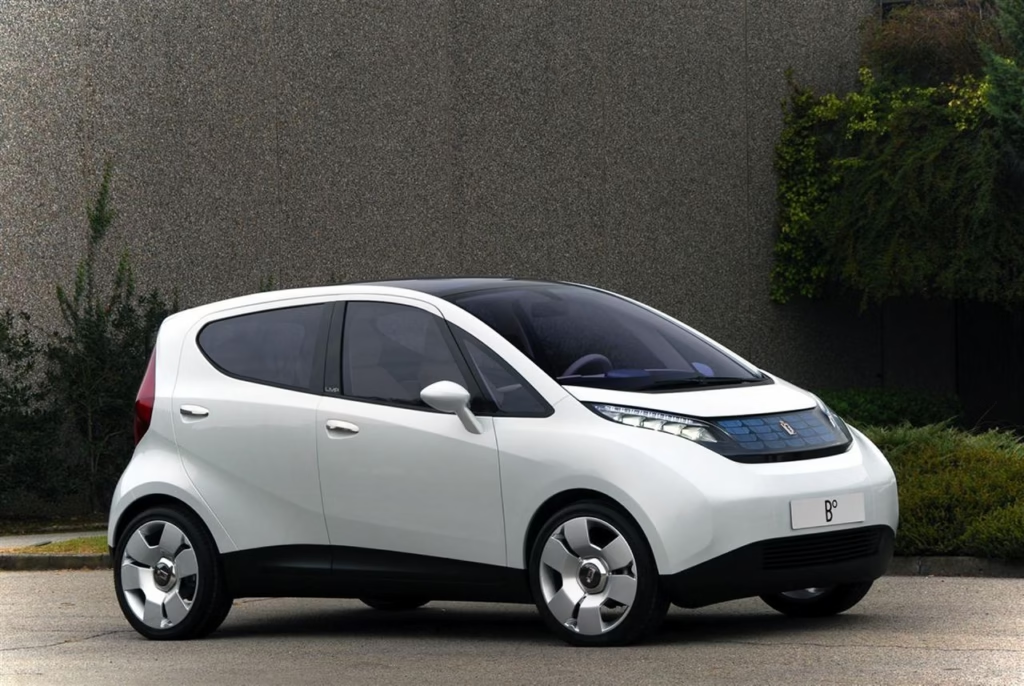
- Brand: Pininfarina
- Other Cars by Brand: Ferrari designs, Alfa Romeo concepts
- Year: 1990
- Type: Concept Car
This vehicle features a reverse trike design and a futuristic body.
Reason Behind the Design:
It was created to experiment with new aerodynamic structures and futuristic mobility concepts.
7. Stout Scarab (1936)
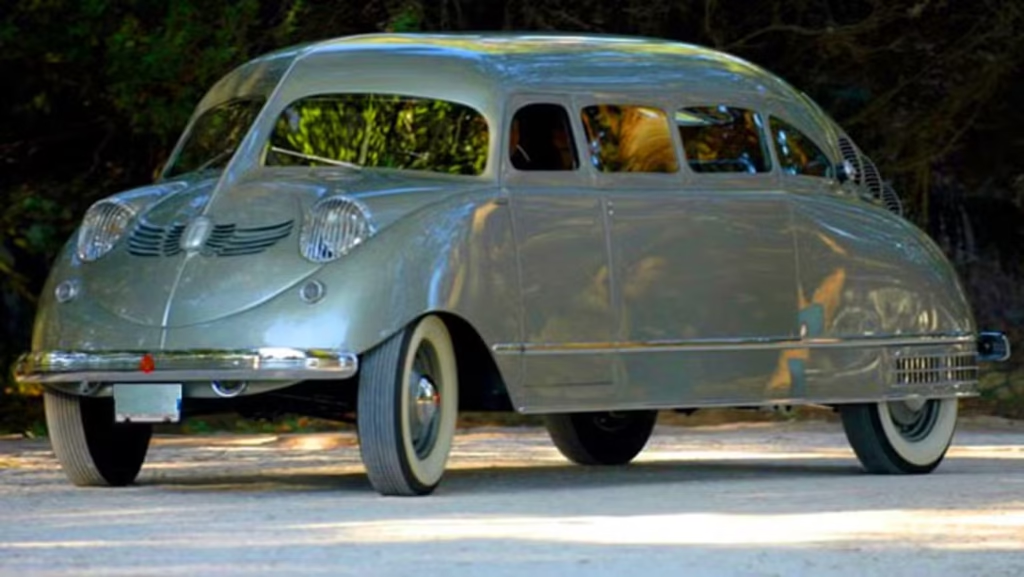
- Brand: Stout Engineering
- Other Work: Aviation engineering
- Year: 1936
- Price: Extremely expensive (limited production)
The Stout Scarab is considered one of the first minivan-style vehicles.
Reason Behind the Design:
It was designed to function as a mobile living space, offering comfort and flexibility rather than traditional car seating.
8. Reliant Robin (1973)
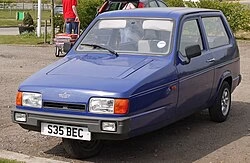
- Brand: Reliant
- Other Cars by Brand: Reliant Regal
- Year: 1973
- Price: Budget-friendly
The Reliant Robin is a three-wheeled car known for its unusual balance.
Reason Behind the Design:
It was classified as a motorcycle, which reduced taxes and made it more affordable for buyers.
9. Messerschmitt KR200 (1955)
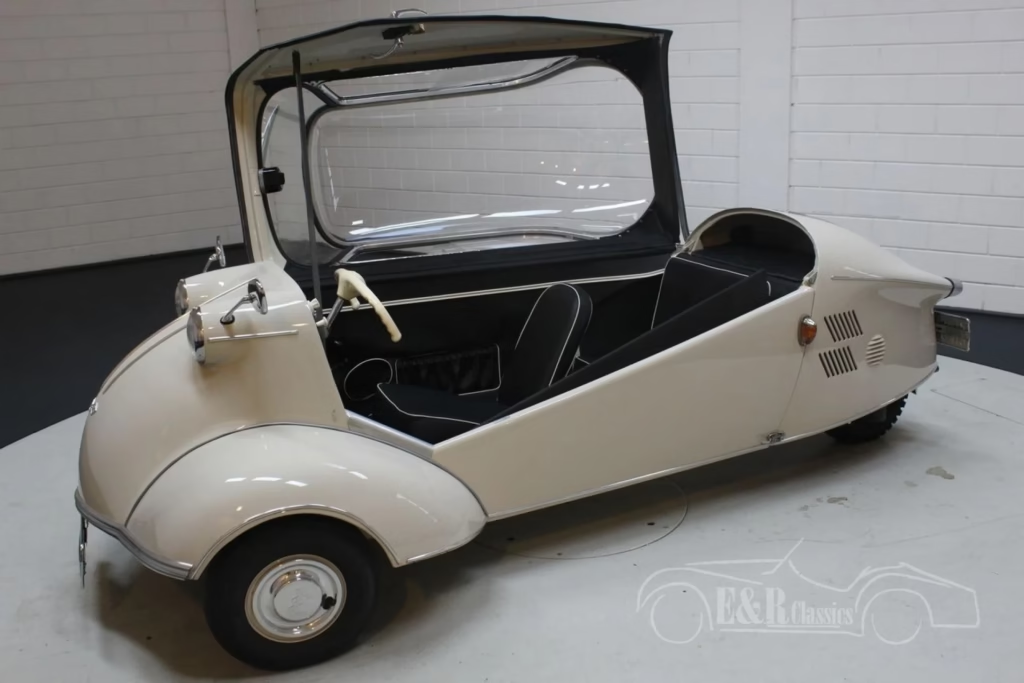
- Brand: Messerschmitt
- Other Products: Aircraft
- Year: 1955
- Price: Affordable microcar
The KR200 features a cockpit-style canopy similar to fighter jets.
Reason Behind the Design:
After World War II, aircraft manufacturers shifted to car production and used aviation design elements in their vehicles.
10. Volkswagen Aqua (2013)
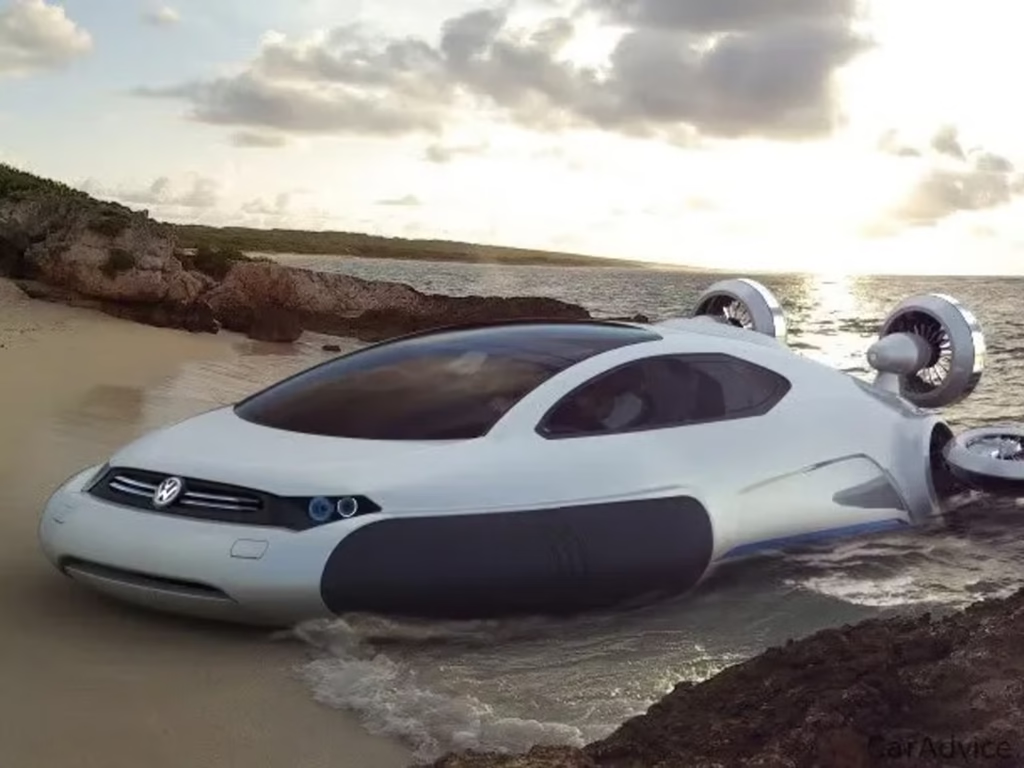
- Brand: Volkswagen
- Other Cars by Brand: Golf, Passat, Beetle
- Year: 2013
- Type: Concept Vehicle
The Volkswagen Aqua is an amphibious car that can travel on both land and water.
Reason Behind the Design:
It was developed to explore future transportation solutions for extreme environments and versatile mobility.
Why Weird Cars Exist
Weird cars are not just experiments. They serve important purposes such as:
- Testing new automotive technologies
- Improving fuel efficiency
- Solving urban transportation problems
- Exploring future mobility concepts
Many modern features in today’s cars originated from these unconventional designs.
Final Thoughts
The automotive industry evolves through experimentation, and weird cars play a crucial role in that process. While many of these vehicles never became mainstream, they pushed the boundaries of design and engineering.
From ultra-small city cars to futuristic amphibious vehicles, these creations prove that innovation often begins with ideas that seem unusual at first.
In many cases, what looks weird today becomes normal tomorrow.