|
Getting your Trinity Audio player ready...
|
Meta has just launched its new smart glasses with display and AI abilities, marking a big leap in wearable tech. As an SEO writer, I believe this could be a hot topic for tech lovers, early adopters, and everyday users in India. In this blog, I’ll explain what these smart glasses are, their features, price, pros and cons, and what this means for the future all in simple words.
What Has Meta Announced?
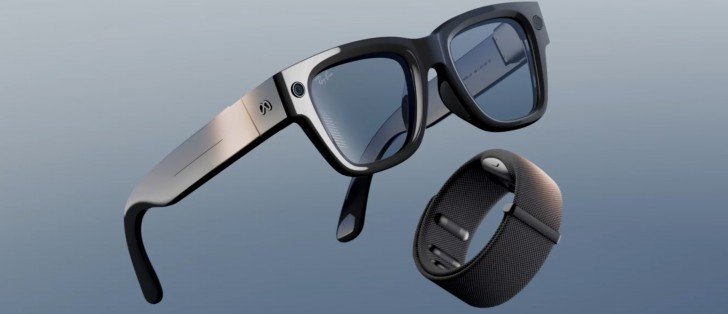
At Meta’s annual hardware and developer conference, CEO Mark Zuckerberg introduced the new smart glasses. These glasses are not just for style—they have built-in display and AI features and are controlled by a wrist strap called the Neural Band. Instead of tapping or touching a screen, you can make small hand movements, thanks to the Neural Band, to control functions. The set, which includes the glasses and the Neural Band, will be available for around 799 US dollars, and Meta says they will go on sale from 30th September 2025.
Key Features: What These Glasses Can Do
Built-in Display and AI Assistant
The glasses can see and hear your surroundings with a camera and speakers and use AI to help you in daily tasks.
Conversation Focus
This is one of the most interesting features. It can amplify the voice of someone you are talking to, while reducing background noise. This will be useful in crowded places like markets or railway stations.
Photos, Videos and Music
You can take photos, record videos, and play music. But note that you need your phone connected for uploading media.
Redesigned Hardware, Audio and Camera Improvements
Meta’s earlier versions had only basic photo and video recording functions. The new version is redesigned from the ground up with better camera and audio, along with AI tools built in.
Price and Availability
The glasses with the Neural Band are priced at around 799 US dollars. They will be available for purchase starting from 30th September 2025. Meta has made it clear that these are not just prototypes but are ready for consumers.
Pros and Cons: What’s Good and What Needs Improvement
Pros
- Hands-free control using gestures and the Neural Band makes interaction natural.
- AI features like conversation focus are helpful in noisy environments.
- Redesigned audio and camera provide better quality for photos, videos and listening.
- Display in glasses adds practical utility beyond just recording, such as showing alerts and useful information.
Cons
- Price is high. In Indian rupees with import duties and taxes, it will become even more expensive, so it may not be affordable for everyone.
- Dependence on the smartphone for uploading media means you still have to carry your phone. It is not fully independent.
- Battery life is not clearly mentioned. With display, cameras, audio and AI assistant, power usage could be heavy.
- Privacy and comfort may be concerns. Wearing an always-on camera and mic could make some people uncomfortable. The design and weight will also matter for long-term use.
What Makes This Different from Meta’s Earlier Smart Glasses
Meta had earlier partnered with Ray-Ban to launch smart glasses in 2021. Those glasses were basic with photo and video functions but no AI or display. Adoption was slow and many users stopped using them. Later, a second generation came with better camera, audio and some AI tools. That version improved adoption and sold more than two million pairs since 2023. Now, with this new model, Meta has ambitious plans to increase production capacity to 10 million pairs per year by the end of 2026. This shows how seriously they are invested in smart glasses technology.
What This Means for Indian Users
Since the price is high, the early target in India will be tech enthusiasts and early adopters. Still, the features are useful in Indian contexts. Conversation focus can be a blessing in busy and noisy streets, crowded buses, or trains. If the design is stylish and not bulky, it could attract younger audiences. Another important factor will be after-sales service. If Meta can provide good repair and customer support in India, it can gain more trust. Language support is another area. If the AI assistant can understand Indian accents and regional languages, it will appeal to a larger audience.
Why This Matters for SEO and Tech Trends
For tech bloggers and digital marketers, wearable AI is the next big thing. Smartphones transformed how we live, but the future lies in wearable devices like these glasses. People will search for product reviews, how-to guides, comparisons, and buying advice. Writing about such devices early gives an advantage to get higher traffic. Keywords like “Meta smart glasses review”, “AI wearable technology”, “smart glasses price in India” or “Meta glasses features” will have strong search potential in 2025 and beyond.
Final Thoughts
Meta’s new smart glasses with display and AI abilities represent a new step in wearable technology. They are more than just upgrades and show a future where devices blend naturally with our lives. For most Indians, the deciding factors will be price and real-world utility. If Meta manages to deliver good battery life, reliable performance, stylish looks, and AI support for local needs, it could find success here.
For tech lovers, this is an exciting development. For bloggers, content creators, and digital marketers, this is a golden opportunity to write engaging content and drive traffic. The coming years may see more competition in this space, but Meta has taken a bold step forward with these smart glasses.