|
Getting your Trinity Audio player ready...
|
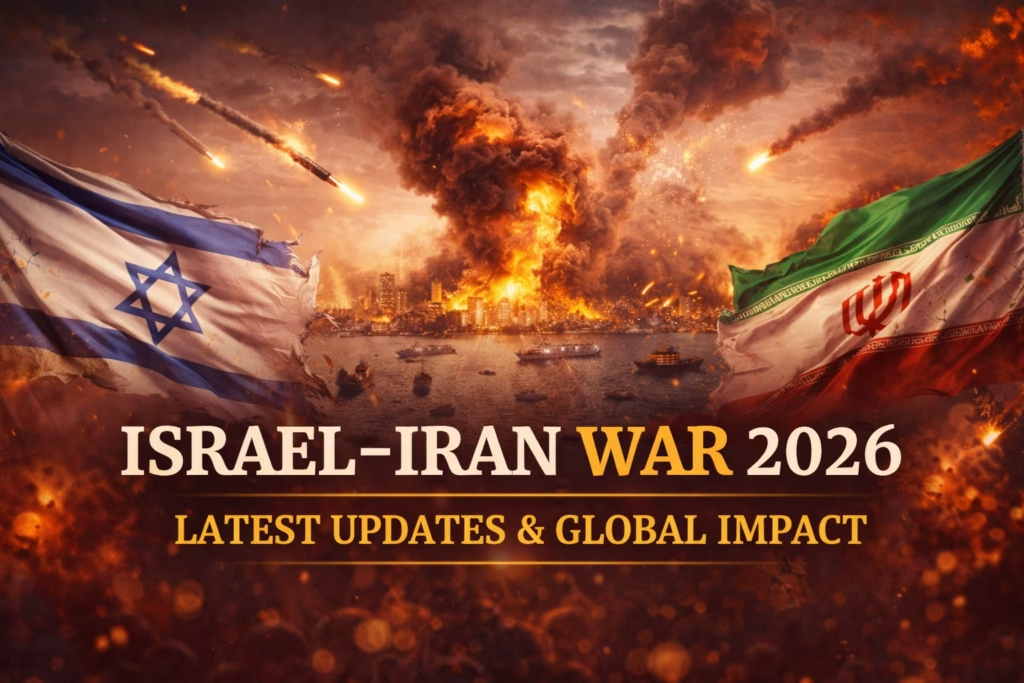
The Israel–Iran war in 2026 is an escalating conflict involving direct and indirect military actions between Israel and Iran, impacting global oil supply, politics, and security.
Why Did This War Start?
The tension between Israel and Iran is not new. It has been building for decades due to:
- Iran’s nuclear program
- Israel’s security concerns
- Regional power struggle in the Middle East
- Support for opposing groups in countries like Syria and Lebanon
👉 In 2026, this tension crossed a line, leading to direct military confrontation.
What’s Happening Right Now (2026 Updates)
The current situation is intense and unstable:
- A temporary ceasefire is in place, but it is very fragile
- Both sides are fully prepared to resume attacks
- Peace talks have not reached any final agreement
👉 This is not peace — it’s just a pause before possible escalation.
Major Military Developments
The conflict has seen serious military action:
- Missile and drone attacks from both sides
- Airstrikes targeting strategic locations
- Involvement of global powers like the United States
Iran has also shown strong resistance, maintaining its naval and missile strength.
👉 This is no longer a small conflict—it’s a high-intensity geopolitical war.
Strait of Hormuz Crisis: Why It Matters
One of the biggest impacts of this war is on the Strait of Hormuz.
- This route carries nearly 20% of the world’s oil supply
- Military tension has disrupted shipping
- Oil tankers are facing delays and risks
👉 Result:
- Global oil prices have surged
- Fuel costs are rising worldwide
- Trade routes are under pressure
Economic Impact on the World
This war is not just about missiles—it’s about money and survival.
- Oil prices have crossed critical levels
- Global markets are unstable
- Inflation risk is increasing
Countries like India are already feeling the pressure through:
- Rising petrol and diesel prices
- Increased import costs
- Economic uncertainty
👉 This conflict is directly hitting common people’s pockets.
Casualties and Damage
The human cost is rising:
- Thousands of deaths reported
- Cities damaged by airstrikes
- Infrastructure destroyed
👉 And the worst part?
The numbers are still increasing as the conflict continues.
Role of Global Powers
This is not just Israel vs Iran anymore.
- The United States is actively involved
- Other Middle Eastern groups are indirectly participating
- Global politics is becoming more divided
👉 This raises the risk of a larger regional or even global conflict.
What Could Happen Next?
Here are the most realistic scenarios:
🔴 1. Full-Scale War
- Ceasefire breaks
- Massive attacks resume
- Wider Middle East gets involved
🟠 2. Proxy War Expansion
- Other groups enter the conflict
- Fighting spreads across multiple countries
🟢 3. Peace Agreement (Least Likely Now)
- Requires major compromise on nuclear issues
- Currently, both sides are far from agreement
Why This War Matters to You
Even if you are far from the Middle East, this war affects you:
- Fuel prices increase
- Cost of living rises
- Global economy slows down
👉 This is a global crisis, not a local war.
Conclusion
The Israel–Iran war in 2026 is a serious and ongoing conflict with global consequences. While a temporary ceasefire exists, tensions remain high, and the risk of escalation is real. The war is already impacting oil prices, economies, and global stability.
👉 The coming months will decide whether this turns into a full-scale war or moves toward peace—but right now, the situation remains highly volatile.