|
Getting your Trinity Audio player ready...
|
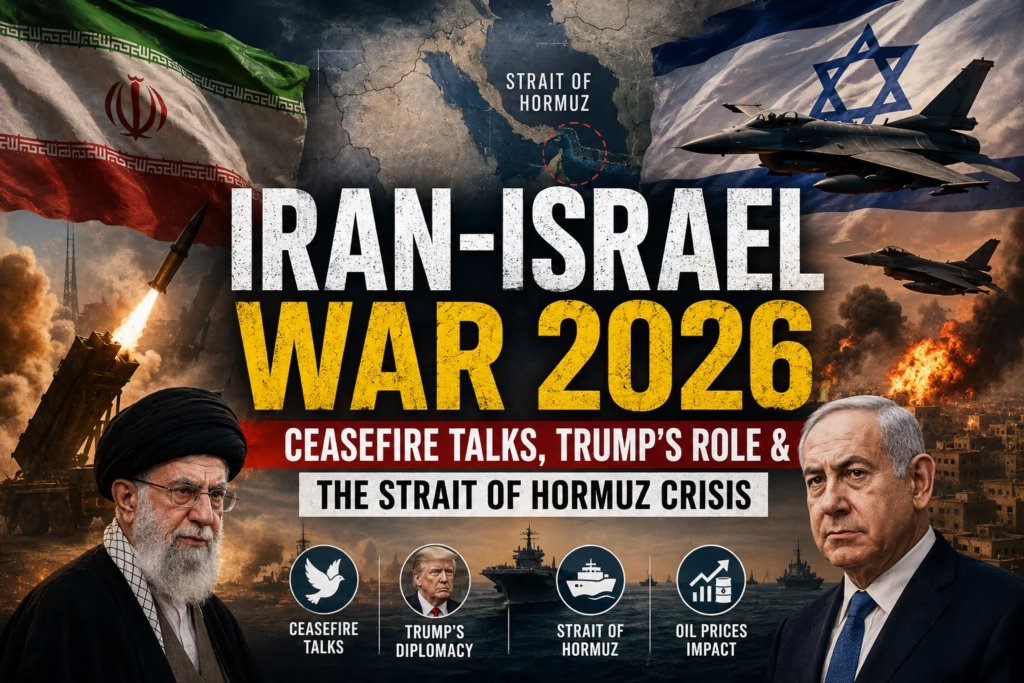
The ongoing Iran-Israel War conflict has once again placed the Middle East at the center of global attention. What began as rising military tensions has now evolved into a major international crisis involving the United States, Gulf nations, oil markets, and global trade routes.
The biggest concern surrounding this conflict is the Strait of Hormuz, one of the world’s most important shipping routes for oil transportation. Recent clashes involving Iran, Israel, and American forces near the region have created fears of a wider war that could impact economies worldwide.
At the same time, ceasefire discussions led by the United States have created hope for temporary peace. However, continued accusations, military responses, and rising tensions suggest that the situation remains extremely fragile.
The entire world is now closely watching how the coming days unfold.
Why the Strait of Hormuz Is So Important
The Strait of Hormuz is one of the most strategically important waterways on Earth. Nearly 20 percent of the world’s oil supply passes through this narrow route every single day.
This makes the region critical for:
- Global oil exports
- International shipping
- Energy security
- Trade stability
- Fuel pricing worldwide
If shipping in the Strait of Hormuz gets blocked or disrupted, the effects are immediate across global markets.
Possible impacts include:
- Sharp rise in petrol and diesel prices
- Increase in global inflation
- Higher transportation costs
- Stock market instability
- Pressure on oil-importing countries like India
Because of the recent military tensions, several shipping companies have already started reducing activity in the region due to safety concerns.
This is why the Iran-Israel conflict is no longer viewed as just a regional issue. It has become a global economic concern.
What Triggered the Latest Escalation?
The recent escalation reportedly began after attacks involving Iranian drones and missiles near American naval forces operating around the Strait of Hormuz.
The United States responded with military strikes targeting Iranian launch facilities and strategic locations. Iran, however, accused the US of violating ceasefire agreements and increasing tensions through aggressive military action.
The situation quickly became more complicated after:
- Naval movements increased in the Gulf region
- Air defense systems were activated
- Missile interception operations intensified
- International trade ships altered routes
Both sides continue blaming each other for violating peace efforts.
As military exchanges continue, fears of a larger regional war are growing rapidly.
Donald Trump’s Role in Ceasefire Talks
US President Donald Trump has become one of the key figures in ongoing negotiations.
The American administration is reportedly attempting to push a temporary ceasefire agreement aimed at:
- Preventing further military escalation
- Protecting oil trade routes
- Reducing attacks near Hormuz
- Restarting diplomatic discussions
- Avoiding a direct Iran-Israel War
Trump has publicly stated that peace discussions are still active, although he also warned Iran against further military aggression.
At the same time, reports suggest that the United States slowed down certain military operations after diplomatic pressure from Gulf nations concerned about regional instability.
This highlights how sensitive the situation has become for America and its allies.
Oil Prices Are Rising Again
One of the fastest visible impacts of the conflict has been the sudden rise in global oil prices.
As tensions increased near the Strait of Hormuz, crude oil prices surged because markets feared supply disruptions.
Experts believe that if the conflict continues for a longer period, countries around the world could face:
- More expensive fuel
- Increased inflation
- Higher travel costs
- Rising food prices
- Economic slowdown
India could also feel significant pressure because the country imports a large portion of its crude oil from the Middle East.
Higher fuel costs often affect transportation, manufacturing, and daily consumer goods, which eventually impacts ordinary citizens.
Impact on the Middle East
The crisis is no longer limited to Iran and Israel alone.
Several countries in the Middle East are now indirectly involved due to military alliances, regional security concerns, and economic interests.
The conflict has already affected:
- Gulf shipping routes
- Military bases in the region
- Regional diplomatic relations
- Trade operations across the Middle East
There are also concerns that groups operating in Lebanon and nearby regions could further escalate the situation.
Because of this, multiple countries are strengthening defense systems and increasing military monitoring.
Global Reactions to the Conflict
World leaders and international organizations are now actively monitoring the crisis.
Many countries are urging both sides to:
- Reduce military actions
- Protect civilian lives
- Keep shipping routes open
- Continue diplomatic negotiations
Global powers including China and several European nations have expressed concern about the economic and security risks linked to the conflict.
The United Nations and international diplomats are also involved in discussions aimed at preventing a full-scale regional war.
Despite these efforts, no permanent peace agreement has been finalized so far.
Could the Conflict Become a Bigger War?
Unfortunately, the possibility still exists.
Although ceasefire discussions continue, the situation remains highly unstable. Even a single large-scale attack could trigger a much wider conflict involving multiple countries.
The biggest dangers include:
- Closure of the Strait of Hormuz
- Direct confrontation between Iran and the United States
- Expansion of conflict into neighboring countries
- Major disruption in global oil supply
- Collapse of ongoing peace talks
Military analysts believe the next few weeks could become extremely important in deciding the future direction of the crisis.
Final Verdict
The Iran-Israel war in 2026 is not just another regional conflict. It has become a major global issue affecting politics, trade, oil markets, and international security.
While ongoing ceasefire talks offer hope for stability, continued military tensions near the Strait of Hormuz show that the danger is far from over.
The world now waits to see whether diplomacy succeeds in preventing a larger war or whether the Middle East moves toward another major geopolitical crisis.
One thing is clear — the outcome of this conflict could influence global politics and economies for years to come.