|
Getting your Trinity Audio player ready...
|
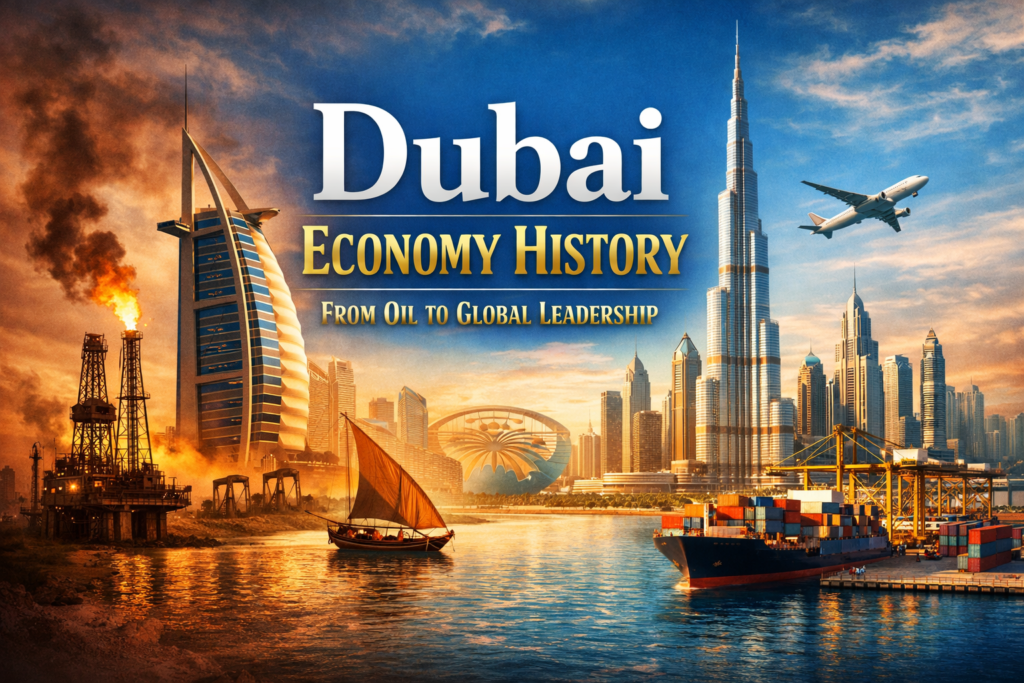
Dubai’s economic story is not accidental. It is one of the most deliberate, aggressive, and visionary transformations in modern economic history. From a small desert settlement dependent on pearls and trade, Dubai reshaped itself into a global business, tourism, and logistics hub within just a few decades.
This blog breaks down Dubai’s economic condition from history, showing how smart leadership, risk-taking, and long-term planning changed its destiny.
Early Economy: Trade, Pearls, and Survival (Pre-1900s)
Before oil, Dubai’s economy was brutally simple.
- Pearl diving was the backbone of income
- Fishing and small-scale trade sustained local communities
- Dubai Creek acted as a natural port linking India, Persia, and East Africa
Merchants from India and Iran played a key role in early commerce, creating a multicultural trading culture long before globalization became a buzzword.
Even in hardship, Dubai focused on trade freedom rather than isolation — a mindset that shaped its future.
Pearl Industry Collapse & Economic Crisis (1930s)
The 1930s nearly broke Dubai’s economy.
- Japanese cultured pearls flooded the global market
- The Great Depression reduced luxury spending worldwide
- Thousands of pearl divers lost livelihoods
Dubai faced severe economic stress. Many families migrated, and poverty increased. This period forced Dubai’s leadership to rethink long-term survival beyond traditional income sources.
Oil Discovery: The Turning Point (1966)
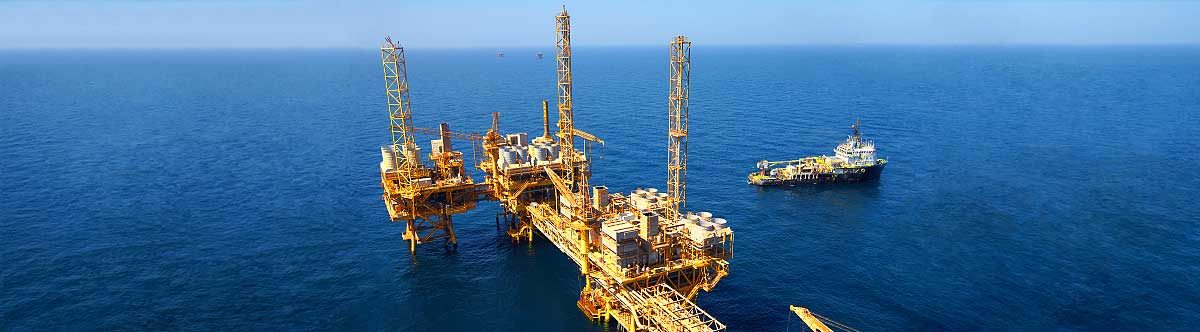
The discovery of oil at the Fateh oil field in 1966 changed everything.
Under the leadership of Sheikh Rashid bin Saeed Al Maktoum, oil revenues were not wasted on short-term luxury.
Instead, funds were invested in:
- Roads and ports
- Education and healthcare
- Airports and logistics infrastructure
Unlike many oil economies, Dubai treated oil as seed capital, not permanent income.
Infrastructure First, Wealth Later (1970s–1980s)
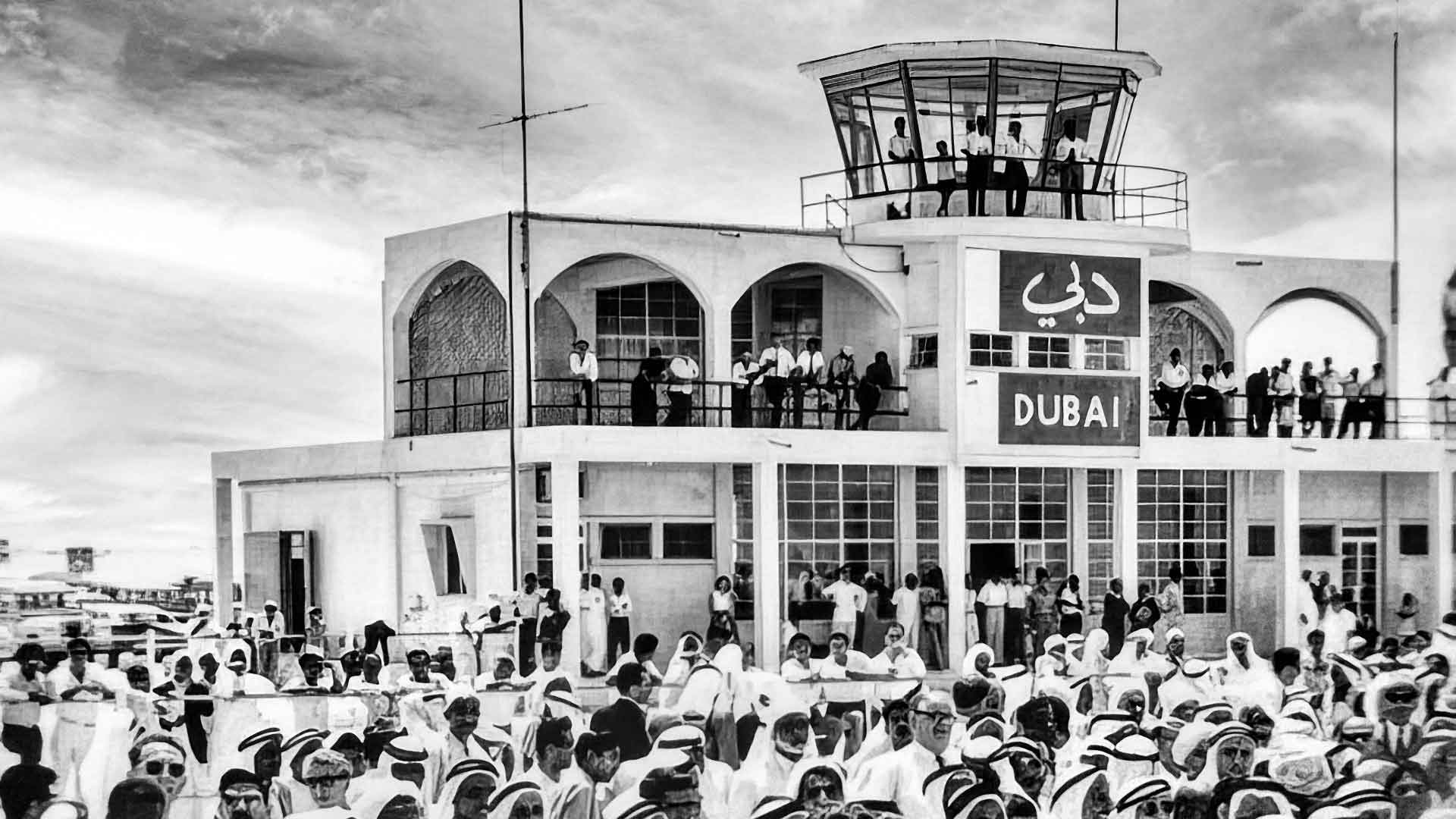
Dubai doubled down on infrastructure while oil income was strong.
Key developments:
- Jebel Ali Port
- Expansion of Dubai International Airport
- Free trade policies to attract foreign businesses
This era laid the physical foundation for global commerce.
Free Zones & Business Liberalization (1985 Onwards)
The creation of Jebel Ali Free Zone was revolutionary.
Why it worked:
- 100% foreign ownership
- Zero import/export duties
- Minimal bureaucracy
Dubai openly competed with global financial centers, offering speed and certainty — two things businesses value more than promises.
This strategy shifted Dubai from oil dependency to trade and services dominance.
Tourism, Real Estate & Branding (1990s–2000s)

Dubai understood one harsh truth:
Oil would not last forever.
So it built experiences.
- Luxury tourism
- Iconic architecture
- Global real estate investment
Landmarks like Burj Al Arab, Palm Jumeirah, and Burj Khalifa were not vanity projects — they were economic marketing tools.
Dubai sold an image, and the world bought it.
Financial Crisis & Recovery (2008–2012)
Dubai’s aggressive growth came with risk.
During the 2008 global financial crisis:
- Property prices collapsed
- Debt levels surged
- Investor confidence dipped
Support from Abu Dhabi helped stabilize the economy. Dubai learned painful but necessary lessons about regulation, debt management, and sustainable growth.
Diversified Economy Era (2013–Present)
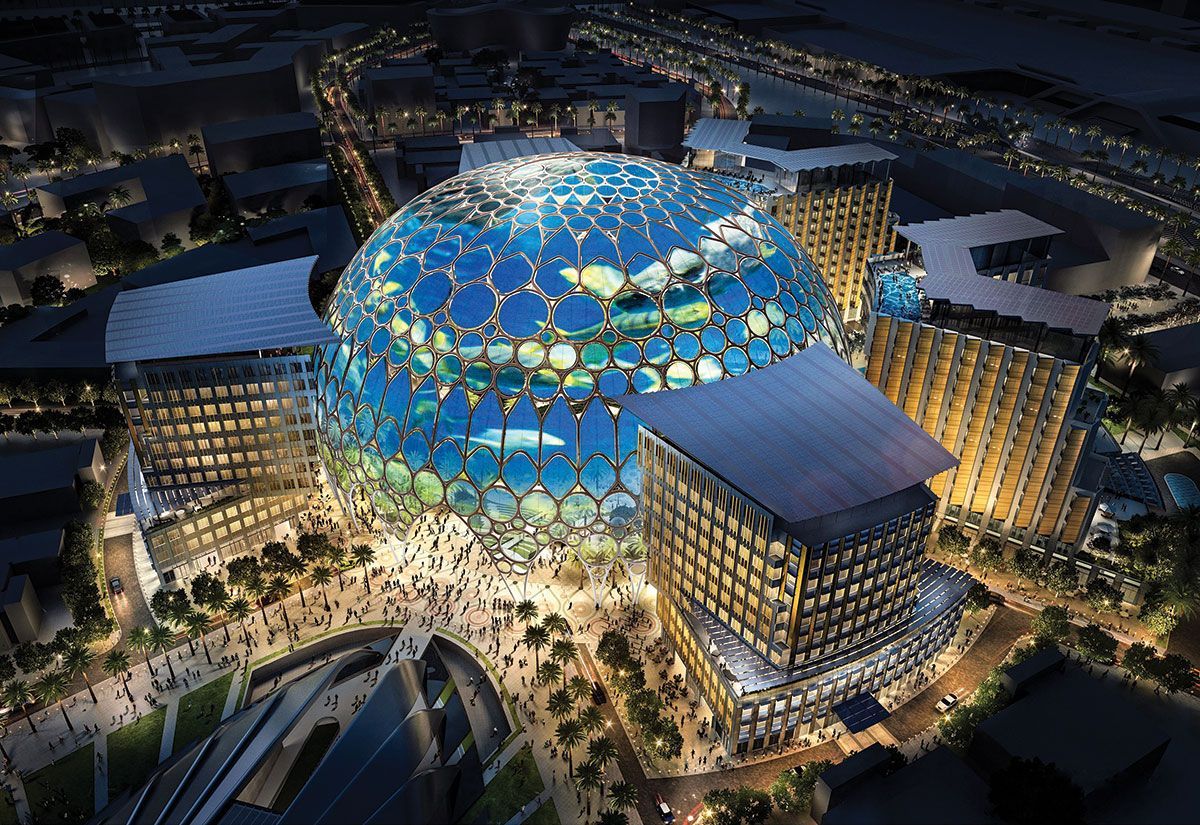
Today, Dubai’s economy is no longer oil-driven.
Major contributors:
- Trade & logistics
- Tourism & hospitality
- Financial services
- Technology & startups
- Aviation & real estate
Oil contributes less than 5% to Dubai’s GDP — a rare achievement among Gulf economies.
Events like Expo 2020 Dubai reinforced Dubai’s global economic relevance.
Strategic Economic Mindset: Why Dubai Succeeded
Dubai’s historical economic success comes down to four brutal truths:
- No emotional attachment to oil
- Speed beats perfection
- Open markets attract capital
- Branding is an economic weapon
While many regions waited for resources to save them, Dubai built its own advantage.
Conclusion: Dubai’s Economy Is Designed, Not Lucky
Dubai’s economic condition from history proves one thing clearly —
vision beats resources.
From pearls to ports, oil to innovation, Dubai never waited for the future. It engineered it.
And that is why Dubai isn’t just rich — it’s resilient.