
|
Getting your Trinity Audio player ready...
|
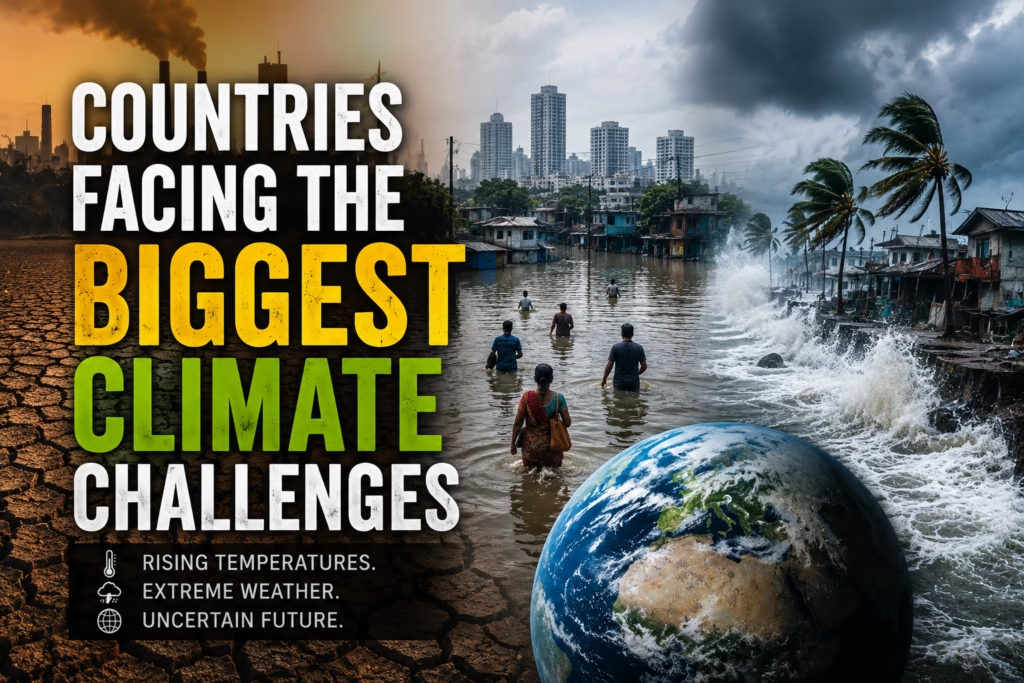
Climate change is no longer a distant concern—it’s reshaping economies, ecosystems, and daily life across the globe. In 2026, countries on nearly every continent are facing more frequent heatwaves, devastating floods, prolonged droughts, rising sea levels, and destructive wildfires. Scientists warn that these extreme weather events are becoming more intense as global temperatures continue to rise. Recent months have seen Europe battle record-breaking heat and wildfires, while many low-income nations continue to struggle with climate-related food insecurity and flooding.
According to global climate experts, vulnerability is not determined by weather alone. A country’s geography, infrastructure, economy, disaster preparedness, and access to resources all influence how severely climate change affects its population. The World Bank estimates that nearly one in five people worldwide live in areas highly exposed to climate hazards with limited capacity to recover from disasters.
Countries Most Affected by Climate Change in 2026
| Rank | Country | Major Climate Challenges |
|---|---|---|
| 1 | Bangladesh | Floods, cyclones, sea-level rise |
| 2 | Pakistan | Glacier melting, floods, heatwaves |
| 3 | India | Extreme heat, floods, drought |
| 4 | Somalia | Drought, food insecurity, flooding |
| 5 | Sudan | Desertification, water scarcity |
| 6 | Philippines | Typhoons, flooding, sea-level rise |
| 7 | Indonesia | Coastal flooding, deforestation |
| 8 | Australia | Bushfires, drought, coral bleaching |
| 9 | Brazil | Amazon deforestation, drought |
| 10 | France & Southern Europe | Heatwaves, wildfires, water shortages |
1. Bangladesh
Bangladesh remains one of the world’s most climate-vulnerable nations because much of the country lies just a few meters above sea level. Rising sea levels, stronger cyclones, river erosion, and monsoon flooding threaten millions of people every year.
Key challenges include:
- Coastal flooding
- Cyclones
- Saltwater intrusion into farmland
- Riverbank erosion
- Climate migration
Climate experts continue to rank Bangladesh among the countries most exposed to long-term climate risks due to its geography and dense population.
2. Pakistan
Pakistan continues to experience the combined effects of extreme heat, glacier melt in the Himalayas, and unpredictable monsoon rainfall. These conditions increase the risk of flash floods while also reducing long-term water security.
Major risks include:
- Melting glaciers
- Flash floods
- Record-breaking temperatures
- Water shortages
- Agricultural losses
3. India
India’s diverse climate means different regions face different threats. Northern states experience severe heatwaves, while eastern and western regions face flooding during the monsoon. Coastal cities also face increasing risks from sea-level rise.
Major climate challenges include:
- Heatwaves exceeding 45°C
- Heavy monsoon flooding
- Water scarcity
- Cyclones along eastern and western coasts
- Air pollution worsened by rising temperatures
4. Somalia
Somalia has endured repeated droughts followed by flooding, creating one of the world’s most severe humanitarian crises. Millions remain food insecure, and forecasts warn of additional flood risks in the coming months.
Key concerns:
- Drought
- Crop failure
- Livestock losses
- Flooding
- Food insecurity
5. Sudan
Sudan faces growing climate stress through desertification, declining rainfall, and water scarcity. These pressures are worsening agricultural productivity and increasing humanitarian needs alongside ongoing conflict.
6. Philippines
The Philippines is hit by numerous tropical storms and typhoons each year. Rising sea temperatures can intensify storms, increasing the risks of flooding, landslides, and infrastructure damage.
Major threats include:
- Typhoons
- Coastal flooding
- Landslides
- Sea-level rise
7. Indonesia
Indonesia faces multiple climate pressures because of its thousands of islands and tropical forests. Rising sea levels threaten coastal communities, while deforestation continues to reduce the country’s natural climate resilience.
Challenges include:
- Coastal erosion
- Flooding
- Forest fires
- Deforestation
- Biodiversity loss
8. Australia
Australia continues to battle prolonged droughts, severe bushfires, marine heatwaves, and coral bleaching across the Great Barrier Reef. Higher temperatures have increased the frequency and intensity of wildfire seasons.
Major issues:
- Bushfires
- Drought
- Water shortages
- Coral reef damage
- Heatwaves
9. Brazil
Brazil’s biggest climate challenge remains the Amazon rainforest. Continued deforestation weakens one of the planet’s largest carbon sinks while increasing drought risk and biodiversity loss.
Climate concerns:
- Amazon deforestation
- Extreme drought
- Wildfires
- Biodiversity decline
10. France and Southern Europe
Europe is increasingly experiencing climate extremes once considered rare. During the summer of 2026, France, Spain, Italy, and neighboring countries faced successive heatwaves, major wildfires, drought, and critically low river levels affecting transport and agriculture. Thousands of residents were evacuated as fires spread rapidly.
Why Are Climate Challenges Becoming More Severe?
Several factors are driving the increase in extreme weather events worldwide:
- Rising global temperatures
- Increased greenhouse gas emissions
- Deforestation
- Urbanization
- Loss of wetlands and forests
- Changing rainfall patterns
- Melting glaciers and polar ice
Scientists state that while natural climate variability exists, human-driven emissions are making many extreme events more frequent and intense.
Global Impact of Climate Change
Climate change is affecting nearly every aspect of modern life.
| Sector | Impact |
|---|---|
| Agriculture | Crop failures and reduced yields |
| Health | Heat-related illnesses and disease spread |
| Economy | Infrastructure damage and insurance losses |
| Food Security | Rising food prices and shortages |
| Water | Droughts and drinking water scarcity |
| Tourism | Damage to beaches, forests, and coral reefs |
| Wildlife | Habitat destruction and biodiversity loss |
UNICEF reports that nearly half of the world’s children are now exposed to at least three overlapping climate hazards, highlighting the growing human impact of climate change.
How Countries Are Responding
Governments are investing in:
- Renewable energy
- Flood protection systems
- Early warning technologies
- Climate-smart agriculture
- Reforestation
- Coastal defense projects
- Electric transportation
- Carbon reduction policies
Some countries are also strengthening disaster preparedness and adapting infrastructure to cope with more frequent extreme weather events.
Conclusion
Climate change has become a defining global challenge, affecting both developing and developed nations. While countries such as Bangladesh, Pakistan, Somalia, and Sudan continue to face severe humanitarian risks, wealthier nations including France, Australia, and Brazil are also dealing with increasingly destructive heatwaves, wildfires, and environmental degradation. As climate impacts grow more frequent and intense, international cooperation, investment in resilience, and faster emissions reductions will play a crucial role in protecting communities and reducing future risks.
FAQs
Which country is most vulnerable to climate change?
Bangladesh is widely considered one of the most climate-vulnerable countries due to its low elevation, high population density, and exposure to floods, cyclones, and sea-level rise.
Why is India vulnerable to climate change?
India experiences multiple climate hazards, including heatwaves, floods, droughts, cyclones, and water scarcity, affecting different regions in different ways.
Why are European countries experiencing more wildfires?
Higher temperatures, prolonged drought, and changing weather patterns have increased wildfire risk across countries such as France, Spain, Italy, and Portugal.
Which countries are most at risk from rising sea levels?
Bangladesh, Indonesia, the Philippines, and several small island nations face some of the greatest risks from rising sea levels.