|
Getting your Trinity Audio player ready...
|
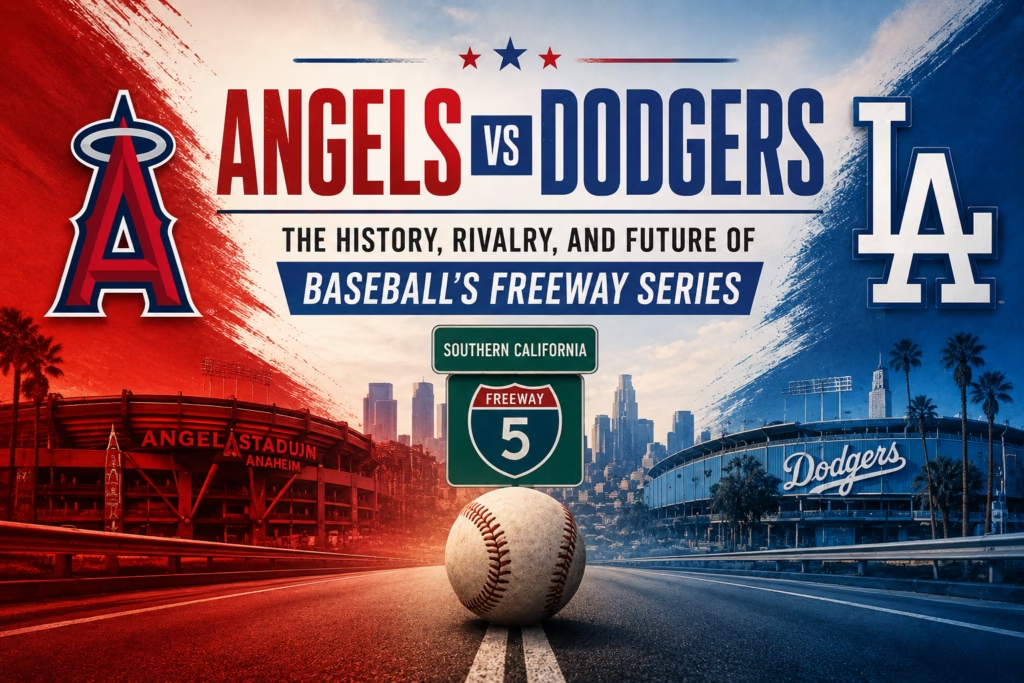
Baseball has produced some of the greatest rivalries in sports history. From the Yankees and Red Sox to the Cubs and Cardinals, rivalries have always been at the heart of Major League Baseball. On the West Coast, however, one rivalry stands apart because of its unique blend of geography, fan loyalty, and city pride. The rivalry between the Los Angeles Angels and the Los Angeles Dodgers, known as the Freeway Series, has become one of baseball’s most fascinating matchups.
Unlike traditional rivalries that developed over a century of league competition, the Angels and Dodgers rivalry is relatively modern. Yet it carries an intensity that reflects Southern California itself. The two teams are separated by only a short drive on the freeway, but their fan bases often see themselves as representing different baseball identities.
The Dodgers are one of baseball’s most historic franchises, known worldwide for their championships, legendary players, and passionate supporters. The Angels, meanwhile, have built their own legacy through memorable stars, exciting seasons, and a dedicated fan base that proudly supports Orange County’s team.
Whenever these two organizations meet, the games become more than regular-season contests. They become battles for regional bragging rights, media attention, and baseball supremacy in Southern California.
- The Origins of the Rivalry
- Two Different Baseball Identities
The Origins of the Rivalry
The rivalry officially began after the Angels joined Major League Baseball as an expansion franchise in 1961. At that time, the Dodgers were already an established powerhouse, having moved from Brooklyn to Los Angeles in 1958.
For many years, the two clubs rarely faced each other because they belonged to different leagues. The Dodgers competed in the National League, while the Angels played in the American League. Before interleague play was introduced, opportunities for regular-season matchups were limited.
Everything changed in 1997 when Major League Baseball introduced interleague play. Suddenly, fans had the opportunity to watch Southern California’s two teams compete against one another during the regular season.
The concept immediately captured public interest. Television ratings increased, stadiums filled with fans from both sides, and local media embraced the growing rivalry. What started as a geographical curiosity quickly evolved into a genuine baseball feud.
The nickname “Freeway Series” perfectly reflected the relationship between the clubs. Southern California is famous for its highways, and the short distance between Dodger Stadium and Angel Stadium made the rivalry feel personal and accessible.
Two Different Baseball Identities
One reason the rivalry remains compelling is the contrast between the two organizations.
The Dodgers are among the most successful franchises in baseball history. Their tradition includes numerous National League pennants, multiple World Series championships, and some of the greatest players ever to step onto a baseball field.
Legends such as Jackie Robinson, Sandy Koufax, Don Drysdale, Fernando Valenzuela, and Clayton Kershaw helped establish the Dodgers as one of the sport’s premier organizations. The team’s history is deeply intertwined with the growth of baseball in California.
The Angels, on the other hand, represent a newer chapter in baseball history. Although they do not possess the same historical depth as the Dodgers, they have built a respected legacy of their own.
The Angels achieved their greatest success in 2002 when they captured their first World Series championship. That title remains one of the most celebrated achievements in franchise history and solidified the Angels as a legitimate force in Major League Baseball.
Because of these different histories, fans often view the rivalry through different lenses. Dodgers supporters emphasize tradition and championships, while Angels fans point to resilience, growth, and regional pride.
The Battle for Southern California
The Angels and Dodgers do not simply compete on the baseball field. They also compete for attention in one of the largest sports markets in the world.
Southern California is home to millions of sports fans. Many families have members who support different teams, creating friendly rivalries that extend beyond the stadium.
The Dodgers traditionally dominate the Los Angeles market, while the Angels enjoy strong support throughout Orange County. However, there is significant overlap between the two fan bases, creating constant debates about which team truly represents Southern California baseball.
Every Freeway Series game becomes an opportunity for fans to claim local bragging rights.
The rivalry is particularly intense because neither side wants to be considered second-best in the region.
Memorable Moments in Freeway Series History
Over the years, the rivalry has produced countless memorable moments.
One of the earliest highlights came during exhibition games before interleague play officially began. These contests generated significant excitement because fans rarely had opportunities to see the teams face each other.
As regular-season meetings became routine, the intensity increased. Walk-off victories, dramatic home runs, and extra-inning battles helped establish the rivalry’s reputation.
Several games have featured playoff-like atmospheres despite occurring during the regular season. Packed stadiums, loud crowds, and emotional performances have often transformed ordinary games into unforgettable experiences.
Players frequently acknowledge that Freeway Series contests feel different from typical regular-season matchups. The energy inside both stadiums creates an environment that closely resembles postseason baseball.
Star Players Who Defined the Rivalry
The Angels and Dodgers have each featured some of baseball’s most recognizable stars.
For the Dodgers, players such as Clayton Kershaw, Mookie Betts, Cody Bellinger, and Freddie Freeman have delivered standout performances against the Angels.
Kershaw, in particular, became a symbol of Dodgers excellence. His dominance on the mound helped the Dodgers remain one of baseball’s elite franchises for more than a decade.
The Angels have countered with stars of their own. Mike Trout emerged as one of the greatest players of his generation and consistently attracted national attention. His combination of power, speed, and defensive ability made him the face of the franchise.
Another transformative figure was Shohei Ohtani. During his time with the Angels, Ohtani accomplished feats rarely seen in baseball history by excelling as both a hitter and pitcher.
The presence of these superstars elevated the rivalry and attracted viewers from around the world.
The Shohei Ohtani Factor
No recent storyline has impacted the rivalry more than Shohei Ohtani’s move from the Angels to the Dodgers.
When Ohtani joined the Angels in 2018, he quickly became one of baseball’s biggest attractions. Fans flocked to stadiums to watch his extraordinary combination of pitching and hitting talent.
Despite Ohtani’s individual success, the Angels struggled to achieve consistent postseason success during his tenure.
His eventual decision to sign with the Dodgers became one of the biggest stories in modern baseball history.
For Angels fans, the move was painful. Losing a generational talent to their regional rival felt like a significant blow.
For Dodgers fans, however, Ohtani’s arrival represented another step toward building a championship-caliber roster.
His transfer added a new emotional layer to the rivalry and increased interest in every future Angels-Dodgers matchup.
Fan Culture and Stadium Atmosphere
One of the most entertaining aspects of the rivalry is the atmosphere created by fans.
Dodger Stadium is known for its passionate crowds and historic setting. The venue has hosted countless memorable moments and remains one of baseball’s most iconic stadiums.
Angel Stadium offers a different but equally engaging experience. Its family-friendly environment and loyal fan base create a distinctive atmosphere that reflects Orange County culture.
When the two teams meet, both stadiums often contain a mix of supporters from each side.
This creates unique environments where cheers, chants, and celebrations constantly compete for dominance.
The rivalry remains largely respectful compared to some of sports’ more hostile matchups, but the passion is undeniable.
Comparing Success and Championships
When discussing the rivalry, championships inevitably become part of the conversation.
The Dodgers possess one of baseball’s richest histories. Their multiple World Series titles and consistent postseason appearances place them among the sport’s elite organizations.
The Angels have fewer championships but achieved their greatest triumph in 2002 when they captured the World Series title against the San Francisco Giants.
That championship remains a defining moment for the franchise and serves as proof that the Angels can compete with baseball’s best.
The differing levels of historical success often fuel debates among fans, adding another layer of intrigue to the rivalry.
Economic and Media Impact
The rivalry generates significant economic benefits for both organizations.
Freeway Series games routinely attract strong attendance figures and substantial television audiences. Sponsors, broadcasters, and local businesses all benefit from the heightened interest surrounding the matchups.
Media coverage also intensifies whenever the teams meet. Sports talk shows, newspapers, and online platforms dedicate extensive attention to analyzing the games.
This constant coverage helps maintain public interest and ensures the rivalry remains relevant even during seasons when one team is outperforming the other.
The Future of the Rivalry
The future of the Angels-Dodgers rivalry appears bright.
Both organizations continue to invest heavily in talent, player development, and fan engagement. As new generations of players emerge, fresh storylines will keep the rivalry evolving.
The presence of global stars, combined with Southern California’s enormous sports market, ensures that national attention will remain focused on these matchups.
Younger players entering both organizations understand the significance of the rivalry and are eager to create their own memorable moments.
As baseball continues to evolve, the Freeway Series will likely remain one of the sport’s most anticipated annual events.
Why the Freeway Series Matters
The Angels vs Dodgers rivalry is about more than wins and losses.
It represents regional pride, community identity, and the passion that makes sports meaningful. Fans invest emotionally in the rivalry because it reflects the neighborhoods, cities, and traditions they cherish.
The games provide opportunities for families, friends, and coworkers to engage in friendly competition while celebrating their love of baseball.
Few rivalries combine history, geography, star power, and fan enthusiasm as effectively as the Freeway Series.
Conclusion
The Angels vs Dodgers rivalry has grown into one of Major League Baseball’s most entertaining and recognizable matchups. What began as a geographical curiosity evolved into a fierce competition for Southern California baseball supremacy.
From legendary players and unforgettable games to passionate fan bases and dramatic storylines, the Freeway Series continues to capture the imagination of baseball fans across the country.
The rivalry has successfully bridged generations, creating memories for longtime supporters while attracting new audiences through modern stars and compelling narratives.
As baseball moves forward, the Angels and Dodgers will continue battling for bragging rights, regional pride, and unforgettable moments. Whether played in Anaheim or Los Angeles, every chapter of the Freeway Series adds another layer to one of baseball’s most unique and enduring rivalries.
FAQs
Why is Angels vs Dodgers called the Freeway Series?
The rivalry is called the Freeway Series because the two teams are located close to each other in Southern California and are connected by the region’s extensive freeway system.
When did the Angels and Dodgers rivalry begin?
The rivalry became significant after interleague play was introduced in 1997, allowing the teams to meet regularly during the season.
Which team has won more championships?
The Dodgers have won multiple World Series championships throughout their history, while the Angels won their first World Series title in 2002.
Why is Shohei Ohtani important to the rivalry?
Ohtani became a major storyline after leaving the Angels and joining the Dodgers, adding extra emotion and attention to future matchups.
Which stadium hosts the Freeway Series?
Games are played at both Angel Stadium in Anaheim and Dodger Stadium in Los Angeles, depending on the schedule.