|
Getting your Trinity Audio player ready...
|
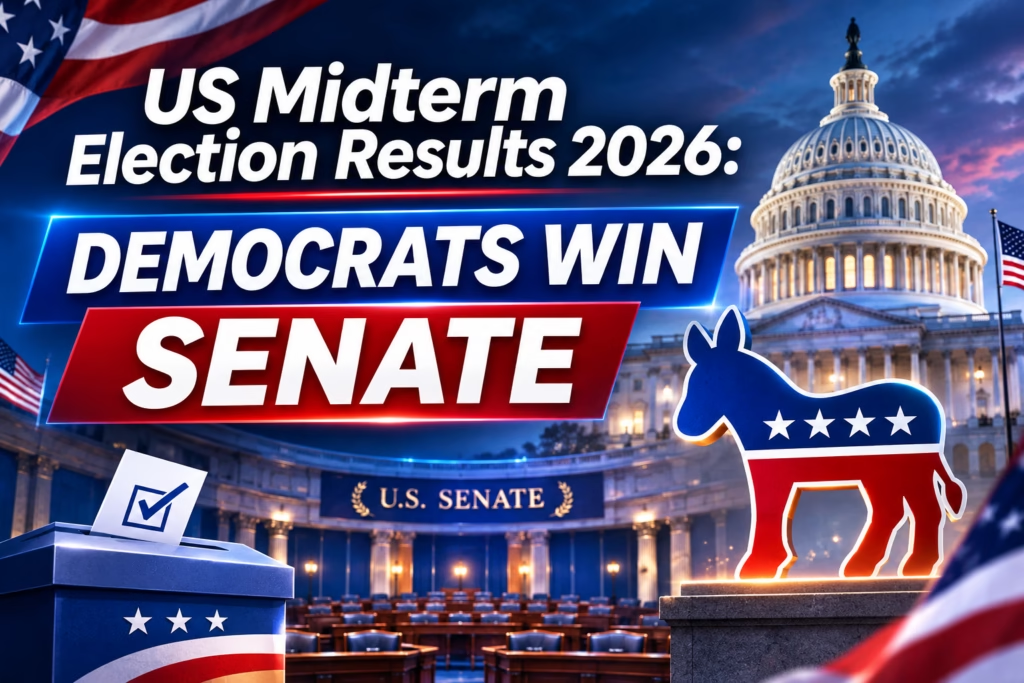
The 2026 United States midterm elections have delivered a significant political shift in Washington, with the Democratic Party winning control of the US Senate and Republicans suffering major losses across several important states. The election results represent a major setback for President Donald Trump’s administration as voters delivered their verdict on the country’s political and economic direction.
The November 3 elections attracted national attention because control of Congress was at stake. Democrats entered the election seeking to regain influence in Washington, while Republicans were attempting to maintain their majority in both chambers of Congress.
The results have now changed the balance of power in the Senate. Democrats secured enough victories in key battleground states to take control of the upper chamber, while the race for the House of Representatives remained closely contested as votes continued to be counted.
Several unexpected victories in traditionally Republican states, including Texas, Kansas, South Carolina and Ohio, contributed to the Democratic gains. The results could significantly influence the final two years of Trump’s current presidential term, particularly regarding legislation, government appointments and congressional investigations.
US Midterm Election Results 2026: What Happened?
The November 3, 2026, midterm elections were held to elect members of the US Congress, including all 435 seats in the House of Representatives and approximately one-third of the Senate.
The elections also included gubernatorial contests, state legislative elections and several important local races.
The biggest development was the Democratic Party’s victory in the Senate. According to Associated Press reporting, Democrats flipped multiple Republican-held seats and secured control of the chamber.
The party made significant gains in states where Republicans had previously maintained strong electoral positions. Texas, Kansas, South Carolina, Ohio, Iowa and North Carolina were among the important states contributing to the change in Senate control.
Republicans also faced difficulties in several House contests, with Democrats gaining seats in districts that had previously been considered favourable to the GOP.
However, the House outcome remained uncertain as counting continued.
Democrats Win Control of the US Senate
The most important result of the 2026 midterm elections is the Democratic Party’s victory in the Senate.
Before the election, Republicans controlled the chamber with 53 seats, compared with 47 seats held by Democrats and Democratic-aligned independents.
Democrats needed to gain four seats to secure an outright majority. Their victories in several competitive states helped them cross that threshold.
Some of the important developments included:
- Texas: Democrat James Talarico defeated Republican Ken Paxton in a closely watched Senate contest.
- North Carolina: Former Democratic Governor Roy Cooper defeated Republican Michael Whatley, flipping a Republican-held seat.
- Ohio: Former Democratic Senator Sherrod Brown defeated Republican incumbent Jon Husted.
- Kansas: Democrats secured a major victory in a traditionally Republican state.
- South Carolina: Democrats achieved another important Senate gain.
- Iowa: Democrats also secured a Republican-held Senate seat.
- Georgia: Democratic Senator Jon Ossoff retained his seat.
- New Hampshire: Democrat Chris Pappas won the Senate election.
These victories helped Democrats regain control of the upper chamber.
The change in Senate leadership will have important consequences for the legislative process and the administration’s ability to secure approval for its policies and appointments.
Texas Election Results: Democratic Victory Becomes a Major Talking Point
Texas became one of the most closely watched states in the 2026 midterm elections.
For decades, Republicans had maintained a strong position in Texas politics. However, the 2026 results brought a major change as Democratic candidate James Talarico defeated Republican Ken Paxton in the Senate contest.
The result attracted national attention because Texas had remained an important Republican stronghold in recent presidential and congressional elections.
The Senate victory was accompanied by other Democratic gains in the state. Democratic candidate Gina Hinojosa also defeated Republican Governor Greg Abbott in the gubernatorial election, according to election reporting.
The results highlighted the importance of economic issues, voter participation and changing political preferences across different parts of the state.
Texas is particularly important because of its population, economic strength and influence in national politics.
North Carolina and Ohio Deliver Important Senate Gains
North Carolina and Ohio were among the most important states in determining the outcome of the Senate election.
In North Carolina, Democrat Roy Cooper defeated Republican Michael Whatley, taking a seat that Republicans had previously held.
Cooper’s victory was particularly significant because the state had remained competitive in several recent national elections.
Ohio also produced an important result. Former Democratic Senator Sherrod Brown defeated Republican incumbent Jon Husted, allowing Democrats to regain a Senate seat.
These results demonstrated how several competitive Senate races contributed to the national change in control.
Why Did Republicans Lose the Senate?
The 2026 midterm results have raised important questions about the factors behind the Republican Party’s losses.
Although individual races had different local issues, national reporting identified several common concerns among voters.
1. Rising Cost of Living
Economic concerns played an important role in the election.
Many American households have been dealing with higher living expenses, including housing, groceries, healthcare, transportation and energy costs.
The cost of living became a major issue during the election campaign, with voters expressing concerns about their purchasing power and financial security.
2. Inflation and Fuel Prices
Inflation and energy costs also influenced political discussions.
Higher fuel prices can affect household budgets and business operating expenses. They can also increase transportation and logistics costs, creating pressure across several industries.
The economic situation became an important subject for candidates in competitive states.
3. Foreign Policy and the Iran War
The US government’s foreign policy, particularly the conflict involving Iran, also became a major election issue.
Concerns about military involvement, international instability and the economic consequences of overseas conflicts contributed to public discussions during the campaign.
4. Dissatisfaction With Government
Voter dissatisfaction with the direction of the country and concerns about political decision-making also featured prominently in election coverage.
Democrats used these issues to challenge Republican candidates, while Republicans defended the administration’s record and campaign priorities.
The election results suggest that voters in several important states were willing to change their political representation.
What Happens to Donald Trump’s Administration Now?
The Democratic victory in the Senate creates a different political environment for President Donald Trump during the final two years of his current term.
With Republicans losing control of the upper chamber, the administration will face greater challenges when seeking approval for legislation and government appointments.
The Senate plays an important role in confirming presidential nominees, approving certain international agreements and considering legislation.
Democratic control could allow the party to exercise greater oversight of the administration and scrutinise its policies.
Congressional investigations could also become more prominent, particularly concerning government decisions, financial matters and executive actions.
However, a Senate majority does not automatically allow Democrats to pass every proposed law. Legislative outcomes will continue to depend on the House of Representatives, Senate voting rules and the level of bipartisan support.
The administration will also retain its executive powers, although its ability to advance certain legislative priorities could become more limited.
US House Election Results 2026: Democrats Also Make Gains
While the Senate result has been established, the House of Representatives remains another important part of the election story.
All 435 House seats were contested during the November 3 elections.
Early results indicated that Democrats were making gains in several districts, including areas where Republicans had previously enjoyed electoral advantages.
According to Associated Press reporting, Democrats were close to taking control of the House, but the final outcome remained dependent on outstanding races and continuing vote counts.
If Democrats secure a majority in both chambers, the political balance in Washington will change substantially.
It would give the party greater control over congressional committees, legislative scheduling and oversight activities.
However, until the remaining races are called, the final House majority should not be treated as confirmed.
How Will the Election Results Affect the US Economy?
The midterm election results could influence several areas of the American economy.
Political control of Congress matters because lawmakers influence taxation, government spending, infrastructure investment, healthcare policy, energy regulation and business-related legislation.
The Democratic victory in the Senate could lead to greater debate over the administration’s economic priorities.
Stock Market and Investor Sentiment
Financial markets will closely monitor the political developments.
Investors generally consider government stability, taxation, trade policies, government spending and regulatory changes when making investment decisions.
A change in congressional control can create uncertainty about the future direction of economic policies.
However, the election result alone does not determine stock market performance. Corporate earnings, interest rates, inflation, international developments and Federal Reserve decisions will continue to influence financial markets.
Business and Corporate Regulations
Companies may also pay attention to potential changes in regulatory oversight.
Sectors such as technology, energy, healthcare, banking and manufacturing could face increased political discussions around government regulations and business policies.
The extent of any actual changes will depend on the legislation proposed and the level of support it receives in Congress.
Trade and International Relations
The election could also influence discussions around international trade and foreign policy.
Businesses operating across international markets will monitor possible changes in trade priorities, tariffs, diplomatic relationships and government spending.
For global investors and multinational companies, the new political balance will be an important development to follow.
What Happens Next After the 2026 Midterm Elections?
The election results are only the beginning of the next political phase in Washington.
The new Congress will take office in January 2027, bringing a changed balance of power to the legislative branch.
Several important developments will follow:
Final election certification: State authorities will complete the official vote-counting and certification processes.
New congressional leadership: The parties will organise their respective caucuses and select leadership for the upcoming congressional session.
Committee appointments: Control of congressional committees will become an important issue because committees oversee legislation, investigations and government agencies.
Policy negotiations: Democrats and Republicans will have to negotiate on major economic, national security and government spending issues.
Presidential oversight: Democratic lawmakers are expected to increase scrutiny of the Trump administration through congressional oversight activities.
The next congressional session will therefore be important for both domestic policy and international relations.
Conclusion
The 2026 US midterm elections have changed the political balance in Washington. Democrats have won control of the Senate after securing important victories in traditionally Republican and competitive states, while the House of Representatives remains closely contested.
The results reflect several issues that dominated the election campaign, including inflation, household expenses, foreign policy and public dissatisfaction with the direction of the country.
For Donald Trump, the loss of Senate control creates new challenges during the remaining years of his presidency. For Democrats, the victory provides an opportunity to strengthen congressional oversight and influence national policy discussions.
Beyond American politics, the results will also be watched by international governments, investors and businesses because changes in US economic, trade and foreign policies can have global consequences.
The final House results and the next steps in Congress will determine how significantly the new political balance changes the direction of American governance.
FAQs
Who won the 2026 US midterm elections?
The Democratic Party won control of the US Senate in the November 3, 2026, midterm elections. The final House of Representatives outcome was still developing as votes continued to be counted.
Did Democrats win control of the US Senate in 2026?
Yes. Democrats secured enough victories in key Senate races to take control of the chamber from Republicans.
Why are the 2026 midterm elections important?
The elections determine control of Congress, influencing legislation, government oversight, federal spending, presidential appointments and other important national decisions.
Which states helped Democrats win the Senate?
Important Democratic gains came in Texas, North Carolina, Ohio, Kansas, South Carolina and Iowa. The party also retained important seats in states such as Georgia and New Hampshire.
How will the Senate result affect Donald Trump?
Democratic control of the Senate will make it more difficult for the Trump administration to advance certain legislative priorities and secure approval for presidential nominees. It will also increase congressional oversight of the administration.
When will the new US Congress take office?
The newly elected members of Congress are scheduled to take office in January 2027.