|
Getting your Trinity Audio player ready...
|
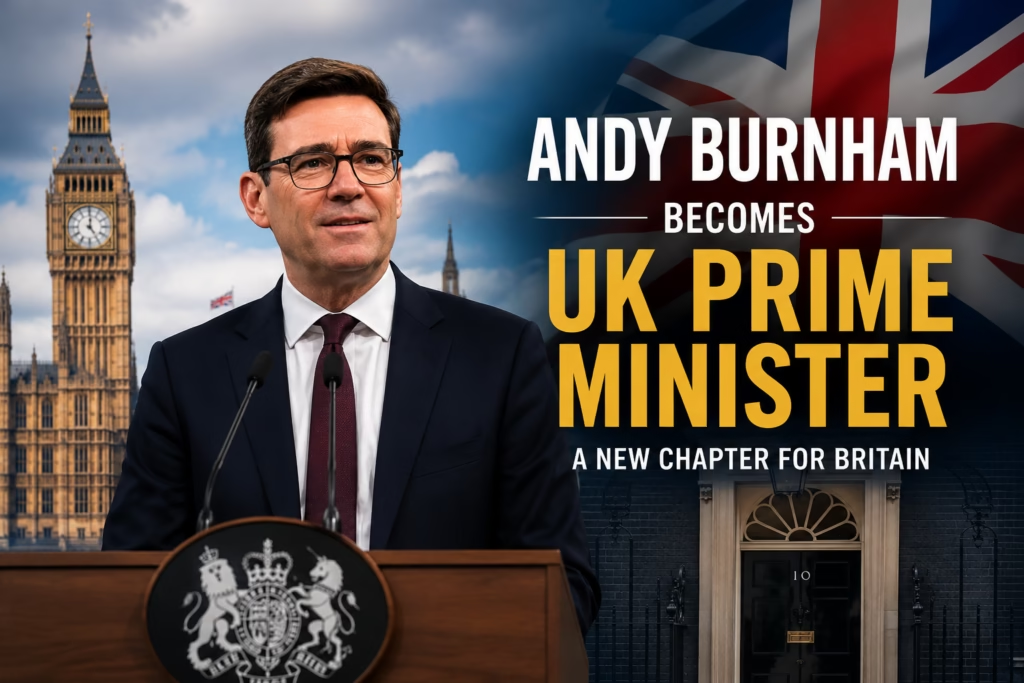
The United Kingdom has entered a significant new political era as Andy Burnham prepares to become the country’s new Prime Minister, succeeding Keir Starmer after a dramatic leadership transition within the Labour Party. The announcement has attracted widespread attention not only across Britain but also among political observers around the world. Burnham, who built a strong reputation during his tenure as the Mayor of Greater Manchester, now steps into the nation’s highest political office at a time when Britain faces economic uncertainty, pressure on public services, global geopolitical challenges, and increasing public demand for meaningful reforms.
His appointment represents far more than a simple change in leadership. Many political analysts believe it reflects a shift in Labour’s priorities, placing greater emphasis on regional development, local governance, public investment, and rebuilding trust with voters who have become increasingly frustrated with mainstream politics. Burnham has spent years positioning himself as a leader who understands the everyday struggles of ordinary people, particularly those living outside London. His rise from local government to 10 Downing Street marks one of the most remarkable political journeys in modern British history.
As Burnham prepares to take office, millions of people are asking important questions. Who exactly is Andy Burnham? Why did Keir Starmer step down? What changes can the public expect under the new Prime Minister? How will his leadership affect the economy, healthcare, housing, education, and Britain’s role on the international stage? This comprehensive guide answers all of these questions while exploring the opportunities and challenges awaiting Britain’s newest leader.
A Historic Leadership Transition
Political transitions are always significant moments in British democracy, but this one carries particular importance because it comes during a period of substantial national and international challenges. The Labour Party returned to power after years in opposition with promises of stability, economic recovery, and improved public services. However, governing has proved considerably more difficult than campaigning.
Public frustration over rising living costs, pressure on the National Health Service, debates surrounding immigration, slow economic growth, housing shortages, and concerns about productivity have created a demanding environment for any government. Although Keir Starmer entered office with considerable public support, maintaining that momentum became increasingly difficult as expectations collided with economic realities.
Against this backdrop, Andy Burnham emerged as a figure capable of offering Labour a fresh direction while maintaining many of the party’s core principles. His popularity extends beyond traditional Labour supporters, largely because of his practical leadership style and willingness to challenge both his own party and political opponents when he believes local communities are being treated unfairly.
His appointment therefore represents not only a change in leadership but also an opportunity for Labour to reconnect with voters who have become sceptical about national politics.
Who Is Andy Burnham?
Andy Burnham has been one of Britain’s most recognisable politicians for more than two decades. Born in Liverpool in 1970 and raised in Merseyside, Burnham studied English before beginning a career that eventually led him into Parliament. His political career officially began when he was elected as Member of Parliament for Leigh in 2001, a constituency he represented for many years.
Throughout his parliamentary career, Burnham served in several important ministerial roles. These included positions involving health, culture, and treasury matters, giving him experience across a broad range of government departments. His time as Health Secretary proved particularly influential, helping establish his reputation as someone deeply interested in improving Britain’s public healthcare system.
Despite serving in senior national roles, Burnham increasingly became associated with local leadership rather than Westminster politics. That transformation occurred when he successfully became the Mayor of Greater Manchester, a role that fundamentally reshaped his public image.
Instead of focusing solely on parliamentary debates, Burnham concentrated on practical improvements affecting millions of residents across Greater Manchester. His leadership style was visible, approachable, and often collaborative, helping him develop an image as a politician more interested in solving problems than scoring political points.
Many voters appreciated this practical approach, particularly during difficult periods such as the COVID-19 pandemic, when Burnham publicly challenged central government decisions that he believed unfairly affected northern England.
His willingness to defend local communities earned him respect well beyond Greater Manchester and eventually transformed him into one of Labour’s most influential political figures.
Andy Burnham’s Political Philosophy
Unlike many politicians whose identities revolve around ideological labels, Burnham has generally presented himself as a pragmatic leader focused on improving everyday life.
Several themes consistently appear throughout his political career.
One is the belief that local communities deserve greater control over decisions affecting their future.
Another is the conviction that economic prosperity should not remain concentrated in London and the South East.
Burnham has repeatedly argued that cities and regions across England possess enormous untapped potential but require greater investment and more decision-making powers to unlock long-term growth.
He has also consistently advocated stronger public transport systems, affordable housing, improvements to healthcare services, better education opportunities, and economic policies designed to reduce regional inequality.
These priorities helped distinguish him from many national politicians and contributed significantly to his popularity.
From Mayor to Prime Minister
Andy Burnham’s years as Mayor of Greater Manchester became the foundation of his national reputation.
During his tenure, Greater Manchester became something of a testing ground for policies involving public transport integration, housing development, policing reforms, and regional economic planning.
One of his most visible achievements was the expansion of the Bee Network, an integrated public transport system designed to improve connectivity throughout Greater Manchester.
He also prioritised reducing homelessness, increasing affordable housing availability, encouraging inward investment, and strengthening cooperation between local councils.
His ability to work across different sectors—business, local government, healthcare, education, and community organisations—demonstrated an administrative style that many observers believe could translate effectively to national leadership.
The pandemic further elevated Burnham’s profile.
His public disagreements with Westminster over financial support for Greater Manchester received extensive media coverage and reinforced his image as someone willing to stand up for his region even when confronting the central government.
For many supporters, those moments demonstrated leadership qualities they believed Britain needed nationally.
Why Did Keir Starmer Step Down?
Keir Starmer entered Downing Street promising competence, stability, and a fresh start after years of political turbulence. Initially, those promises generated optimism among many voters seeking calmer governance.
However, governing Britain during a period of economic uncertainty proved extremely challenging.
- Inflation remained a concern.
- Household finances continued experiencing pressure.
- Businesses faced rising costs.
- The National Health Service struggled with growing demand.
- Housing affordability remained a major issue.
Although the government introduced various reforms, public expectations often exceeded the pace at which improvements became visible.
Political pressure gradually increased as opinion polls reflected declining public satisfaction.
Within Labour itself, discussions emerged regarding future leadership and strategies for maintaining electoral competitiveness.
Ultimately, the leadership transition reflected a belief that new leadership could revitalise the government while continuing Labour’s broader policy agenda.
Andy Burnham’s strong public profile, administrative experience, and popularity outside Westminster made him the natural choice to lead the party into its next chapter.
What Makes Andy Burnham Different?
Burnham’s leadership style differs noticeably from many traditional Westminster politicians.
He communicates in a straightforward manner, often avoiding unnecessarily technical political language.
He frequently emphasises practical outcomes rather than ideological debates.
His experience governing a major metropolitan region means he approaches national challenges from the perspective of implementation rather than theory.
Supporters argue this practical mindset could prove valuable as Britain addresses complex issues requiring cooperation between central government, local authorities, businesses, healthcare providers, educators, and community organisations.
Critics, however, question whether success at the regional level automatically translates into effective national leadership.
They argue that governing an entire country involves considerably greater complexity than managing even one of Britain’s largest metropolitan regions.
Burnham will therefore face immediate pressure to demonstrate that his regional achievements can be successfully replicated on a national scale.
Andy Burnham’s Vision for the United Kingdom
As Andy Burnham prepares to take office, attention has shifted from his political journey to the policies he is expected to introduce. Unlike leaders who promise sweeping overnight changes, Burnham has built his reputation on gradual but practical reforms that aim to improve everyday life. His supporters often describe him as a politician who focuses on delivery rather than slogans, and many expect that philosophy to shape his government.
One of the defining themes of Burnham’s leadership is decentralisation. For decades, critics have argued that too much power is concentrated in Westminster, leaving local authorities with limited resources and decision-making ability. Burnham has consistently championed the idea that cities and regions should have greater control over transport, housing, healthcare, policing, education, and economic development. As Prime Minister, he is expected to continue pushing for greater devolution, allowing local leaders to make decisions that best suit their communities.
Burnham believes that local governments understand regional challenges better than central government departments. By giving mayors and councils more authority, he hopes to reduce bureaucracy, speed up infrastructure projects, and create stronger regional economies.
Reviving the British Economy
The economy will likely be the biggest challenge facing Burnham’s government. Britain has faced years of economic uncertainty driven by inflation, rising energy costs, global supply chain disruptions, and slower-than-expected economic growth. Businesses continue to deal with higher operating costs while households remain concerned about the cost of living.
Burnham is expected to focus on creating long-term economic stability rather than relying on short-term political measures. His approach centres around increasing investment, supporting innovation, encouraging manufacturing, and creating skilled employment opportunities across every region of the country rather than concentrating growth in London.
One of his priorities is expected to be attracting private investment while maintaining strong public investment in infrastructure. Better roads, railways, broadband connectivity, renewable energy projects, and housing developments could form the backbone of his economic strategy.
Economic experts suggest that Burnham may also introduce measures to strengthen small and medium-sized businesses, which collectively employ millions of people across Britain. Easier access to finance, investment incentives, and support for local entrepreneurship could become key components of his economic agenda.
Addressing the Cost of Living Crisis
The cost of living remains one of the most pressing concerns for British families. Rising grocery prices, energy bills, housing costs, and mortgage repayments have significantly affected household budgets.
Burnham has repeatedly acknowledged that economic statistics alone do not reflect the real experiences of ordinary citizens. His government is therefore expected to prioritise policies that directly improve household finances.
Potential measures may include targeted financial support for lower-income families, reforms to housing affordability, investment in public transport to reduce commuting costs, and continued efforts to keep inflation under control.
While these measures cannot solve every economic challenge immediately, Burnham has argued that government policy should focus on making life more affordable for working families rather than simply improving headline economic figures.
Reforming the National Health Service
Healthcare has always been one of Andy Burnham’s strongest policy interests. Having previously served as Health Secretary, he possesses extensive experience in managing Britain’s healthcare system.
The NHS remains one of Britain’s most valued public institutions, but it also faces enormous challenges. Long waiting lists, staff shortages, funding pressures, ageing infrastructure, and growing patient demand continue to strain the system.
Burnham is expected to place healthcare reform at the centre of his government’s agenda.
His priorities are likely to include reducing waiting times, recruiting additional doctors and nurses, improving mental health services, modernising hospitals, expanding digital healthcare services, and strengthening preventive healthcare initiatives.
Many healthcare professionals have welcomed the appointment of a Prime Minister with direct experience in health policy, although expectations remain extremely high.
Housing and Urban Development
Britain’s housing shortage has developed over many years and remains one of the country’s biggest social and economic challenges.
House prices have risen significantly faster than wages in many regions, making home ownership increasingly difficult for younger generations.
Burnham has consistently argued that housing should be viewed as a social necessity rather than purely an investment asset.
His government is expected to encourage the construction of affordable homes while supporting regeneration projects in towns and cities requiring economic renewal.
Greater collaboration between local authorities, private developers, and housing associations may become a central feature of his housing strategy.
He also supports improving planning processes without compromising environmental standards or community interests.
Education and Skills Development
Education plays an important role in Burnham’s long-term vision for Britain’s economy.
Rather than focusing exclusively on universities, he has frequently highlighted the importance of vocational education, apprenticeships, technical training, and lifelong learning.
Modern industries increasingly require highly skilled workers, particularly in technology, engineering, healthcare, renewable energy, and advanced manufacturing.
Burnham believes government should work more closely with businesses to ensure education systems prepare students for future employment opportunities rather than outdated labour market demands.
Expanding apprenticeships and strengthening partnerships between colleges, universities, and employers could become major priorities.
Climate Change and Green Growth
Climate change remains one of the defining global challenges of the twenty-first century, and Burnham has repeatedly expressed support for environmental sustainability.
His government is expected to continue Britain’s transition towards cleaner energy while attempting to balance environmental goals with economic growth.
Investment in renewable energy, electric vehicle infrastructure, public transport, energy-efficient housing, and green technologies could create thousands of new jobs while reducing carbon emissions.
Burnham has argued that environmental policy should also serve as economic policy by creating new industries capable of driving future prosperity.
Britain’s International Role
Beyond domestic issues, Burnham inherits responsibility for Britain’s international relationships.
The UK continues maintaining strong partnerships with Europe, the United States, NATO allies, Commonwealth nations, and emerging global economies.
Although major changes to foreign policy are not immediately expected, Burnham may place greater emphasis on international cooperation regarding climate change, trade, security, technology, and healthcare.
Global investors will also closely monitor his government’s economic policies, as political stability often influences international business confidence.
Maintaining constructive diplomatic relationships while protecting Britain’s national interests will remain one of the Prime Minister’s most important responsibilities.
Challenges That Cannot Be Ignored
Despite widespread optimism among Labour supporters, Burnham’s government begins under considerable pressure.
- Economic growth remains relatively modest.
- Government finances remain constrained.
- Public expectations are extremely high.
- The NHS continues facing unprecedented demand.
- Housing shortages persist.
- Regional inequality remains significant.
- Immigration continues generating political debate.
- International conflicts create uncertainty for global markets.
Each of these issues requires long-term solutions rather than quick political announcements.
Burnham’s greatest test will therefore be translating popular leadership into measurable improvements affecting everyday life.
Political Reactions
Labour supporters have broadly welcomed Burnham’s appointment, viewing him as a leader capable of reconnecting the party with working-class communities and regional voters.
Business organisations have cautiously welcomed his emphasis on investment, infrastructure, and economic growth while waiting for greater clarity regarding taxation and regulation.
Opposition parties argue that changing leaders alone will not solve Britain’s structural challenges and insist the government must deliver concrete results rather than symbolic changes.
Political commentators generally agree that Burnham enters office with significant goodwill but will ultimately be judged by measurable outcomes rather than public popularity.
What Success Would Look Like
For Burnham’s government, success will likely be measured through several key indicators.
- Lower NHS waiting times.
- Stronger economic growth.
- Higher employment.
- Improved public transport.
- Increased housing construction.
- Reduced regional inequality.
- Greater investor confidence.
- Higher public satisfaction with government services.
Achieving progress across these areas would strengthen both Burnham’s leadership and Labour’s electoral prospects heading into the next General Election.
Final Thoughts
Andy Burnham’s appointment as Prime Minister represents one of the most significant political developments in recent British history. From serving as a Member of Parliament and Cabinet Minister to transforming Greater Manchester as Mayor, his journey has been built on decades of public service and a consistent belief that government should improve the lives of ordinary people.
He now inherits a nation facing considerable challenges but also significant opportunities. Economic recovery, NHS reform, housing, education, regional development, and international relations will all demand decisive leadership.
Whether Burnham ultimately succeeds will depend not on campaign promises but on his ability to convert ideas into practical results. His experience in regional government suggests he values implementation over rhetoric, and many voters hope this approach can restore confidence in national politics.
The coming months will be closely watched by citizens, businesses, investors, and governments around the world. Britain’s newest Prime Minister begins his tenure with high expectations, considerable political experience, and the opportunity to shape the country’s future during a defining period in its history.
FAQs
Who is Andy Burnham?
Andy Burnham is a senior Labour politician who previously served as Mayor of Greater Manchester, Health Secretary, and Member of Parliament before becoming the UK’s Prime Minister.
Why did Andy Burnham become Prime Minister?
He became Prime Minister after succeeding Keir Starmer as Labour leader following Starmer’s resignation.
What are Andy Burnham’s main priorities?
His priorities include boosting economic growth, strengthening the NHS, increasing affordable housing, improving public transport, supporting regional development, and giving local governments more powers.
What experience does Andy Burnham have?
Burnham has more than two decades of political experience, including serving in Cabinet positions and leading Greater Manchester as its elected Mayor.
What challenges will the new Prime Minister face?
Major challenges include improving the economy, tackling the cost of living, reducing NHS waiting lists, increasing housing supply, addressing regional inequality, and maintaining Britain’s international competitiveness.