|
Getting your Trinity Audio player ready...
|
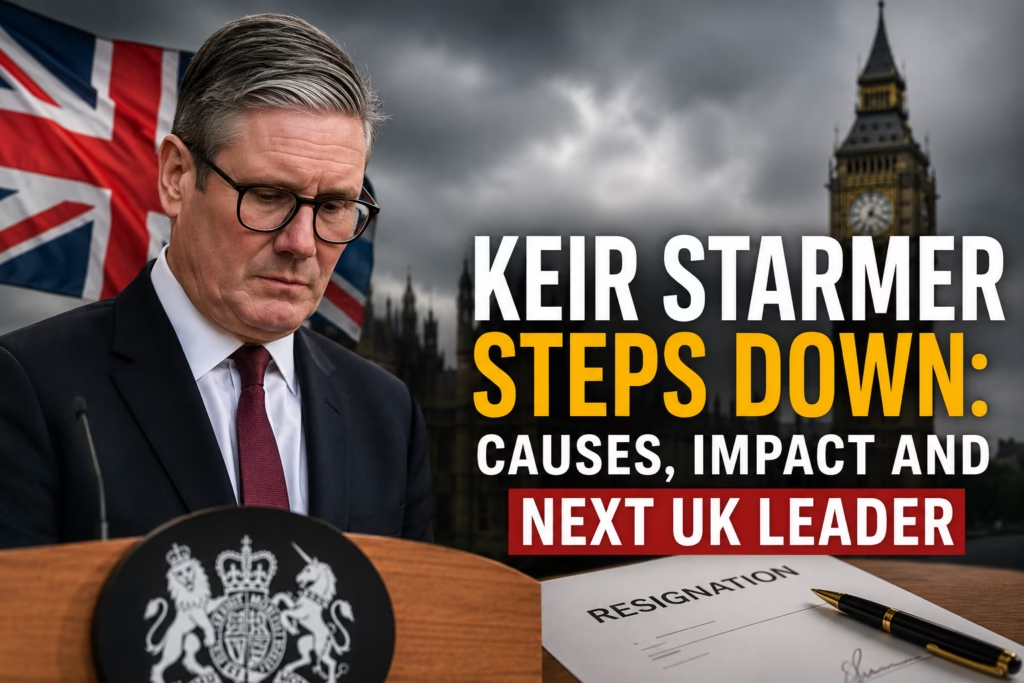
The United Kingdom has entered another period of political uncertainty after Prime Minister Keir Starmer announced his resignation less than two years after leading the Labour Party to a historic election victory. The decision marks a dramatic turning point in British politics and opens the door for a new leader to take charge of the country at a critical moment.
Starmer’s resignation comes after months of growing pressure from within his own party, disappointing election results, declining public support, and increasing concerns about Labour’s future. His departure makes him the latest in a long line of British prime ministers to leave office amid political turbulence, highlighting the ongoing volatility of UK politics in the post-Brexit era.
For many observers, the resignation is not just about one politician stepping down. It raises important questions about the direction of the Labour Party, the future of the UK economy, and who will emerge as Britain’s next leader.
Who Is Keir Starmer?
Keir Starmer entered national politics with a reputation as a respected lawyer and former Director of Public Prosecutions. He became leader of the Labour Party in 2020 and was credited with rebuilding the party after years of internal divisions and electoral struggles.
In the 2024 general election, Starmer led Labour to a landslide victory, ending years of Conservative rule and securing one of the largest parliamentary majorities in modern British history. His campaign focused on stability, economic growth, public service reform, and restoring trust in government. Many voters viewed him as a pragmatic leader capable of bringing order after years of political uncertainty.
However, governing proved far more challenging than winning an election.
Why Did Keir Starmer Resign?
The resignation did not happen overnight. It was the result of mounting pressure that had been building for months.
One of the biggest factors was Labour’s poor performance in local and regional elections. The party suffered significant losses across England, Scotland, and Wales, causing concern among MPs who feared Labour was losing support ahead of the next general election. The rise of Nigel Farage’s Reform UK further intensified those concerns, as opinion polls suggested Labour could face a serious challenge if trends continued.
Many Labour MPs reportedly questioned whether Starmer remained the best person to lead the party. Senior figures within the government expressed frustration over what they viewed as weak communication, policy inconsistencies, and an inability to establish a clear long-term vision for the country.
During his resignation announcement, Starmer acknowledged these concerns and accepted that many within his parliamentary party no longer believed he was the right person to lead Labour into the next election.
The Political Challenges That Weakened His Leadership
Starmer’s government faced multiple challenges during its relatively short time in office.
The UK economy remained under pressure from inflation concerns, cost-of-living issues, and slow economic growth. Many voters expected rapid improvements after Labour’s election victory, but progress proved slower than anticipated.
At the same time, Labour struggled to communicate a compelling vision that resonated with voters. Critics argued that Starmer focused heavily on management and pragmatism while failing to inspire the public with a broader political mission. This perception gradually damaged his popularity among both voters and party members.
The government also faced criticism over several policy decisions and appointments. Internal controversies created distractions that weakened confidence in the administration and contributed to growing dissatisfaction within Labour ranks.
As pressure increased, calls for leadership change became louder.
The Rise of Andy Burnham
A major catalyst for Starmer’s resignation was the growing influence of Andy Burnham.
The former Mayor of Greater Manchester has long been regarded as one of Labour’s most recognizable and popular figures. Burnham recently returned to Westminster after winning a parliamentary seat and quickly emerged as the leading candidate to replace Starmer.
His success energized many Labour MPs who believed he could reconnect the party with voters and better compete against political rivals.
Following Starmer’s resignation announcement, Burnham confirmed his intention to seek the Labour leadership. Several potential rivals also indicated support for his candidacy, making him the clear frontrunner to become the next Prime Minister.
For many within Labour, Burnham represents an opportunity to reset the government’s agenda and rebuild public confidence.
How the Labour Party Reacted
The reaction within Labour was mixed.
Many MPs expressed respect for Starmer’s decision and praised his efforts to restore the party’s credibility after years of division. They acknowledged his role in delivering Labour’s historic 2024 election victory and recognized the difficult circumstances he faced while governing.
At the same time, there was a sense of relief among some members who believed a leadership change had become necessary.
Several senior figures emphasized the importance of ensuring a smooth transition to avoid further political instability. Calls for unity became a central theme as Labour prepared for a leadership contest that could shape the party’s future for years to come.
The challenge now is maintaining party cohesion while selecting a new leader capable of reversing Labour’s declining popularity.
Impact on the United Kingdom
Starmer’s resignation has significant implications for the country.
Political transitions often create uncertainty for businesses, investors, and international partners. Markets generally prefer stability, and any prolonged leadership contest could raise concerns about future economic policy and government priorities.
The UK is currently facing several major challenges, including economic growth, public service reform, housing shortages, and ongoing cost-of-living pressures. A new Prime Minister will inherit these issues immediately and face pressure to deliver tangible results.
There are also questions about how a new leader might adjust Labour’s policy agenda. Changes in priorities could affect taxation, infrastructure spending, public services, and industrial policy.
For ordinary citizens, the leadership transition could influence everything from economic confidence to public sector reforms.
International Implications
The resignation is attracting attention far beyond Britain.
The United Kingdom remains one of the world’s largest economies and plays an important role in international diplomacy, security cooperation, and global trade.
During his time in office, Starmer was active in strengthening relationships with European partners and supporting Ukraine during ongoing geopolitical tensions. International leaders have acknowledged his contributions to European security and foreign policy cooperation.
A new Prime Minister may bring different priorities and approaches to international affairs. Allies will be watching closely to see whether Britain’s foreign policy direction changes under new leadership.
The transition could also influence relations with the United States, the European Union, and other key partners.
What Happens Next?
Starmer has stated that he will remain in office temporarily while Labour completes the process of selecting a new leader. The transition is expected to take place over the coming weeks, with a new Prime Minister potentially installed before Parliament returns after the summer recess.
The Labour Party will begin formal leadership procedures, allowing candidates to seek nominations and campaign for support.
Although other candidates may enter the race, Andy Burnham currently appears to be the overwhelming favorite. Support from influential Labour figures has strengthened his position and increased expectations that he could become Britain’s next Prime Minister.
Once a new leader is selected, attention will quickly shift toward the government’s future direction and whether Labour can recover lost public support.
Could This Change the Future of British Politics?
Many political analysts believe Starmer’s resignation reflects broader changes taking place within British politics.
Traditional party loyalties have weakened, voter expectations have increased, and political competition has become more intense. The rise of alternative political movements has created new challenges for both Labour and the Conservatives.
The next Prime Minister will need to address not only immediate policy issues but also deeper questions about public trust, political engagement, and the future of the UK’s political system.
Whether Labour can successfully navigate this transition may determine its prospects for the next general election.
Final Thoughts
Keir Starmer’s resignation marks the end of a significant chapter in British politics. Less than two years after leading Labour to a historic victory, he leaves office amid growing political pressure, electoral setbacks, and internal party concerns. While his supporters credit him with rebuilding Labour and restoring it to power, critics argue that his government struggled to maintain momentum and connect with voters.
The focus now shifts to the future.
With Andy Burnham emerging as the leading contender to succeed him, Britain may soon have a new Prime Minister and a new political direction. The coming weeks will be crucial not only for the Labour Party but for the entire United Kingdom as it enters yet another period of political transition.