
|
Getting your Trinity Audio player ready...
|
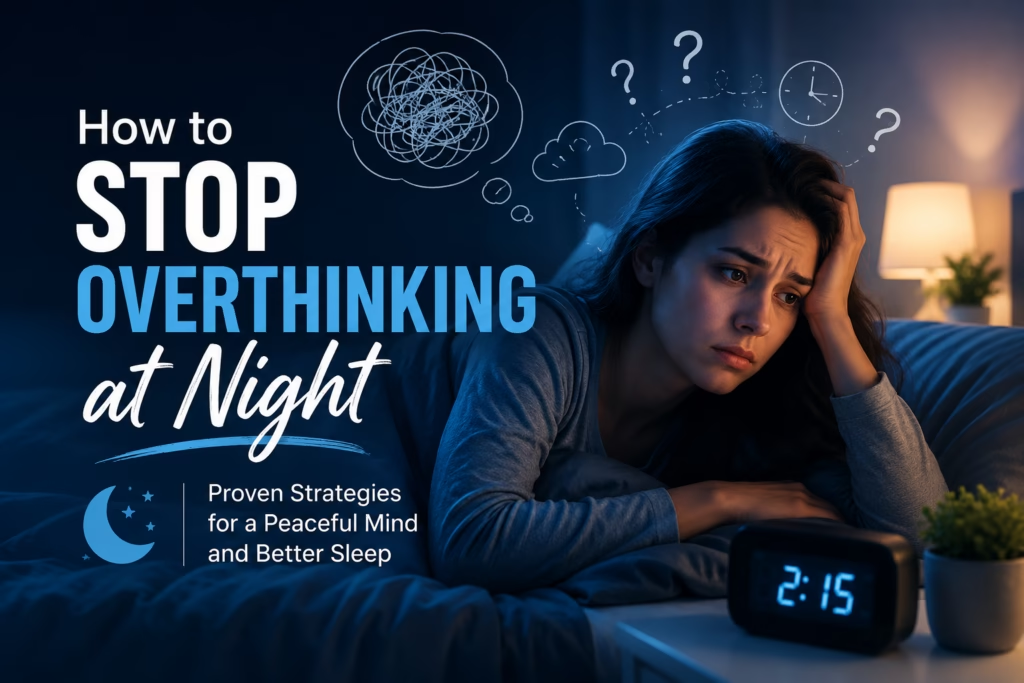
Have you ever climbed into bed feeling exhausted, only to find your mind suddenly racing with thoughts, worries, memories, and endless “what if” scenarios? You’re not alone. Millions of people struggle with overthinking at night, turning what should be a peaceful transition into sleep into hours of mental activity.
Nighttime overthinking has become increasingly common in today’s fast-paced world. While the body may be physically tired, the mind often remains active, replaying conversations, analyzing decisions, worrying about the future, or imagining worst-case scenarios. This cycle can make it difficult to fall asleep, reduce sleep quality, and negatively impact mental and physical health.
The problem is not simply thinking. Thinking is normal and necessary. Overthinking occurs when thoughts become repetitive, unproductive, and emotionally draining. Instead of helping solve problems, overthinking often creates more stress and anxiety.
The good news is that overthinking can be managed. By understanding why it happens and applying proven techniques, you can calm your mind, improve your sleep, and wake up feeling more refreshed.
Why Do People Overthink More at Night?
Many people notice that their minds become more active once they turn off the lights and try to sleep. During the day, work, social interactions, entertainment, and responsibilities keep the brain occupied. At night, these distractions disappear.
The quiet environment creates space for thoughts that may have been ignored throughout the day. Concerns about work, relationships, finances, health, and future goals often rise to the surface.
Additionally, fatigue can make emotional regulation more difficult. When the brain is tired, it may struggle to process thoughts effectively, causing worries to feel larger and more overwhelming than they actually are.
This combination of reduced distractions and mental exhaustion creates the perfect conditions for overthinking.
What Happens to Your Brain When You Overthink?
Overthinking activates areas of the brain associated with problem-solving and threat detection. The brain essentially remains in a state of alertness rather than preparing for rest.
When you repeatedly analyze situations or worry about potential outcomes, your body may release stress hormones such as cortisol. Elevated cortisol levels can increase heart rate, tension, and alertness, making it harder to fall asleep.
Over time, chronic overthinking can create a cycle where poor sleep leads to more stress, and more stress leads to additional overthinking.
Breaking this cycle is essential for both mental and physical well-being.
Common Signs of Nighttime Overthinking
Recognizing the signs of overthinking can help you address the problem more effectively.
Many people experience racing thoughts as soon as they lie down. Others replay conversations repeatedly, wondering if they said the wrong thing or should have acted differently.
Some individuals constantly imagine future problems that have not yet occurred. Others create detailed scenarios based on unlikely outcomes.
Physical symptoms may also appear. Increased heart rate, muscle tension, restlessness, headaches, and difficulty relaxing often accompany excessive thinking.
If you frequently struggle to fall asleep despite feeling tired, overthinking may be playing a significant role.
How Overthinking Affects Your Sleep
Sleep is essential for brain function, emotional regulation, and overall health. When overthinking interferes with sleep, the consequences can be significant.
Insufficient sleep can reduce concentration, memory, productivity, and decision-making abilities. It may also increase irritability, anxiety, and stress levels.
People who consistently experience poor sleep are often more vulnerable to mental health challenges and physical health issues.
Over time, the combination of sleep deprivation and chronic stress can affect immune function, cardiovascular health, and overall quality of life.
Addressing nighttime overthinking is therefore about much more than simply getting better sleep.
Create a Brain Dump Before Bed
One of the most effective ways to reduce overthinking is to transfer thoughts from your mind onto paper.
Before going to bed, spend ten to fifteen minutes writing down everything on your mind. This can include worries, tasks, ideas, reminders, or unresolved issues.
The goal is not to solve every problem. Instead, it is to signal to your brain that these thoughts have been recorded and can be addressed later.
Many people find that writing helps reduce mental clutter and makes it easier to relax.
This simple habit can significantly decrease nighttime mental activity.
Practice Deep Breathing Techniques
Breathing exercises help activate the body’s relaxation response and reduce stress.
When people overthink, their breathing often becomes shallow and rapid without them realizing it. Slow, controlled breathing sends signals to the nervous system that it is safe to relax.
One effective technique involves inhaling slowly through the nose, holding the breath briefly, and exhaling gradually through the mouth.
Focusing on breathing helps redirect attention away from racing thoughts and toward the present moment.
With regular practice, deep breathing can become a powerful tool for managing nighttime anxiety and overthinking.
Avoid Stimulation Before Bed
Many people unknowingly make overthinking worse by consuming stimulating content before sleep.
News articles, social media debates, stressful television programs, and work-related activities can keep the brain highly active.
The blue light emitted by electronic devices may also interfere with the body’s natural sleep signals.
Creating a calming bedtime routine can help prepare the mind for rest.
Reading a book, listening to relaxing music, or practicing meditation may be more beneficial than scrolling through social media.
Reducing stimulation before bedtime often leads to calmer thoughts and improved sleep quality.
Challenge Negative Thought Patterns
Overthinking frequently involves distorted thinking patterns that exaggerate problems or assume negative outcomes.
When you notice yourself imagining worst-case scenarios, pause and ask whether there is actual evidence supporting those fears.
Often, the mind treats possibilities as probabilities, making unlikely events seem inevitable.
Learning to question and challenge irrational thoughts can reduce their emotional impact.
Replacing catastrophic thinking with balanced, realistic perspectives helps create a calmer mental environment.
Focus on What You Can Control
A significant portion of overthinking involves situations beyond our control.
People often worry about future events, other people’s opinions, or outcomes that cannot be predicted.
Shifting attention toward actions you can actually take is far more productive.
Instead of repeatedly thinking about a problem, identify one small step you can take tomorrow to address it.
This approach transforms worry into action and reduces feelings of helplessness.
The more you focus on controllable factors, the less power overthinking tends to have.
Use Mindfulness to Stay Present
Mindfulness involves paying attention to the present moment without judgment.
Overthinking usually pulls people into the past or future. Mindfulness gently brings attention back to the here and now.
Simple mindfulness practices may include focusing on breathing, observing physical sensations, or listening to surrounding sounds.
The goal is not to eliminate thoughts entirely but to avoid becoming trapped in them.
Regular mindfulness practice can strengthen your ability to observe thoughts without reacting emotionally.
Over time, this skill can dramatically reduce nighttime overthinking.
Establish a Consistent Sleep Routine
The brain responds well to routine. Going to bed and waking up at the same time each day helps regulate internal sleep patterns.
A consistent schedule signals to the body when it is time to relax and prepare for sleep.
Creating a predictable bedtime routine can also reduce mental activity.
Activities such as reading, stretching, journaling, or meditation can become cues that encourage relaxation.
The more consistent your routine becomes, the easier it may be to fall asleep without becoming caught in cycles of overthinking.
Reduce Caffeine and Late-Night Stimulants
Caffeine can remain in the body for several hours and may contribute to increased alertness and racing thoughts.
Consuming coffee, energy drinks, or other stimulants late in the day can make it more difficult for the brain to settle down at night.
Limiting caffeine intake during the afternoon and evening may improve both sleep quality and mental calmness.
Many people notice significant improvements simply by adjusting their caffeine habits.
Small lifestyle changes often produce surprisingly meaningful results.
When Overthinking May Require Professional Support
While occasional overthinking is normal, persistent and severe overthinking may indicate underlying anxiety, stress disorders, or other mental health concerns.
If overthinking regularly interferes with sleep, work, relationships, or daily functioning, professional support may be beneficial.
Mental health professionals can provide evidence-based strategies tailored to individual needs.
Seeking help is not a sign of weakness. It is a proactive step toward improving mental well-being and quality of life.
Many people experience significant improvements through counseling, therapy, and structured coping techniques.
Building a Calmer Relationship With Your Thoughts
The goal is not to eliminate thinking. Human beings naturally think, reflect, plan, and analyze.
The objective is to prevent thoughts from controlling your emotions and disrupting your sleep.
By developing healthier thinking habits, practicing relaxation techniques, and focusing on the present moment, you can gradually reduce nighttime overthinking.
Progress may take time, but small changes often lead to meaningful improvements.
A calmer mind creates better sleep, better health, and a more positive outlook on life.
Conclusion
Overthinking at night is a challenge faced by millions of people around the world. While it can feel overwhelming, it is important to remember that overthinking is a habit that can be managed and improved.
Understanding why it happens, recognizing its impact, and applying practical strategies can help break the cycle of racing thoughts and sleepless nights.
Whether through journaling, mindfulness, breathing exercises, healthier routines, or professional support, there are many effective ways to regain control over your mind.
The next time your thoughts begin racing at bedtime, remember that you do not have to follow every thought. Sometimes the most powerful thing you can do is simply let it pass.
FAQs
Why do I overthink more at night?
People often overthink more at night because daytime distractions disappear, allowing worries and unresolved thoughts to become more noticeable.
Can overthinking cause sleep problems?
Yes. Overthinking can increase stress levels, elevate cortisol production, and make it difficult to fall asleep or stay asleep.
What is the fastest way to calm an overthinking mind?
Deep breathing, mindfulness exercises, and writing down thoughts are among the quickest methods for reducing mental activity before sleep.
Can overthinking affect physical health?
Yes. Chronic overthinking and stress may contribute to headaches, fatigue, muscle tension, digestive issues, and sleep disturbances.
Is overthinking a sign of anxiety?
Not always, but excessive overthinking can be associated with anxiety and stress-related conditions.
How long does it take to stop overthinking at night?
The timeline varies from person to person. Consistent practice of healthy coping strategies can lead to noticeable improvements over several weeks.