|
Getting your Trinity Audio player ready...
|
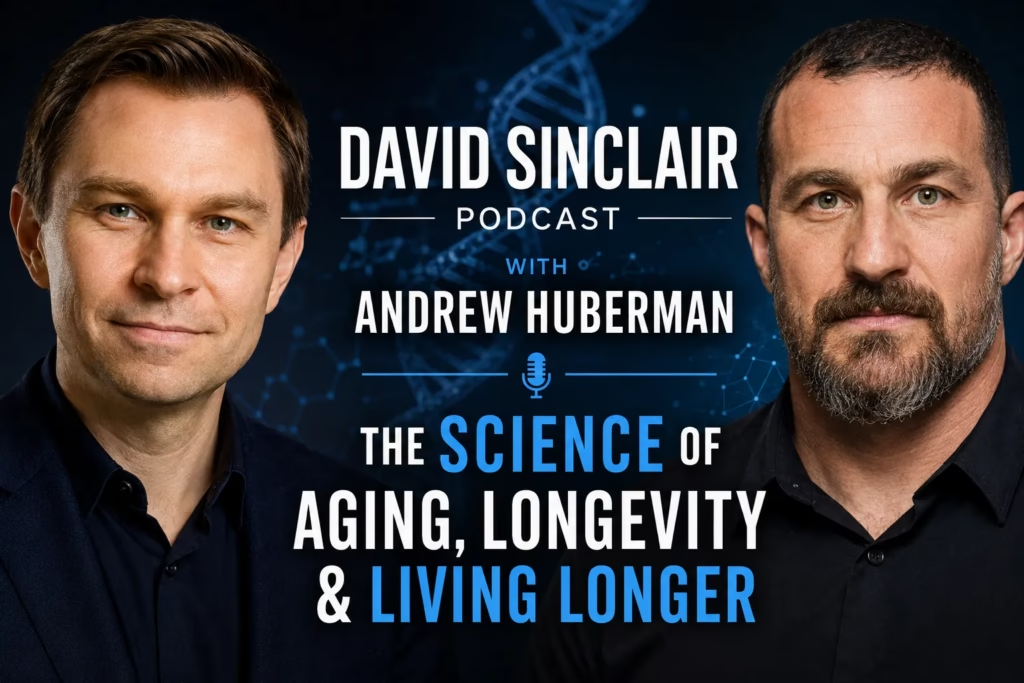
It goes without saying, the Huberman Lab Podcast has hosted numerous phenomenal, groundbreaking conversations. In one such episode, legendary geneticist and longevity researcher, entrepreneur, author, and professor David Sinclair has sat down with Andrew Huberman. Renowned worldwide for his leading research in aging and lifespan, David Sinclair is widely accepted as one of the leading scientists behind humanity’s aging and lifespan issues. As a professor at Harvard Medical School, he has written Lifespan, an internationally bestselling book exploring his many studies in age and health, as well as the human body’s biological processes that affect our longevity. In his discussion with Huberman, Sinclair has dived deep into genetics, longevity, cellular repair, the prevention of various diseases and ailments, exercise, nutrition, supplements, biological age, and what future medical developments will look like. One of the most engaging and viewed conversations on the Huberman Lab Podcast to date, it offered viewers a breathtaking insight into the possible future of medicine and healthcare.
- The Beginning of the Conversation
- Why Humans Age
- Genetics and Longevity
- Biological Age vs. Chronological Age
- Cellular Repair and Regeneration
- The Role of Exercise
- Nutrition and Longevity
- Disease Prevention
- The Future of Anti-Aging Research
- Living Better, Not Just Longer
- Why This Podcast Became So Popular
- Future medical innovations
- About David Sinclair
- Why You Should Watch This Podcast
The Beginning of the Conversation
Huberman begins the podcast episode by asking David Sinclair about what led him to study longevity. Sinclair notes that early in his scientific career, he began wondering why living organisms, including humans, get old and die. For many years, aging has been understood as something unavoidable; nonetheless, with new knowledge of genes and molecules, that ideology has changed entirely. He has explained how modern scientific discoveries will one day change the future of how we age, along with the role in which lifestyles and even new medicines may play in controlling such phenomena. Sinclair believes that understanding human aging is one of the greatest questions modern medicine faces today.
Why Humans Age
A significant part of the discussion was on human aging itself and why it occurs. Sinclair explained that aging is a biological process that involves the loss of important information stored in our DNA. Throughout life, this information becomes degraded, making cells and their functions decline due to less efficient repair mechanisms. Unlike what some have theorized in the past, Sinclair noted that the aging process is due to a complex array of interconnected biological functions and that new discoveries are continually being made regarding exactly how such processes happen. This aspect of the conversation particularly fascinated listeners because it brought new and unconventional insights into a subject most have already accepted and internalized.
Genetics and Longevity
In one of the major components of the conversation, the two subjects discussed genes and how they can be linked to aging and a longer lifespan. According to Sinclair, our genes have an impact on our biology which can also affect how aging affects us throughout our lives. The discussion looked at some specific genetic paths that allow for cellular repair, the resistance against stress, and the function of metabolism. Sinclair mentioned certain genes that have been found to enable life in even harsh conditions, and this is something he and his colleagues are continuing to research in the pursuit of a longer human lifespan. This area of research has recently grown to be an exceptionally engaging part of modern biological study.
Biological Age vs. Chronological Age
Another amazing idea covered in the episode was the relationship between biological age and chronological age. Sinclair distinguishes the two in stating that chronological age is simply a measure of how many years an individual has lived, whereas biological age takes into account the overall health and condition of the individual’s body systems and tissues. The dialogue then explored how individuals can both have similar chronological ages but completely different biological ages and why it is the former that an individual must focus on if they wish for a longer and healthier lifespan. This discussion showed that everyday lifestyle and environmental factors greatly contribute to biological age and what sort of impacts they can have on us for decades to come.
Cellular Repair and Regeneration
In an exceedingly exciting part of the discussion, Sinclair shed light on a very important function of the human body; cellular repair. He emphasized how the body is equipped with very sophisticated systems for repairing the cellular damage that life inflicts, and how these functions prevent the body from undergoing age-related diseases. Much of the research by longevity scientists involves trying to enhance these natural biological repair mechanisms in hopes that medicine will someday be able to reverse signs of aging. This conversation was riveting because it introduced listeners to groundbreaking possibilities of how science can soon play an even bigger role in optimizing our health and the length of our lifespan.
The Role of Exercise
Amongst all of the amazing biological insights revealed on the episode, exercise proved to be a key contributor to longevity, with Sinclair referring to it as one of the most accessible health technologies. According to Sinclair, the body naturally utilizes beneficial mechanisms during physical activity that contribute to health and survival. Exercise not only enhances the functioning of our cardiovascular system and metabolism, but it can also have major positive effects on our cognition and resilience. He suggested that as simple and traditional as exercise is, it remains one of the most effective interventions we can utilize to make our lives healthier for longer. This insight was very practical and resonating.
Nutrition and Longevity
Another important contributor that was brought up in the conversation between Sinclair and Huberman was nutrition. This area of lifestyle was noted as something that has a significant impact on our biological systems associated with aging. Sinclair elaborated on nutrient quality, metabolism, and how energy production in our bodies can greatly affect our longevity, but emphasized the need for consistent healthy habits rather than severe diet modifications. This balanced view was something that many listeners found appealing and easy to follow.
Disease Prevention
On this groundbreaking podcast episode, one of the biggest takeaways of the discussion included disease prevention. Sinclair believes that aging is the leading risk factor for a large amount of chronic illnesses. Cardiovascular disease, cancers, metabolic issues, and Alzheimer’s are just a few that were highlighted as being more likely with increased biological age. He emphasized that by preventing the natural aging of the human body, multiple illnesses may be preventable all at once. This insight aligned well with Andrew Huberman’s continued pursuit of the optimal human lifestyle.
The Future of Anti-Aging Research
The show had an especially thought-provoking session where David Sinclair spoke on the future of medicine. He explained how recent advancements in gene therapy, molecular technology, and regenerative medicine are making treatments and solutions for aging possible at a rapid rate. The future, according to Sinclair, will see entirely new and innovative forms of healthcare and many of the “science fiction” possibilities will be at our fingertips very soon. This aspect of the podcast enthralled many, and listeners are excited for what the future of medicine will look like.
Living Better, Not Just Longer
However, the entire discussion was not just focused on making humans live longer; it was also about living healthier and better lives. Sinclair argues that by promoting healthspan, the time spent in our lives feeling well, active and productive will also significantly increase. He mentioned how it’s the combination of physical health and mental well-being that contribute to a fulfilling life and how the research being conducted will soon help us not only lengthen our lives but also maximize the quality of our remaining years.
Why This Podcast Became So Popular
The Huberman Lab Podcast episode featuring David Sinclair quickly became one of the most highly watched and widely discussed of all their longevity-focused conversations because it perfectly combined cutting-edge, novel scientific information with easily implementable and actionable advice for listeners. Audiences loved the topics and explanations concerning:
- Aging research
- Longevity science
- Genetics and health
- Cellular repair mechanisms
- Disease prevention strategies
- Nutrition and lifestyle tips
Future medical innovations
The podcast was not only educational but was also incredibly positive and made viewers feel excited about the potential health outcomes that can be achieved.
About David Sinclair
David Sinclair is a genetics expert, Harvard Medical School professor, innovative researcher, successful entrepreneur, published author, and worldwide recognized longevity guru. He has become known throughout the world for his pioneering work on aging, cell health, and genes which impact lifespan. Through his published studies, many books, lectures, and other educational outlets, he continues to profoundly affect the field of human longevity.
David Sinclair Businesses and Ventures
- Life Biosciences
- Animal Biosciences
- Iduna
- Biotechnology Investments
- Longevity Research Programs
- Book Publishing
- Public Speaking Events
- Academic Research Initiatives
David Sinclair Social Media Accounts
Why You Should Watch This Podcast
This podcast is highly recommended for entrepreneurs, professionals, students, healthcare enthusiasts, researchers, and anyone interested in longevity.
The discussion provides valuable insights into aging, genetics, disease prevention, biological health, and future medical innovations.
Whether someone wants to improve current health or understand the future of healthcare, the lessons remain highly relevant.
Conclusion
The conversation between David Sinclair and Andrew Huberman became one of the most fascinating longevity discussions featured on the Huberman Lab Podcast.
Through discussions about aging, genetics, cellular repair, disease prevention, and future scientific breakthroughs, Sinclair shared insights that may transform how people think about health and aging.
His message demonstrated that aging is not simply an unavoidable decline but an area of science filled with exciting possibilities and opportunities.
That powerful lesson is exactly why this episode remains one of the most influential conversations ever featured on the Huberman Lab Podcast.
1. Who is David Sinclair?
David Sinclair is a geneticist, professor, researcher, entrepreneur, author, and longevity expert known for his work on aging and lifespan research.
2. Why did this podcast become popular?
The podcast became popular because it explored longevity, genetics, anti-aging science, disease prevention, and future healthcare innovations.
3. What was the main focus of the conversation?
The discussion focused on aging, biological health, genetics, longevity science, cellular repair, and future medical technologies.
4. What did David Sinclair say about longevity?
He emphasized healthy lifestyle habits, preventive healthcare, exercise, nutrition, and scientific advancements that may improve healthspan.
5. Who should watch this podcast?
Entrepreneurs, students, healthcare professionals, researchers, and anyone interested in health and longevity can benefit from watching this episode.
Watch Full Podcast Here:
David Sinclair Podcast with Andrew Huberman – The Science of Aging, Longevity & Living Longer