|
Getting your Trinity Audio player ready...
|
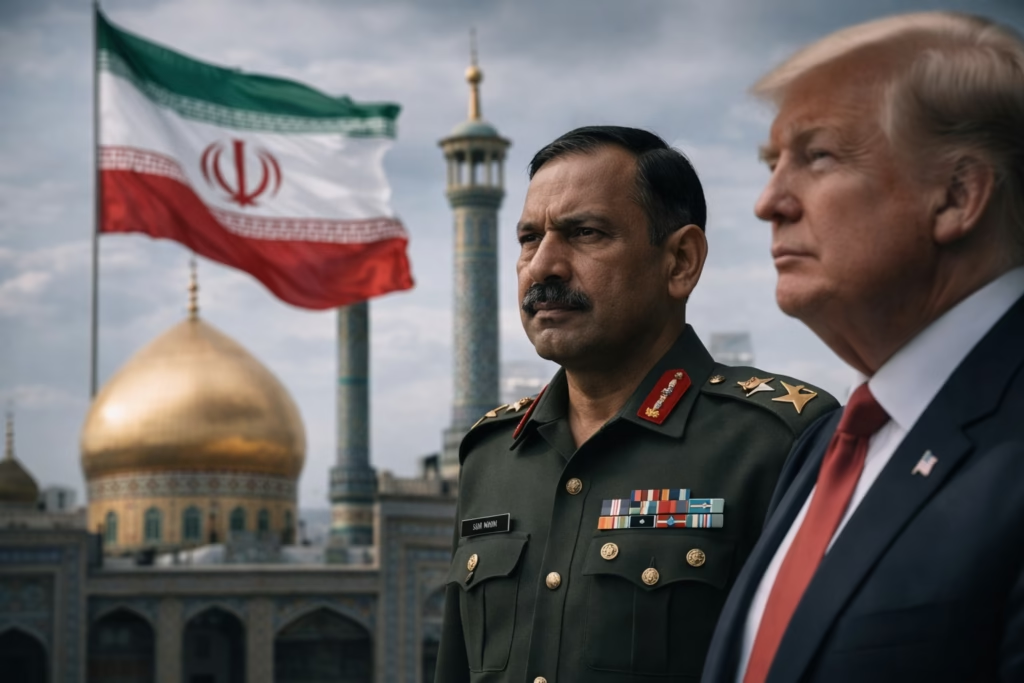
In a significant geopolitical development, Asim Munir has arrived in Iran carrying a peace proposal reportedly backed by Donald Trump. This move comes after crucial talks in Pakistan failed to produce a breakthrough, signaling a new phase in regional diplomacy.
Background of the Crisis
Tensions in the region have been escalating due to ongoing conflicts and strained diplomatic relations. Pakistan has been actively engaging in dialogue with multiple stakeholders to prevent further instability.
The Islamabad talks were seen as a critical opportunity to de-escalate tensions. However, negotiations failed to reach a consensus, forcing Pakistan to explore alternative diplomatic channels.
Munir’s Iran Visit
Following the failed discussions, Asim Munir traveled to Iran with what sources describe as a “peace framework” supported by Donald Trump.
This visit highlights Pakistan’s attempt to position itself as a mediator while maintaining strategic relationships with both regional and global powers.
Munir’s presence in Iran signals urgency, as the region faces increasing risks of conflict escalation.
Trump’s Role in the Proposal
Donald Trump’s involvement adds an interesting dimension to the situation. While no longer in office, Trump continues to influence international political narratives.
The proposed peace plan reportedly focuses on de-escalation, confidence-building measures, and reopening diplomatic channels between conflicting parties.
Analysts believe Trump’s backing may help bring global attention to the initiative, even if its practical impact remains uncertain.
Why Islamabad Talks Failed
The breakdown of talks in Islamabad reflects deep-rooted disagreements among stakeholders. Key issues include security concerns, territorial disputes, and lack of trust between negotiating parties.
Despite multiple rounds of discussions, negotiators failed to bridge these gaps. This failure has increased pressure on Pakistan to find alternative solutions quickly.
Iran’s Strategic Importance
Iran plays a crucial role in regional stability. Its influence across the Middle East makes it a key player in any peace effort.
By bringing the proposal to Iran, Pakistan aims to leverage Tehran’s diplomatic weight to push the initiative forward.
Iran’s response will be critical in determining whether the proposal gains traction or fades away.
Global Reactions
The international community is closely monitoring these developments. Countries with strategic interests in the region are evaluating how this initiative could impact their own policies.
Some analysts see this as a bold diplomatic move, while others remain skeptical about its effectiveness.
The involvement of multiple actors, including a former US president, adds complexity to the situation.
Potential Outcomes
Several scenarios could emerge from this development:
- Iran may support the proposal and facilitate broader negotiations
- The plan could evolve into a multilateral peace initiative
- The effort may fail if key stakeholders reject the terms
Each outcome carries significant implications for regional stability.
Challenges Ahead
The biggest challenge lies in building trust among conflicting parties. Without trust, even the most well-designed peace plans struggle to succeed.
Additionally, political interests and internal pressures within each country could influence decision-making.
Pakistan must navigate these complexities carefully to maintain credibility as a mediator.
Conclusion
Asim Munir’s visit to Iran marks a critical moment in regional diplomacy. It reflects both urgency and ambition in addressing a complex geopolitical crisis.
However, success is far from guaranteed. The effectiveness of this initiative will depend on cooperation, trust, and the willingness of all parties to compromise.
For now, the world watches closely as this high-stakes diplomatic effort unfolds.