|
Getting your Trinity Audio player ready...
|
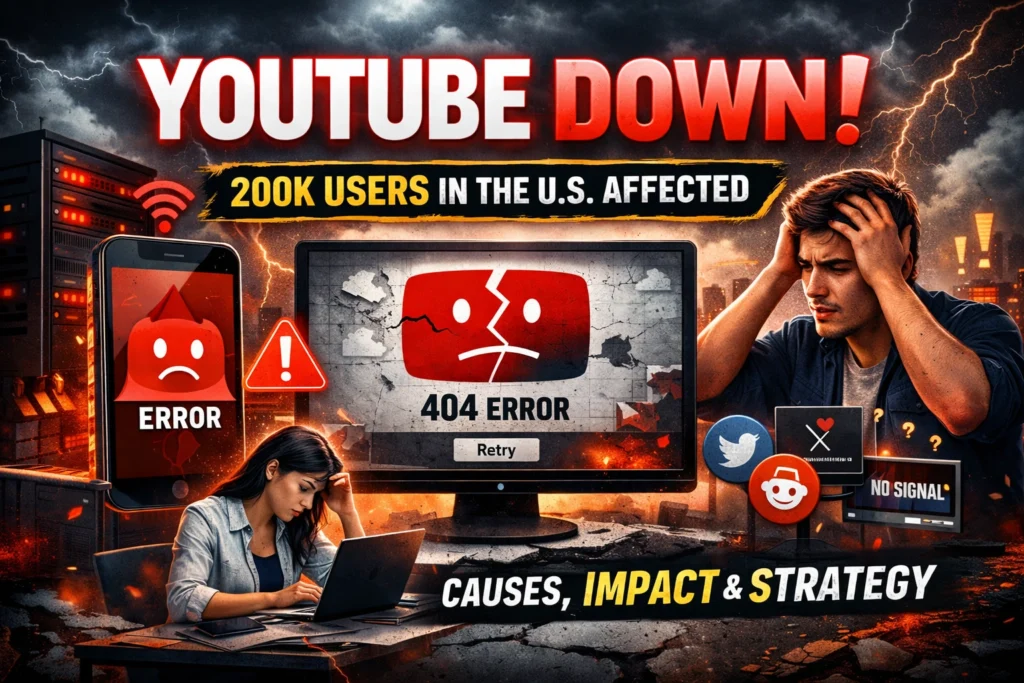
The internet witnessed another major disruption as YouTube reportedly went down for more than two lakh users in the United States. The outage sparked widespread panic among content creators, marketers, and viewers who rely heavily on the platform for entertainment, learning, and business operations.
Here’s a complete blog-style breakdown of what actually happened, why outages like this occur, and what it means for creators and digital businesses.
What Happened During the YouTube Outage?
According to reports, YouTube experienced a sudden service disruption affecting over 200,000 users in the U.S. Users faced issues such as:
- Videos not loading
- Buffering errors
- Login failures
- Playback interruptions
- Mobile and desktop access problems
This caused a massive spike in outage reports on tracking platforms like Downdetector, indicating a widespread technical issue rather than isolated user errors.
The outage began unexpectedly and affected both the website and mobile apps, leading to user frustration and social media outrage.
Why Did YouTube Go Down?
While Google typically resolves outages quickly, several technical reasons may cause such disruptions:
1. Server Overload
Heavy traffic spikes can overload servers, especially during peak hours or global events.
2. Backend System Failures
Internal infrastructure glitches, database crashes, or CDN failures can break video streaming services.
3. Software Updates Gone Wrong
Sometimes, new feature rollouts or backend updates introduce bugs that temporarily crash core services.
4. Cloud Network Issues
Since YouTube runs on Google Cloud infrastructure, any disruption in cloud networking can affect accessibility globally.
Experts believe the outage was likely caused by a temporary backend or server-side malfunction rather than user-side issues.
Impact on Creators, Businesses & Marketers
This outage wasn’t just a technical hiccup—it had real business consequences.
Major Impacts:
- Loss of ad revenue for creators
- Interrupted live streams and scheduled uploads
- Campaign delays for brands running YouTube ads
- Viewer drop-offs affecting engagement metrics
For digital marketers and SEO professionals, this highlights one brutal truth:
Depending on a single platform is risky.
A temporary outage can pause traffic, revenue, and visibility instantly.
Social Media Reactions: Chaos & Memes
As usual, the moment YouTube stopped working, users rushed to X (Twitter) and Reddit to confirm if the issue was global. Memes flooded timelines, and “YouTube down” started trending within minutes.
This behavior reflects a predictable pattern:
- Platform goes down
- Users panic-check Twitter
- Memes take over
- Service restores silently
That’s the modern internet cycle.
How Long Did the Outage Last?
Reports suggest the disruption lasted for a limited period before services gradually began restoring. Most users regained access once Google engineers rolled out fixes on the backend systems.
Even though the downtime wasn’t extremely long, the scale of affected users made it a significant digital event.
What This Means for SEO & Digital Strategy
Let’s be honest: this outage is a wake-up call.
If your entire traffic strategy depends only on YouTube, you’re sitting on a ticking time bomb.
Smart Digital Strategy After This Incident:
- Build an email subscriber list
- Repurpose videos into blog content
- Diversify platforms (Instagram, LinkedIn, Website SEO)
- Create backup hosting for important video content
Relying only on YouTube = unstable digital foundation.
Diversification = long-term growth and control.
Key Lessons for Content Creators
Here are the brutal but necessary takeaways:
- Platforms are powerful but not permanent
- Algorithm + server dependency is dangerous
- Owning your audience (email list, website traffic) is critical
- Backup distribution channels are no longer optional
If YouTube stops for 6 hours, your revenue shouldn’t go to zero. That’s the difference between creators and digital entrepreneurs.
Final Thoughts
The YouTube outage affecting more than two lakh users in the U.S. is another reminder that even tech giants are not immune to technical failures. While the issue was resolved quickly, it exposed the vulnerability of businesses and creators who rely solely on a single platform.
In the long run, the smartest move is simple:
Build your own traffic ecosystem, not just rented audiences.
Because when platforms go down, only owned assets keep running.
FAQs
Q1: Why was YouTube down for many users?
A technical backend or server-related issue likely caused the disruption, impacting playback and login services.
Q2: How many users were affected?
More than 200,000 users in the United States reported issues during the outage.
Q3: Did the outage affect India?
The major impact was reported in the U.S., but minor access issues may have been experienced in other regions.
Q4: How can creators protect themselves from such outages?
By diversifying platforms, building email lists, and maintaining a strong SEO-driven website presence.