|
Getting your Trinity Audio player ready...
|
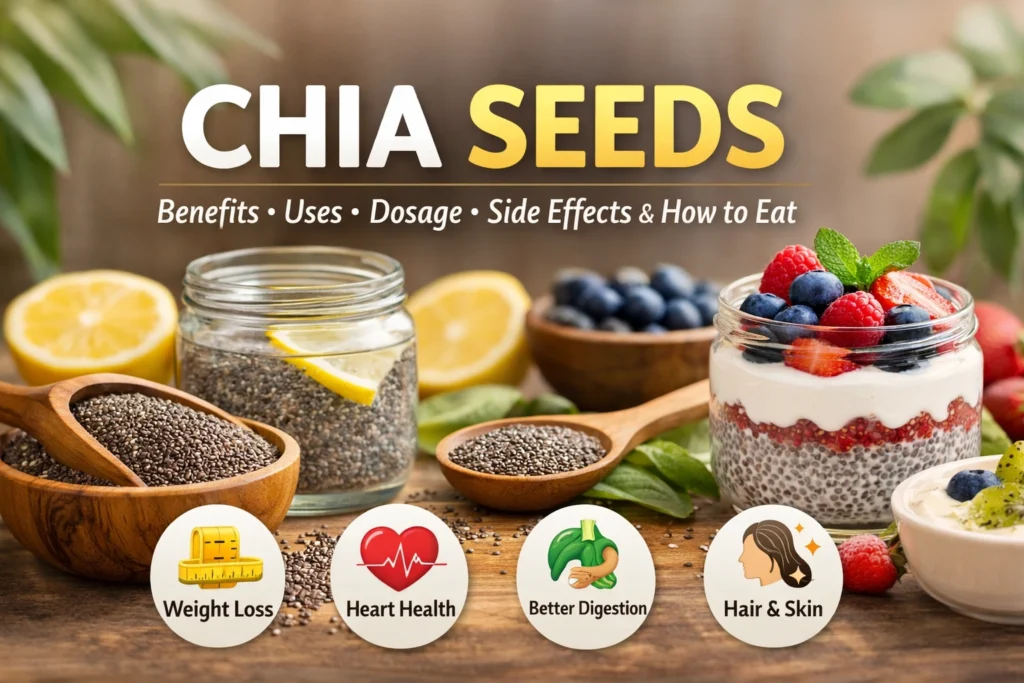
Chia seeds may look tiny, but they are one of the most powerful superfoods in the world. Packed with fiber, protein, omega-3 fatty acids, and essential minerals, chia seeds have become a global health trend for weight loss, digestion, heart health, and overall wellness.
Originally cultivated by the Aztecs and Mayans, chia seeds are now widely used across the United States, Europe, Australia, and rapidly growing in India due to increasing health awareness. This blog covers everything you need to know about chia seeds — benefits, nutritional value, how to consume them, daily dosage, best combinations, and possible side effects.
What Are Chia Seeds?
Chia seeds come from the plant Salvia hispanica, a member of the mint family. When soaked in liquid, they absorb up to 10–12 times their weight, forming a gel-like texture. This property makes them excellent for digestion, hydration, and appetite control.
Nutritional Value of Chia Seeds (Per 28g / 2 Tbsp.)
- Fiber: ~10 grams
- Protein: ~4 grams
- Omega-3 fatty acids: ~5 grams
- Calcium: ~18% of daily requirement
- Magnesium: ~30%
- Iron: ~12%
- Antioxidants: High
This nutrient density is why chia seeds are considered a complete superfood.
Top Health Benefits of Chia Seeds
1. Supports Weight Loss
Chia seeds are extremely high in fiber, which helps you feel full for longer. The gel formed after soaking slows digestion and reduces unnecessary snacking.
2. Improves Digestion & Gut Health
The soluble fiber in chia seeds feeds healthy gut bacteria, improves bowel movement, and helps prevent constipation.
3. Regulates Blood Sugar Levels
Chia seeds slow down carbohydrate absorption, helping stabilize blood sugar levels. This makes them beneficial for people with diabetes when consumed in moderation.
4. Boosts Heart Health
Omega-3 fatty acids help reduce inflammation, lower bad cholesterol (LDL), and improve overall heart function.
5. Strengthens Bones
Chia seeds contain calcium, phosphorus, and magnesium — essential minerals for bone density and strength.
6. Enhances Energy & Endurance
Athletes and fitness enthusiasts use chia seeds for sustained energy because they provide slow-release nutrients.
7. Improves Skin & Hair Health
Antioxidants and omega-3s support skin elasticity, reduce premature aging, and strengthen hair follicles.
How to Eat Chia Seeds (Best Methods)
1. Soaked Chia Seeds (Most Recommended)
Soak 1 tablespoon of chia seeds in 1 glass of water for at least 30 minutes or overnight.
Best for: Digestion, weight loss, hydration
2. Chia Seeds Water
Drink soaked chia seeds on an empty stomach in the morning.
Best for: Detox, metabolism boost
3. Add to Smoothies
Blend soaked or dry chia seeds with fruits and yogurt.
Best for: Protein intake, post-workout recovery
4. Mix with Yogurt or Curd
Improves gut health and nutrient absorption.
5. Sprinkle on Salads & Oats
Adds crunch and nutrition without altering taste.
With What Can You Eat Chia Seeds?
Chia seeds pair well with:
- Warm water or lemon water
- Milk or plant-based milk
- Yogurt or curd
- Oats and porridge
- Smoothies and juices
- Fruit bowls
- Protein shakes
Avoid mixing chia seeds with very dry foods without soaking.
Best Time to Eat Chia Seeds
- Morning (Empty Stomach): Best for weight loss and digestion
- Before Workout: For sustained energy
- Night: Can be taken with milk for digestion and satiety
Consistency matters more than timing.
Recommended Daily Dosage of Chia Seeds
- Beginners: 1 tablespoon per day
- Regular users: 1–2 tablespoons per day
- Maximum safe limit: 2 tablespoons per day
Always soak chia seeds before consumption to avoid choking or digestive discomfort.
Side Effects of Chia Seeds
While chia seeds are safe for most people, overconsumption or incorrect intake may cause:
- Bloating or gas
- Stomach discomfort
- Difficulty swallowing if eaten dry
- Possible allergic reactions (rare)
People with digestive disorders should start with small quantities.
Who Should Avoid or Limit Chia Seeds?
- People with swallowing difficulties
- Those with severe digestive sensitivity
- Individuals on blood-thinning medication (consult a doctor)
Chia Seeds vs Other Seeds
Compared to flax seeds or basil seeds, chia seeds offer better omega-3 content, longer satiety, and easier digestion when soaked properly.
Final Thoughts
Chia seeds are a simple, affordable, and powerful addition to a healthy diet. When consumed correctly and in the right dosage, they support weight loss, digestion, heart health, and overall wellness. The key is moderation, soaking, and consistency.
Adding just one tablespoon of chia seeds daily can make a noticeable difference in your health over time.