|
Getting your Trinity Audio player ready...
|
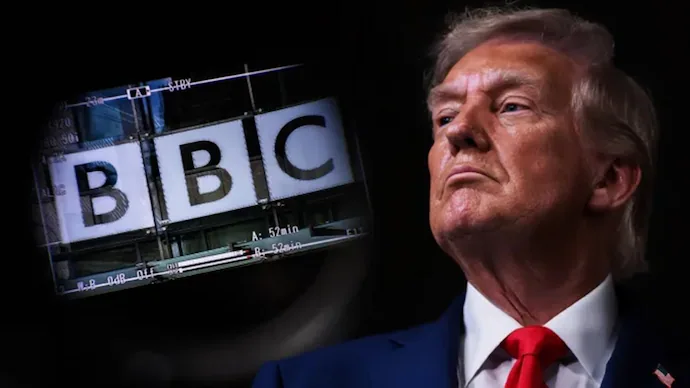
In mid-December 2025, former U.S. President Donald J. Trump launched one of the most aggressive legal actions ever taken against an international media organisation. Trump filed a $10 billion lawsuit against the British Broadcasting Corporation (BBC), accusing the public broadcaster of defamation and deceptive practices related to the editing of his January 6, 2021 speech.
The lawsuit, filed in a U.S. federal court in Florida, has instantly ignited global debate around media responsibility, political bias, free speech, and editorial power. While Trump has frequently clashed with media organizations, this case stands apart due to its scale, timing, and the international implications involved.
What Triggered the Lawsuit?
The dispute centres on a BBC Panorama documentary that examined the events surrounding the Capitol riot of January 6, 2021. In the documentary, the BBC aired an edited version of Trump’s speech delivered earlier that day.
According to Trump’s legal filing, the BBC selectively edited portions of the speech, combining separate statements in a way that allegedly made it appear as though Trump directly encouraged violence at the U.S. Capitol.
Trump’s team argues that:
- Key lines where Trump urged supporters to act “peacefully” were omitted
- Statements were rearranged to change context and intent
- The final edit created a misleading narrative that portrayed him as calling for violence
The lawsuit claims the editing crossed the line from journalism into deliberate misrepresentation.
Why the Lawsuit Is So Large
Trump is seeking at least $10 billion in damages, broken into two major claims:
- Defamation – alleging the BBC knowingly published misleading content that harmed his reputation
- Deceptive and unfair trade practices – arguing that the broadcaster misled audiences and damaged his political standing
Trump’s legal team states that the documentary caused “extraordinary reputational harm,” particularly because it aired shortly before the 2024 U.S. presidential election, a period when political perception is especially sensitive.
The lawsuit also claims the BBC’s actions contributed to long-term damage to Trump’s personal brand, business interests, and political legacy.
BBC’s Response and Internal Fallout
The BBC responded by issuing a formal public apology, acknowledging that the editing of the speech was an “error of judgment” and that the sequence may have given viewers the wrong impression.
However, the broadcaster stopped short of admitting legal liability. It maintains that:
- The documentary was produced in good faith
- Editorial decisions fall within journalistic discretion
- The lawsuit lacks a solid legal foundation
Despite this stance, the controversy has already had serious consequences inside the BBC. Senior editorial leadership resigned, and internal reviews were launched to re-examine editorial oversight, especially in politically sensitive reporting.
The Legal Challenge Ahead
Defamation cases involving public figures are notoriously difficult to win in the United States.
To succeed, Trump must prove “actual malice”, meaning the BBC either knowingly published false information or acted with reckless disregard for the truth. This is an extremely high bar designed to protect freedom of the press.
Additional legal hurdles include:
- Jurisdiction issues, since the documentary was produced and broadcast in the UK
- First Amendment protections, which strongly shield editorial speech
- International media law complexities, given the BBC’s public-service status
Legal experts are divided. Some believe the internal apology and resignations could strengthen Trump’s argument. Others argue that editorial mistakes do not automatically equal defamation.
A Familiar Pattern in Trump’s Media Battles
This lawsuit fits into a broader pattern of Trump’s confrontations with major media organisations. Over the years, he has accused numerous outlets of bias, misinformation, and coordinated attacks against him.
Supporters view this lawsuit as a long-overdue pushback against what they see as unchecked media power. Critics argue it represents an attempt to intimidate journalists and chill investigative reporting.
Regardless of perspective, the case underscores how media-politics relationships have grown increasingly adversarial in the digital era.
Why This Case Matters Beyond Trump
This legal battle is not just about one politician or one broadcaster.
It raises deeper questions:
- Where is the line between editing for clarity and manipulating meaning?
- How much accountability should global media organisations face when reporting on foreign political figures?
- Can traditional journalism survive growing legal and political pressure?
For the BBC, a publicly funded broadcaster with a reputation for impartiality, the case is particularly damaging. For global media, it serves as a warning about the legal risks of editorial framing in an age of extreme polarization.
Impact on Public Trust and Media Credibility
Public trust in media institutions has been steadily declining worldwide. High-profile cases like this further intensify skepticism, especially when corrections or apologies come after widespread dissemination.
Audiences increasingly question:
- What is shown
- What is left out
- Who decides the narrative
The Trump–BBC lawsuit amplifies these concerns and may push media organizations to adopt stricter internal checks, especially for politically explosive content.
What Happens Next?
The case is expected to move slowly through the legal system. Possible outcomes include:
- Jurisdictional dismissal
- Prolonged pre-trial litigation
- Out-of-court settlement
- A full trial that sets new legal precedents
Regardless of the outcome, the lawsuit has already achieved one thing: it has placed media accountability under an intense global spotlight.
Conclusion
Donald Trump’s $10 billion lawsuit against the BBC represents one of the most significant media-political confrontations in recent history. It blends questions of editorial ethics, legal accountability, political influence, and public trust into a single, high-stakes legal fight.
Whether Trump wins or loses in court, the implications of this case will echo far beyond one documentary. It challenges how stories are told, how power is framed, and how truth is interpreted in a deeply divided world.
One thing is certain: the relationship between politics and the press has entered a far more confrontational era — and this lawsuit is a defining moment in that shift.