|
Getting your Trinity Audio player ready...
|
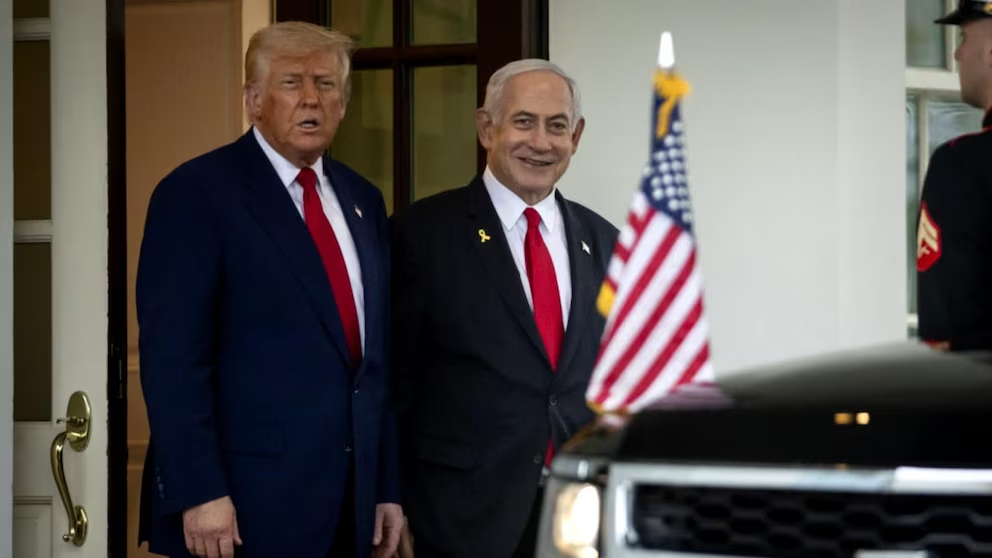
Late on 30 September 2025, Israel, under a US-backed proposal shaped by Donald Trump and Benjamin Netanyahu, announced it would not occupy Gaza — and no one would be forced to flee. The plan, hailed as a step toward peace, leaves far more questions than assurances on the table.
What Was Announced
- Trump and Netanyahu jointly revealed a 20-point plan to bring the Israel–Hamas war in Gaza to a close.
- Palestinians would not be displaced, and no mass exodus would be forced.
- A phased withdrawal of Israeli forces is envisaged, contingent on Hamas’ acceptance and compliance.
- All remaining hostages are to be released within 72 hours of agreement.
- An international “Board of Peace” will be established to monitor implementation.
- Trump warned that if Hamas refused, Israel would have his full backing to continue militarily.
- Netanyahu added that if Hamas fails to comply, Israel “will finish the job” unilaterally.
- Hamas has said it will review the plan “in good faith” through mediators such as Qatar and Egypt.
Strengths — Or At Least, Selling Points
- Symbolic Restraint
By promising no occupation or forced displacement, the plan seeks to project moral credibility in a conflict criticised worldwide for its humanitarian toll. - Conditional Diplomacy
With a ceasefire, hostage release, and international monitoring, the proposal attempts to balance war-weariness with hope. - Pressure on Hamas
Hamas faces a choice: accept the terms or risk total defeat. The plan’s structure is designed to push them towards acceptance. - US Leverage
By giving Israel full backing if talks collapse, the US guarantees political cover for further military action.
Weaknesses, Caveats, and Red Flags
- Unclear Guarantees
Without binding enforcement, promises of non-displacement can unravel quickly. - Hamas’ Legitimacy
Accepting terms may erode its standing, rejecting them may restart the war — both options carry risk. - Monitoring Doubts
The “Board of Peace” sounds promising, but questions linger over who runs it and whether it will be truly neutral. - Security Vacuums
A phased Israeli withdrawal could leave gaps that reignite violence. - Political Theatre
With Trump and Netanyahu under pressure, critics fear the plan may be more about optics than durable peace. - Threat of Force
The shadow of continued military action undermines confidence in the diplomatic overtures.
Why the World Is Watching — and Why It Might Not Work
This proposal will be judged not only by Israelis and Palestinians but also by regional powers like Egypt and Qatar, global actors such as the UN and EU, and international publics weary of conflict.
Yet scepticism runs high:
- Implementation gaps are common in past ceasefire deals.
- Power asymmetry favours Israel, which can pivot more easily than Hamas.
- Humanitarian urgency demands fast results for Gaza’s suffering population.
- Trust deficit threatens every stage of execution.
FAQs on the Trump–Netanyahu Gaza Deal
Q1. What is the Trump–Netanyahu Gaza deal about?
It is a 20-point proposal announced on 30 September 2025 to end the Israel–Hamas war in Gaza. The plan promises that Israel will not occupy Gaza, Palestinians will not be forcibly displaced, and all hostages will be released in exchange for Hamas’ compliance.
Q2. Does the plan guarantee that Palestinians will not be displaced?
The deal states no one will be forced to leave Gaza. However, critics highlight that without strong enforcement and monitoring, this commitment may be difficult to uphold in practice.
Q3. What role does Hamas play in the deal?
Hamas must accept the terms for the agreement to proceed. This includes halting hostilities and cooperating with international monitors. If Hamas refuses, Israel has US backing to continue its military campaign.
Q4. Who will monitor the deal’s implementation?
An international “Board of Peace” is proposed to oversee compliance. Details on who will sit on the board, how it will function, and whether it will have real enforcement powers remain unclear.
Q5. What happens if Hamas rejects the proposal?
If Hamas refuses to comply, Trump and Netanyahu have both signalled that Israel will resume and potentially intensify military operations in Gaza with full US support.
Q6. Why are critics sceptical about the deal?
Concerns include the lack of enforceable guarantees, the possibility of renewed violence during Israel’s phased withdrawal, questions over the neutrality of monitors, and the risk that the proposal is more political theatre than a workable peace framework.
Q7. How significant is this deal for the wider Middle East?
If implemented successfully, it could reshape regional dynamics, reduce humanitarian suffering, and open doors to broader negotiations. If it collapses, it risks deepening mistrust and escalating instability across the region.
Verdict: A Bold Gesture, But No Guarantees
The Gaza deal announced by Trump and Netanyahu is ambitious and politically charged. It offers a fragile chance for pause and diplomacy, but without firm guarantees, neutral oversight, and genuine buy-in, it risks collapse.
The world will watch closely — but peace will depend on substance, not just declarations.