|
Getting your Trinity Audio player ready...
|
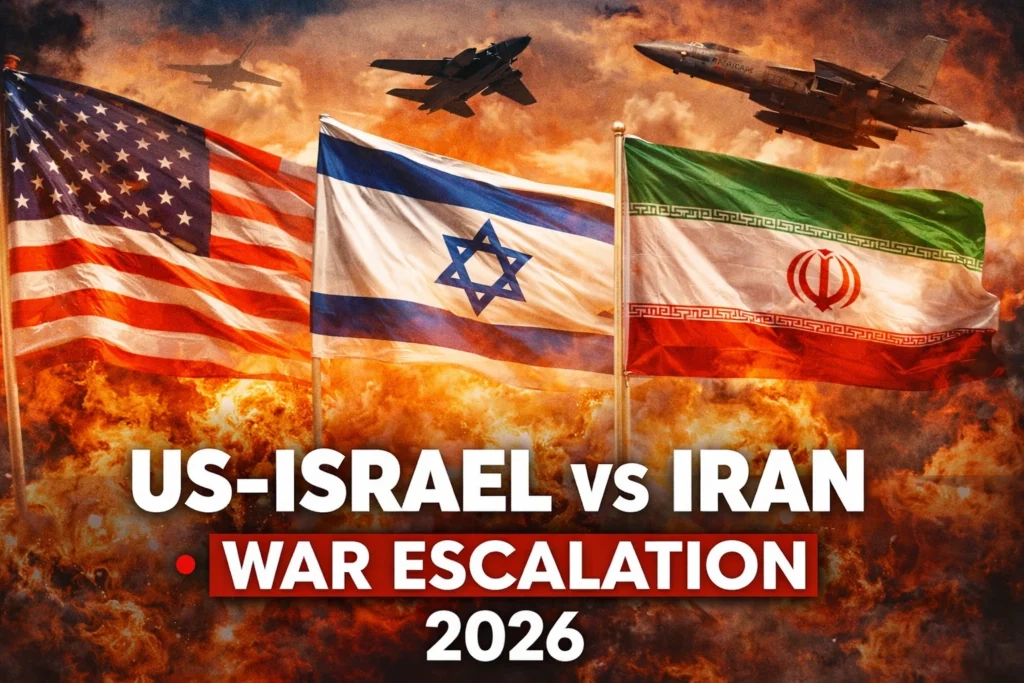
The Middle East has entered one of its most dangerous phases in decades. What once simmered beneath the surface has now erupted into direct confrontation between the United States, Israel, and Iran.
For years, these nations clashed indirectly through sanctions, cyber operations, and proxy groups. However, the current escalation marks a decisive shift. This time, military force is no longer operating in the shadows. It is front and center.
What Triggered the Escalation?
The immediate spark came from coordinated strikes targeting Iranian military infrastructure and strategic facilities. Leaders in Washington and Tel Aviv described the operation as a necessary preemptive move designed to neutralize long-term threats.
U.S. President Donald Trump and Israeli Prime Minister Benjamin Netanyahu both signaled that operations would continue until strategic objectives were achieved. In contrast, Iran’s Supreme Leader Ali Khamenei condemned the attacks and vowed retaliation.
As a result, Iran launched missile and drone strikes toward Israeli territory and U.S. bases across the Gulf. Within days, the conflict expanded beyond isolated targets and began affecting civilian infrastructure and regional stability.
Clearly, this is no limited exchange. It is an unfolding military campaign with global consequences.
From Proxy War to Direct Confrontation
Previously, tensions unfolded through indirect engagement. Iran supported armed networks across the region. Israel carried out calculated air operations. Meanwhile, the United States applied economic pressure and selective military responses.
Now, that indirect framework has collapsed.
Instead of shadow warfare, the sides are engaging each other directly. Consequently, the risk of rapid escalation has increased dramatically. When states strike sovereign territory, political leaders face enormous pressure to respond decisively.
Moreover, the involvement of Hezbollah has widened the battlefield. Rocket exchanges along Israel’s northern border demonstrate how quickly a regional conflict can multiply into multiple fronts.
Strategic Goals on Each Side
United States and Israel
Washington and Tel Aviv aim to:
- Disable Iran’s missile production and launch capabilities
- Disrupt suspected nuclear infrastructure
- Weaken Iran’s regional proxy influence
They argue that delaying action would have strengthened Iran’s military leverage. Therefore, they believe force now prevents greater instability later.
Iran
Tehran, on the other hand, seeks to:
- Demonstrate resilience against technologically superior forces
- Preserve regime authority
- Maintain influence across regional alliances
For Iran, perception matters as much as firepower. If it appears weak, its strategic credibility declines.
The Strait of Hormuz: A Global Flashpoint
Beyond military targets, energy security has become the central global concern. The Strait of Hormuz serves as one of the world’s most critical oil transit chokepoints.
If instability disrupts shipping routes there, oil prices surge immediately. Already, markets have reacted sharply. Insurance premiums have climbed. Shipping companies have rerouted vessels. Energy-dependent economies feel the pressure.
Therefore, this war does not remain regional. It directly influences inflation, fuel prices, and global economic confidence.
Diplomatic Tensions and Global Alignment
While missiles fly, diplomacy struggles to keep pace. The United Nations Security Council has faced urgent calls for de-escalation. However, consensus remains difficult.
At the same time:
- Russia has criticized Western military action and positioned itself strategically.
- China has urged restraint while protecting its energy interests.
- Members of NATO debate how far support should extend.
As a result, alliances are recalibrating. Countries are reassessing defense commitments, energy diversification strategies, and diplomatic priorities.
Economic Shockwaves Beyond Oil
Although oil dominates headlines, broader markets also feel the impact.
Defense sectors have gained momentum as governments increase security spending. Conversely, airline stocks face pressure due to airspace closures. Emerging markets tied to Middle Eastern trade routes experience currency volatility.
In addition, global investors demand stability. When uncertainty expands, capital retreats to safer assets. Therefore, prolonged conflict could trigger sustained market turbulence.
Escalation Risks: What Comes Next?
Several scenarios remain possible:
- Regional Expansion – Additional Gulf states could become directly involved.
- Cyber Warfare Surge – Banking systems and infrastructure may face digital attacks.
- Extended Air Campaign – Weeks of strikes could turn into months.
- Internal Pressure in Iran – Economic strain might fuel domestic unrest.
- Global Economic Downturn – Persistent energy disruption could slow growth worldwide.
Importantly, wars rarely follow predictable timelines. Even limited operations can spiral when miscalculations occur.
The Nuclear Dimension
Another critical factor involves nuclear capability. Even if current operations focus on conventional infrastructure, the nuclear question looms in the background.
Any perceived threat to nuclear assets could alter military strategy overnight. Consequently, international actors monitor developments carefully and push for containment.
The stakes here extend beyond regional dominance. They involve global security architecture.
Why 2026 Could Be a Turning Point
This conflict represents more than a Middle Eastern crisis. It reflects a broader shift in geopolitical posture. Power blocs are becoming more assertive. Deterrence strategies are becoming more aggressive. Energy security and military dominance now intersect more tightly than ever.
If diplomacy succeeds, the escalation may stabilize. However, if retaliation continues unchecked, the consequences could reshape global alliances for years.
In short, the US-Israel vs Iran escalation stands at a crossroads. The decisions made in the coming weeks will determine whether 2026 marks a brief confrontation—or the beginning of a prolonged geopolitical realignment.
One thing is certain: the world cannot ignore this conflict. Its ripple effects are already moving far beyond the battlefield.