|
Getting your Trinity Audio player ready...
|
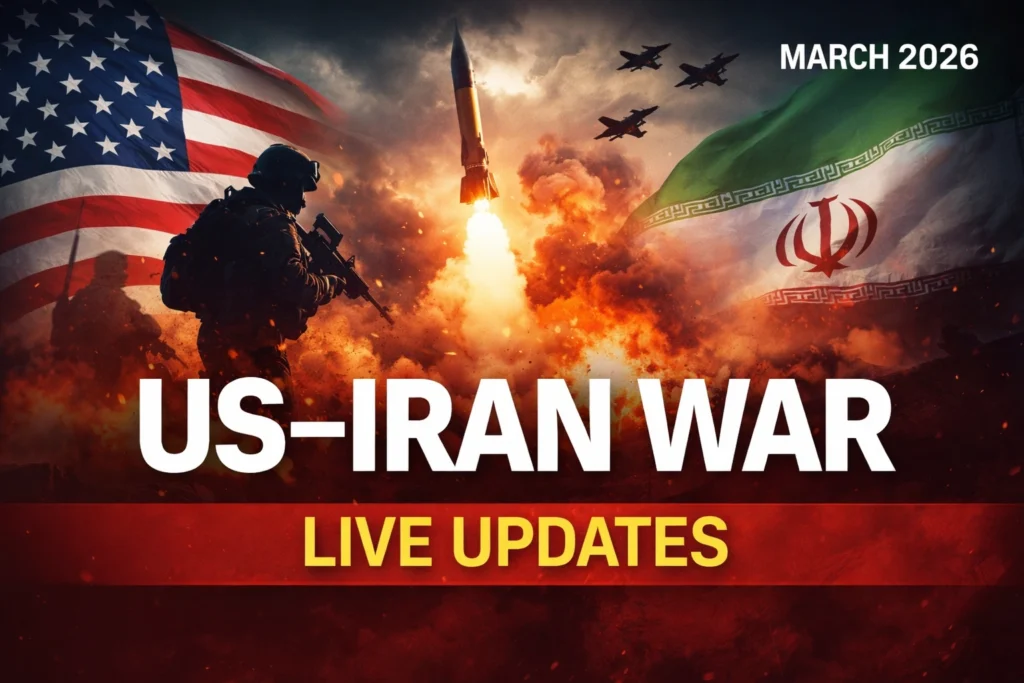
The US–Iran war has entered a critical and fast-evolving phase in early March 2026, marked by large-scale military strikes, retaliatory missile attacks, and widening regional involvement across West Asia. What began as targeted military operations quickly escalated into a broader regional conflict involving multiple countries, allied forces, and proxy groups. The developments have raised global concerns over stability, energy markets, and international security.
This detailed blog presents a clear, neutral, and news-style overview of the ongoing US–Iran war and its latest updates.
- 🔴 LIVE UPDATES
- War Trigger: Initial Large-Scale Strikes on Iran
🔴 LIVE UPDATES
New missile exchanges reported in the Gulf region as tensions remain high.
Air defense systems activated across multiple cities amid rising alerts.
Military officials confirm continued monitoring of cross-border activities.
Global leaders call for restraint and diplomatic engagement to prevent escalation.
War Trigger: Initial Large-Scale Strikes on Iran
The conflict escalated sharply after coordinated military strikes targeted key Iranian military and strategic infrastructure. Several missile bases, command centers, and defense facilities were reportedly hit in the opening phase of operations. These strikes marked a significant turning point, signaling a direct and large-scale military confrontation.
Following the strikes, Iran reported major leadership and military losses, which further intensified tensions and prompted swift retaliation planning. The initial operations significantly altered the security balance in the region and pushed the situation into an active conflict phase.
Iran’s Retaliation: Missile and Drone Attacks
In response to the strikes, Iran launched missile and drone attacks targeting US military bases and allied facilities across the Gulf region. These retaliatory operations indicated a shift from limited responses to sustained military engagement. Some bases reported damage and casualties, showing the growing intensity of the conflict.
The retaliatory strikes were not limited to one area but were spread across multiple locations, demonstrating Iran’s regional reach and signaling its readiness for prolonged confrontation. This phase marked the beginning of continuous exchanges between both sides.
Conflict Expansion: New Fronts Open in the Region
The US–Iran war quickly expanded beyond direct strikes between the two nations. Iran-aligned groups in the region became active, launching rockets and drones toward Israeli territory. In response, counterstrikes were conducted on positions linked to these groups in neighboring countries.
This development widened the conflict geographically and transformed it into a multi-front regional crisis. Several Middle Eastern nations increased security alerts, reinforced air defenses, and placed military forces on high readiness to prevent further spillover.
Intensifying Military Operations and Casualties
As the conflict progressed, continued airstrikes and missile launches were reported from both sides. Military operations focused on strategic assets such as missile systems, naval bases, and intelligence facilities. The scale and frequency of strikes indicated that the conflict had moved into a sustained combat stage rather than isolated incidents.
Reports also confirmed casualties among military personnel during retaliatory attacks on bases in the region. These developments underscored the seriousness of the confrontation and the potential for further escalation if hostilities continue.
Regional Reactions and Diplomatic Developments
The expanding war triggered strong reactions across the Middle East. Several countries held emergency security meetings, strengthened border surveillance, and issued safety advisories to citizens. Diplomatic channels remained active as regional and global leaders called for restraint and emphasized the importance of de-escalation.
At international forums, concerns were raised about the risk of a prolonged conflict that could destabilize the broader West Asian region. Diplomatic engagement efforts focused on preventing further military expansion and encouraging dialogue between involved parties.
Global Economic and Aviation Impact
The US–Iran war has had immediate effects on global markets and transportation networks. Oil prices witnessed sharp fluctuations amid concerns about supply disruptions from key transit routes in the Gulf region. Investors reacted cautiously as geopolitical uncertainty increased.
Air travel across the Middle East faced widespread disruptions, with multiple flight cancellations and route diversions reported. Shipping and logistics operations also experienced delays, reflecting the conflict’s impact on global trade and mobility.
Humanitarian and Civilian Concerns
The conflict has raised significant concerns regarding civilian safety and infrastructure security. Several cities in the region implemented precautionary measures, including emergency alerts, temporary closures of public facilities, and strengthened civil defense systems.
Authorities advised residents to remain cautious, follow official guidelines, and stay prepared for possible further developments as tensions remain high. Humanitarian agencies also emphasized the importance of protecting civilian populations and avoiding large-scale displacement.
Current Status: Ongoing and Fluid Situation
As of early March 2026, the US–Iran war remains active and highly dynamic. Military readiness continues across multiple fronts, with ongoing strikes, defensive operations, and regional alerts. The involvement of allied and proxy forces suggests that the conflict has evolved into a broader Middle East security crisis rather than a limited bilateral confrontation.
Diplomatic efforts are ongoing alongside military developments, indicating that the situation could shift depending on strategic decisions taken in the coming days.
Conclusion
The US–Iran war has rapidly become one of the most significant geopolitical conflicts of 2026. Beginning with major strategic strikes and followed by widespread retaliation, the confrontation has expanded across multiple fronts, affecting regional stability, global markets, and international diplomacy.
With continued military exchanges and rising regional involvement, the situation remains fluid and uncertain. The coming weeks will be crucial in determining whether tensions escalate further or shift toward diplomatic resolution and regional stabilization.