|
Getting your Trinity Audio player ready...
|
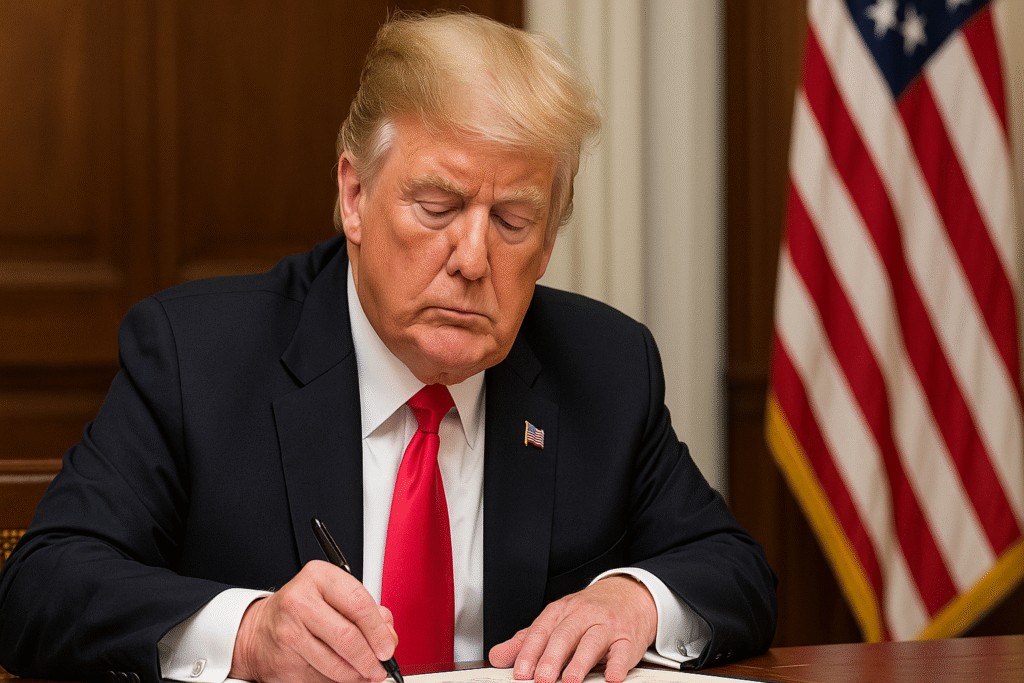
On November 12 2025, the United States government reached a critical juncture when President Donald Trump signed legislation that officially ended the longest federal shutdown in U.S. history. The shutdown had dragged on for 43 days, beginning October 1, after Congressional appropriations failed to pass in time. With the signing of the bill, many agencies reopened, federal workers were promised back pay, and funding for most departments was restored — but the agreement is more a temporary stopgap than a permanent fix.
What Led to the Shutdown
Federal funding for departments and agencies operates on a yearly cycle, and the lapse in appropriations triggered the shutdown. The impasse reflected deep partisan divisions: Republicans pushed ahead with funding bills that excluded certain policy priorities, while Democrats insisted on linking funding to key issues such as health-care subsidies. The standoff grew as the shutdown extended and pressures mounted.
Several factors contributed:
- The budget deadline passed without a full suite of funding bills, leading to a pause in operations for many agencies.
- Congressional negotiations were hampered by ideological demands and political brinkmanship, rather than pragmatic compromise.
- As the shutdown dragged on, the human, economic and operational costs increased significantly, raising pressure from all sides.
Impacts of the Shutdown
On Federal Workers and Services
Hundreds of thousands of federal employees were either furloughed or required to work without pay. Lives were disrupted: mortgage payments, household budgets and service delivery suffered. Many government services slowed or stopped entirely — from inspections and regulatory functions to travel and benefits delivery.
On the Economy and Public Infrastructure
The shutdown threatened major segments of economic activity. With government agencies inactive or under-resourced, travel delays surged, key economic data collection was disrupted, and public programmes like food assistance were placed under strain. The cumulative cost to productivity and confidence was substantial — estimates running into the billions.
On Governance and Credibility
Perhaps most troubling, the shutdown exposed structural weaknesses in how the government handles funding. The fact that a single political impasse could shut down large portions of government demonstrates how fragile the process can be in times of sharp polarization. Trust in institutions eroded as public services faltered and accountability got muddled.
The Resolution: What the Bill Achieves
The legislation signed by President Trump achieved these key outcomes:
- Government funding was extended through January 30, 2026, for most departments, providing a temporary runway to avoid another immediate shutdown.
- Full-year appropriations were included for certain agencies (for example agriculture, military construction and the legislative branch) to bring some stability.
- Federal workers will receive retroactive pay and many layoffs instigated during the shutdown will be reversed or prevented through the funded period.
- Agencies that had been shut down or scaled down will begin the path to reopening and service restoration.
This deal, however, is not a permanent resolution. Many policy fights remain unresolved, most notably health-care subsidies that were demanded by Democrats and not secured in this deal. The next funding deadline looms, meaning the risk of renewed shutdown remains unless deeper reforms are addressed.
Why This Matters — And Why It’s Not Over
Short-Term Relief, Long-Term Risk
Yes, the shutdown is over and government operations will resume, but the deal buys time — it does not resolve the underlying structural issues. The temporary nature of the funding means the parties remain on a countdown to the next showdown.
Political Fallout and Voter Trust
Both parties took hits in the public eye. Many Americans blame Congress and the presidency for the disruption of services and wages. The decision to link funding to policy battles lowered trust and set a precedent for future brinkmanship.
Institutional Repercussions
This shutdown will be studied as a case of how funding deadlocks can paralyze government. The fact that critical services and large segments of the workforce were affected raises questions about resilience and governance in times of political conflict.
Economic Implications
Recovering from the shutdown will take time. Backlogs in services, delayed payments, operational delays and reputational damage will persist even after funding is restored. The long-term economic hit is not simply the dollar amount lost during the shutdown — it’s the accumulated impact on confidence, productivity and government operations.
Lessons and Takeaways
From this shutdown episode, several lessons emerge:
- Predetermined deadlines and budget process rigidity invite crisis — When funding flows hinge on strict timelines, any failure becomes existential.
- Using government operations as leverage in policy fights is dangerous — When funding becomes bargaining power, the public and services suffer.
- Short-term patches are not sustainable — Extending funding temporarily without addressing core disagreements means the cycle repeats.
- Federal workers and the public bear the brunt — Regardless of who wins politically, actual people and services face the consequence.
- Governance needs structural reform — The process that allows a shutdown to last so long needs reconsideration for a more stable future.
What’s Next — The Watch Points
In the coming weeks and months, keep an eye on these developments:
- How quickly federal services and agencies return to full functioning — delays and backlogs will linger.
- Whether the health-care subsidy battle is reopened, and how that becomes tied to future funding.
- Whether reforms are proposed to alter the budget process, reduce shutdown risk and build resilience.
- How public opinion shifts — whether voters punish or reward parties for the shutdown and how that influences future political risk.
- Whether the next funding deadline triggers renewed brinkmanship or a pre-emptive compromise to avoid another shutdown.
Final Word
The end of this record-breaking government shutdown brings relief, but it is by no means a triumph of governance. What we have instead is a temporary fix — a breathing space before the next funding fight. The actors now need to decide: will they use this window to reform the process and prioritise stability, or simply gear up for the next confrontation? For the country, federal workers, and the millions relying on public services, the expectation is clear: “This must not happen again.”