|
Getting your Trinity Audio player ready...
|
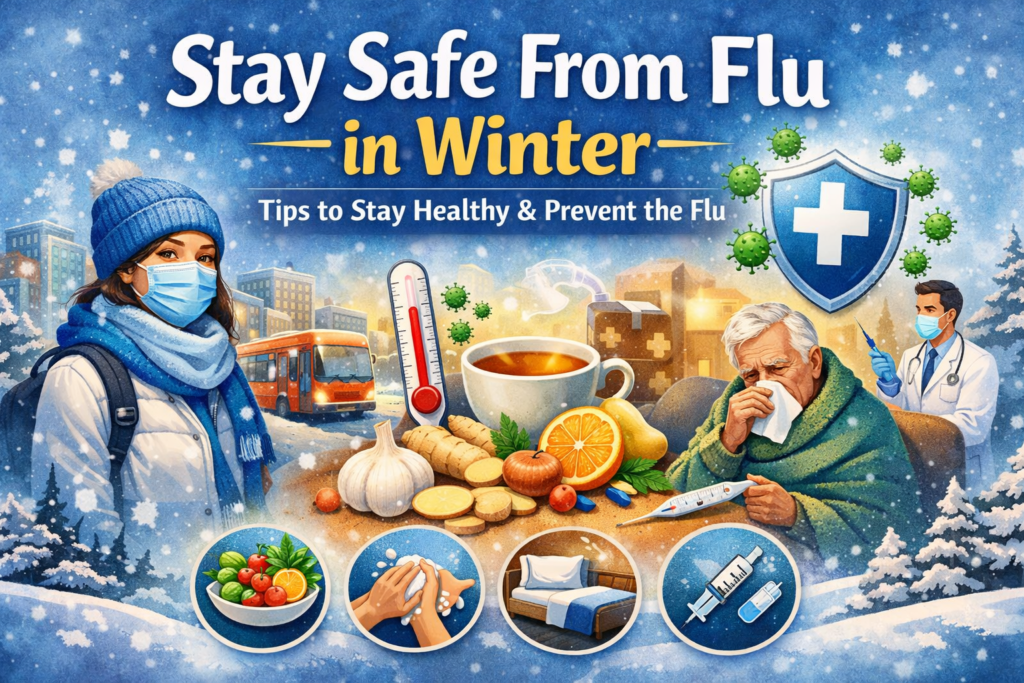
Winter brings cozy evenings, warm clothes, and festive vibes—but it also brings the flu season. Across the world, colder temperatures, dry air, and indoor crowding create the perfect conditions for flu viruses to spread faster. No matter where you live, staying proactive is the only smart move.
This blog explains practical, science-backed ways to stay safe from flu in winter—simple enough to follow anywhere in the world.
Why Flu Spreads More in Winter
Flu viruses survive longer in cold, dry air. People also spend more time indoors with closed windows, increasing close contact. On top of that, reduced sunlight can affect vitamin D levels, slightly weakening immunity.
The truth is simple: winter doesn’t cause flu—our winter habits do.
Strengthen Your Immunity Daily
A strong immune system is your first and best defense.
Eat Immunity-Boosting Foods
Include seasonal fruits and vegetables rich in vitamins and antioxidants. Citrus fruits, berries, leafy greens, garlic, ginger, and nuts help your body fight infections naturally.
Stay Hydrated
Cold weather reduces thirst, but dehydration weakens immunity. Drink warm water, herbal teas, soups, and broths regularly.
Get Enough Sleep
Sleep deprivation directly reduces your body’s ability to fight viruses. Aim for 7–9 hours of quality sleep every night, regardless of age or climate.
Practice Smart Hygiene Habits
Good hygiene sounds basic—but it works better than most medicines.
Wash Hands Frequently
Wash your hands with soap for at least 20 seconds, especially after being outside, coughing, or touching shared surfaces.
Avoid Touching Your Face
Flu viruses enter through the eyes, nose, and mouth. Keeping hands away from your face reduces infection risk dramatically.
Use Tissues, Not Hands
Always cover coughs and sneezes with a tissue or your elbow. Dispose of tissues immediately.
Protect Yourself in Public Places
Crowded indoor spaces are flu hotspots.
Wear a Mask When Needed
In crowded public transport, hospitals, or poorly ventilated spaces, wearing a mask is a smart preventive step—especially during peak flu season.
Carry Hand Sanitizer
When soap and water are not available, an alcohol-based sanitizer is your backup shield.
Keep Distance When Possible
Avoid close contact with people showing flu symptoms such as coughing, sneezing, or fever.
Keep Your Body Warm—But Balanced
Cold stress can weaken your immune response.
Dress in Layers
Protect your chest, neck, hands, and feet. Avoid sudden exposure to extreme cold after sweating.
Maintain Indoor Air Quality
Dry indoor air irritates nasal passages. Use humidifiers if needed, and ventilate rooms daily by opening windows briefly.
Stay Active, Even in Cold Weather
Physical activity improves circulation and immune cell movement.
Light indoor workouts, yoga, stretching, or brisk walks help your body stay resilient. Avoid completely sedentary winter routines—they quietly lower your defenses.
Know When to Rest and Recover
Ignoring early symptoms is a mistake.
If you experience fever, body aches, sore throat, fatigue, or chills:
- Rest immediately
- Increase fluid intake
- Avoid social contact
- Seek medical advice if symptoms worsen or last longer
Pushing through flu symptoms doesn’t make you strong—it spreads infection.
Vaccination: A Smart Preventive Choice
Seasonal flu vaccines are updated yearly to protect against the most common strains. They reduce the risk of severe illness and complications, especially for children, elderly people, and those with existing health conditions.
It’s prevention, not paranoia.
Final Thoughts
Flu in winter is global, predictable, and preventable. Staying safe doesn’t require extreme measures—just consistent habits, smart hygiene, and respect for your body’s signals.
Winter should be enjoyed, not endured in bed with fever and fatigue.
Strong immunity, simple discipline, and early action—that’s how you beat the flu, anywhere in the world.