|
Getting your Trinity Audio player ready...
|
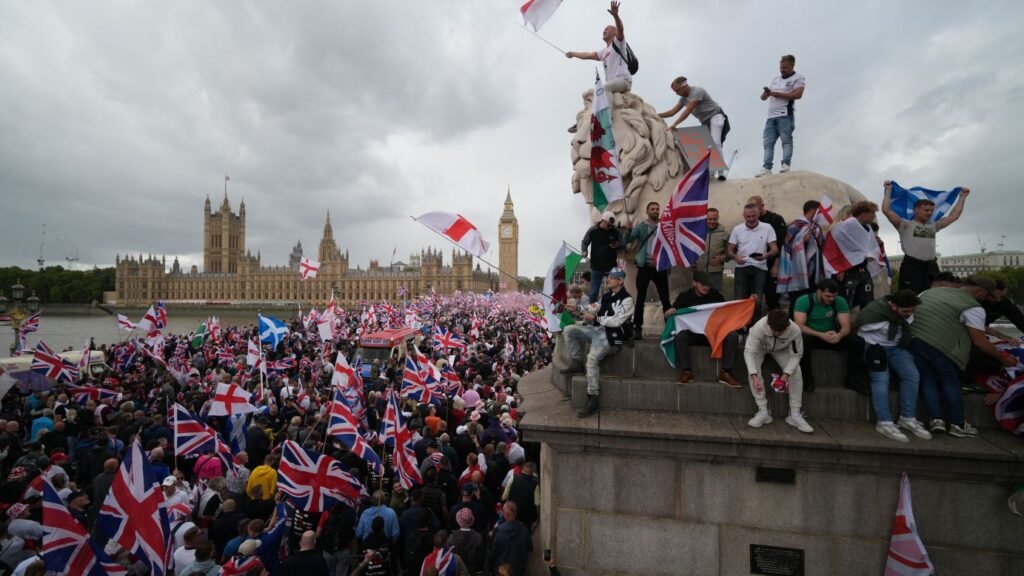
The UK is witnessing a wave of protests, counter-protests, and rising community tensions. On one side, far-right groups are organising large rallies against immigration and Islam, using national symbols like the Union Jack and the St George’s Cross to frame their narrative. On the other side, Muslim communities and anti-racism groups are voicing fears of rising Islamophobia, as incidents of mosque vandalism, intimidation, and online hate continue to increase.
This conflict is not just about protests in the streets. It is about identity, belonging, and how Britain sees its multicultural future.
What Is Happening Now
- Far-right rallies such as “Unite the Kingdom” are gaining visibility and drawing large crowds.
- Mosques and Muslim communities are reporting harassment and targeted vandalism.
- Operation Raise the Colours is spreading nationalist flag displays, which critics see as coded anti-immigrant signalling.
- Palestine Action protests have added another layer of tension, with arrests made after the group was banned.
- Government debate is underway about defining Islamophobia and giving police more power to control protests near places of worship.
Why This Is Happening
The roots of the unrest lie in three overlapping forces:
- Immigration Anxiety – A surge of political and media focus on asylum seekers and migration has fuelled nationalist backlash.
- Cultural Identity Battles – Flags, religion, and “Englishness” are being weaponised in ways that polarise society.
- Misinformation Online – False claims about Muslims or migrants often go viral, sparking fear and feeding far-right mobilisations.
Together, these create a cycle: protests spark intimidation → communities react with fear → backlash grows → further protests erupt.
The Impact on Muslim Communities
For British Muslims, the impact is immediate and personal:
- Fear of safety when attending mosques or Islamic events.
- Anxiety among families and young people who feel increasingly unwelcome.
- Strain on inter-community relations in towns and cities with mixed populations.
- A growing sense of being “othered” in national conversations.
The Future of the UK
The direction Britain takes in the coming years depends on leadership and community response. There are three possible futures:
- Escalation – If unchecked, far-right mobilisation could intensify, leading to more violence and social division.
- Stalemate – Continued cycles of protest and counter-protest, with no real solutions, keeping society tense.
- Reconciliation and Renewal – Strong political, community, and religious leadership could steer the UK towards inclusivity, with clear laws protecting minorities, fair immigration policy, and campaigns against online hate.
The UK is at a crossroads. Either it allows fear and division to define its identity, or it embraces its multicultural reality as a strength.
Final Thoughts
What’s unfolding in the UK is bigger than flags and marches. It’s about how a diverse society negotiates belonging, respect, and shared identity in an age of polarisation. The future will be shaped by whether Britain chooses confrontation—or cohesion.