|
Getting your Trinity Audio player ready...
|
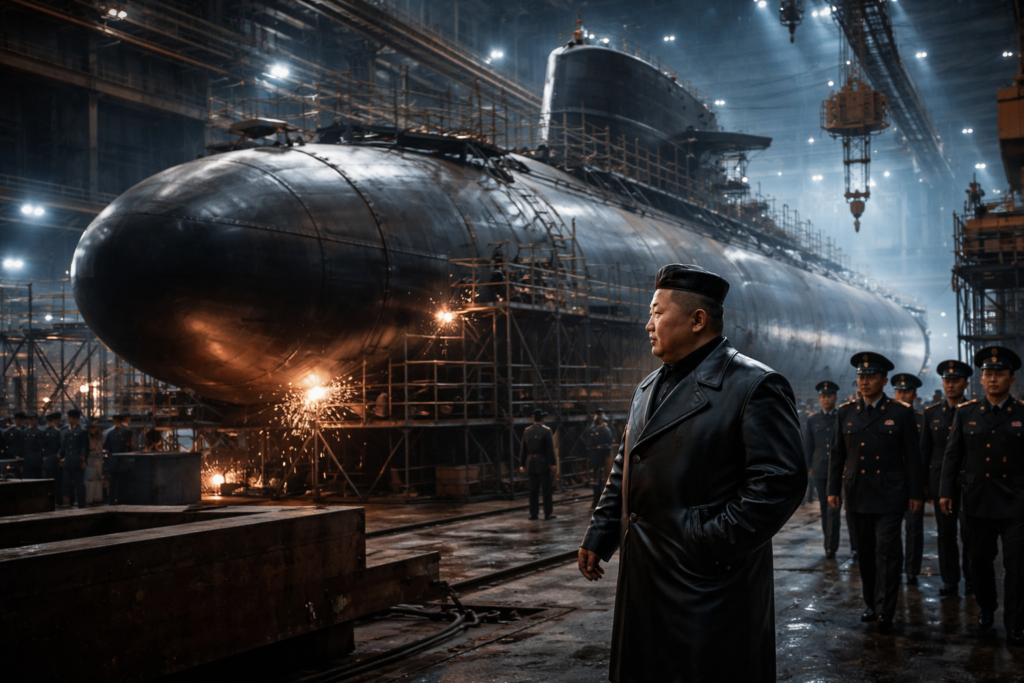
North Korean leader Kim Jong Un has once again drawn global attention after inspecting the construction of what state media described as a nuclear-powered submarine. This visit is not just a routine military inspection. It is a carefully calculated political and strategic message aimed at rivals, allies, and domestic audiences alike.
The inspection highlights North Korea’s continued push to modernize its military capabilities, particularly its naval forces, which have historically lagged behind its missile and nuclear programs.
What Exactly Was Inspected?
According to North Korean state media, Kim Jong Un visited a major shipyard where a “strategic nuclear-powered submarine” is under construction. While no technical specifications were officially released, experts believe the submarine is intended to carry submarine-launched ballistic missiles (SLBMs) capable of delivering nuclear warheads.
If operational, this would represent a major leap in North Korea’s second-strike capability—the ability to retaliate even after absorbing an initial nuclear attack.
This inspection follows earlier tests of SLBMs and public displays of submarine-based missile technology, suggesting that the regime is now moving from experimentation toward deployment.
Why a Nuclear Submarine Matters
A nuclear-powered submarine is not just another weapon. It fundamentally changes how a country can project power.
Key strategic advantages include:
- Extended underwater endurance without needing to surface frequently
- Greater stealth, making detection far more difficult
- Improved deterrence, especially against technologically superior adversaries
For North Korea, this capability would complicate the defense planning of the United States and South Korea, both of which rely heavily on missile defense systems and early-warning detection.
In simple terms, a nuclear submarine makes North Korea harder to predict, harder to track, and harder to neutralize.
A Message to the World
Kim Jong Un’s public inspection was clearly meant to be seen. The timing is critical.
North Korea has repeatedly accused the US and South Korea of increasing military pressure through joint exercises and advanced weapon deployments in the region. By showcasing progress on a nuclear submarine, Pyongyang is signaling that deterrence will be met with deterrence—at a higher level.
This visit also sends a strong warning to Japan and reinforces North Korea’s stance that it will not return to denuclearization talks unless its security demands are met.
Domestic Politics and Power Projection
Internally, the inspection serves another purpose: consolidating authority.
Military development remains central to Kim Jong Un’s legitimacy. By personally overseeing advanced weapons projects, he reinforces his image as a strong leader defending national sovereignty against external threats.
State media coverage framed the submarine project as a symbol of technological self-reliance and national pride, themes that resonate strongly with the North Korean population.
How Advanced Is North Korea’s Submarine Program?
Despite bold claims, analysts remain cautious.
North Korea has long operated a large fleet of diesel-electric submarines, most of them outdated and noisy by modern standards. A true nuclear-powered submarine requires advanced reactor technology, precision engineering, and extensive crew training.
Some experts believe the current project may be:
- A hybrid design rather than a full-scale nuclear submarine
- A vessel capable of carrying nuclear missiles but not powered by a reactor
- An experimental platform still years away from operational readiness
However, even partial success would represent a significant strategic shift.
Regional and Global Reactions
The inspection has already raised alarms across East Asia.
- South Korea is expected to strengthen its anti-submarine warfare capabilities
- The United States will likely increase surveillance and intelligence monitoring
- Japan may push for deeper security cooperation with its allies
For the wider international community, the development adds pressure to an already fragile regional security environment.
Sanctions have so far failed to halt North Korea’s weapons programs, and this inspection suggests that Pyongyang is doubling down rather than slowing down.
What Comes Next?
If North Korea successfully deploys a nuclear-capable submarine, it would mark a new phase in its military evolution—moving from land-based missile threats to multi-domain nuclear deterrence.
Possible next steps include:
- Public SLBM tests from a submerged platform
- Further inspections by Kim Jong Un to signal progress
- Increased military exercises by rival nations in response
One thing is clear: this inspection was not symbolic theater. It was a strategic statement.
Final Take
Kim Jong Un’s inspection of nuclear submarine construction underscores North Korea’s determination to strengthen its military deterrence, regardless of sanctions or diplomatic isolation. Whether the submarine becomes fully operational soon or not, the message is unmistakable: Pyongyang is aiming for survivable, long-range, and hard-to-counter nuclear capabilities.
For regional stability, this development raises the stakes—and narrows the margin for error.