|
Getting your Trinity Audio player ready...
|
Iran is witnessing one of its most intense waves of unrest in recent years. What began as scattered demonstrations has now turned into a nationwide movement, spreading rapidly across cities, towns, and provinces. Fueled by economic hardship, political frustration, and public anger, the protests have shaken the foundations of the country’s ruling establishment.
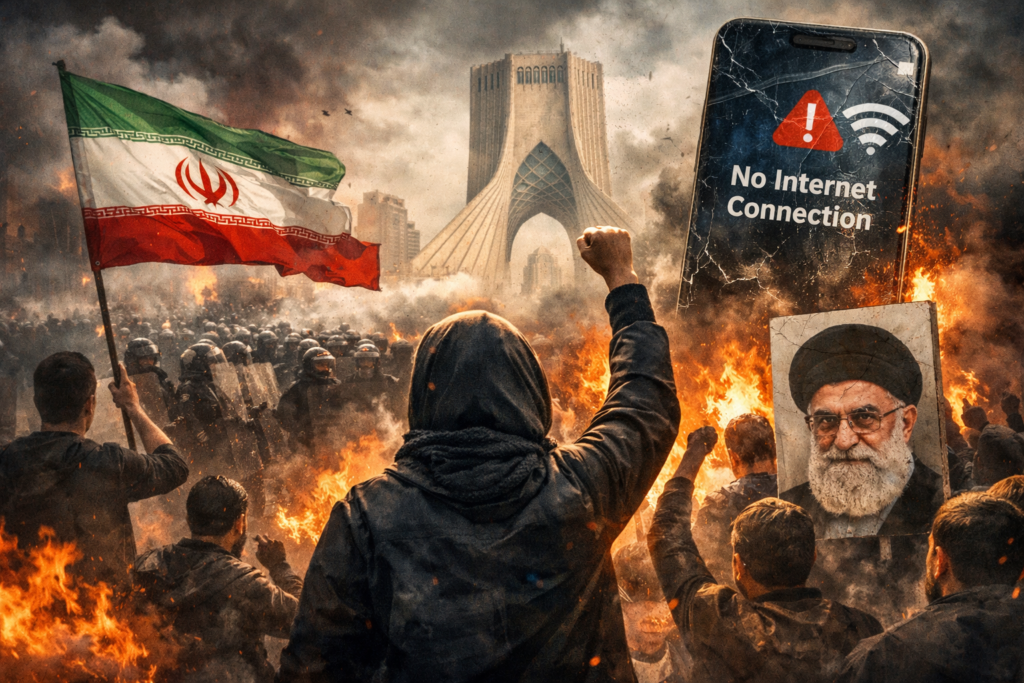
In response, authorities have imposed sweeping internet shutdowns, disrupted communication services, and tightened security in major areas. Meanwhile, voices from exile, including prominent opposition figures, are calling on Iranians to continue resisting. Together, these developments signal a moment of deep uncertainty for the nation.
How the Protests Began
The roots of the current crisis lie in Iran’s worsening economic conditions. Over the past few years, ordinary citizens have faced rising inflation, shrinking job opportunities, and a steady decline in purchasing power. Essential goods have become more expensive, while wages have remained stagnant.
For many families, survival has become a daily struggle.
Initially, small demonstrations broke out in response to local economic grievances. Shopkeepers, workers, and students gathered to express frustration over high prices and unemployment. However, what started as economic protests soon took on a political tone.
People were no longer just complaining about prices — they were questioning the system itself.
From Local Anger to Nationwide Movement
Within days, protests spread from isolated pockets to multiple provinces. Major cities witnessed large crowds chanting slogans against the government, while smaller towns saw spontaneous gatherings and marches.
What made this movement different was its scale.
Instead of being limited to one region or one social group, people from various backgrounds joined in — students, laborers, shop owners, professionals, and even retirees. Many were driven by a shared sense that their voices had been ignored for too long.
Social media initially played a key role in mobilizing people. Videos, messages, and calls for protest circulated rapidly. This digital momentum made it harder for authorities to contain the unrest.
That is when the government made a drastic move.
Internet Blackout: A Familiar Tactic
As protests intensified, Iran implemented widespread internet restrictions. In many areas, mobile data stopped working, messaging apps became inaccessible, and international websites were blocked.
The objective was clear:
Cut communication, slow coordination, and isolate protesters from the outside world.
This tactic has been used before. During previous waves of unrest, authorities had relied on internet blackouts to limit the spread of information and prevent footage from reaching international audiences.
However, such shutdowns come with serious consequences.
Small businesses suffer immediate losses. Students are cut off from online learning. Families lose access to digital banking and essential services. In short, the blackout adds more pressure to an already struggling population.
Instead of calming tensions, it often makes people angrier.
Voices from Exile and Rising Symbolism
Another striking feature of this wave of protests is the renewed attention on opposition voices living abroad. Among them, the exiled crown prince, Reza Pahlavi, has publicly called on Iranians to rise up against the current leadership.
For some protesters, he represents a symbolic alternative to the present system. For others, he is simply a loud voice amplifying their frustration.
Regardless of personal opinions about him, his statements have gained traction inside Iran. They are being shared widely whenever internet access briefly returns.
Authorities appear deeply concerned about this influence, which may explain the timing of the communication shutdowns.
Clashes, Arrests, and Fear
As demonstrations grew, so did the government’s response.
Security forces were deployed in large numbers. In several cities, clashes broke out between protesters and police. Tear gas, batons, and mass detentions became common reports from affected areas.
Human rights groups claim that many people have been arrested, while some have lost their lives. However, verifying exact numbers remains difficult due to limited access to information.
Families are often left in the dark, unsure of where detained relatives are being held.
Fear is now part of daily life — but so is defiance.
Why This Protest Feels Different
Iran has seen protests before. However, this movement feels different for several reasons:
1. Wider Participation
People from all walks of life are joining in. It is no longer limited to students or activists.
2. Economic Desperation
When people can’t afford food, medicine, or rent, they reach a breaking point. This desperation fuels long-term resistance.
3. Lack of Trust
Many citizens no longer believe official promises. They see reforms as empty words.
4. Global Awareness
Even with blackouts, news eventually leaks out. International attention puts pressure on authorities.
Together, these factors create a volatile mix.
Government’s Dilemma
Iran’s leadership now faces a difficult choice.
On one hand, cracking down harder may suppress protests temporarily. On the other hand, excessive force risks further alienating the public.
Internet blackouts, arrests, and censorship may buy time — but they do not solve the underlying problems.
The deeper issues remain:
- Economic instability
- Political dissatisfaction
- Social inequality
- Lack of freedom of expression
Until these are addressed, unrest is likely to resurface.
What Happens Next?
No one can predict the future with certainty. However, several possible scenarios are emerging:
1. Sustained Protests
If people continue to organize despite the blackouts, the movement could grow stronger.
2. Harsher Crackdowns
Authorities may intensify security operations to regain control.
3. Partial Concessions
The government might announce economic relief measures or limited reforms.
4. International Pressure
Global reactions could influence how events unfold.
Each of these paths carries risks.
A Nation at a Crossroads
Iran is standing at a crossroads.
For many citizens, the protests represent more than anger — they symbolize hope for a different future. A future where voices matter, opportunities exist, and dignity is not negotiable.
At the same time, fear remains real. Families worry about safety, arrests, and economic survival.
The blackout of the internet may have silenced phones, but it has not silenced people.
Their message is clear:
They want change.
Whether that change comes through dialogue, reform, or prolonged conflict remains to be seen.