
|
Getting your Trinity Audio player ready...
|
Stress and anxiety have become a part of modern life. Whether it is work pressure, financial worries, health concerns, or personal responsibilities, most people feel mentally overwhelmed at some point. While short-term stress is normal, constant stress can harm your physical health, emotional balance, and overall quality of life.
If you often feel restless, tired, worried, or unable to relax, your body and mind are asking for care.
The good news is that you do not always need medication to feel better. Many natural methods can help calm your mind, reduce anxiety, and restore inner peace.
In this blog, you will learn how stress affects your body, what triggers anxiety, and the best natural ways to manage both.
What Is Stress and Anxiety?
Stress is your body’s response to pressure or demand. Anxiety is a feeling of worry, fear, or nervousness that may continue even when the stressful situation is gone.
When stress becomes chronic, it can lead to anxiety disorders, sleep problems, digestion issues, heart problems, and weakened immunity.
How Stress Affects Your Body
When you feel stressed, your body releases hormones like cortisol and adrenaline. These hormones prepare you for “fight or flight,” but when released too often, they create problems.
Long-term stress can cause:
- Headaches
- Poor sleep
- Digestive issues
- Weight gain
- High blood pressure
- Weak immunity
- Mood swings
- Low energy
That is why managing stress naturally is essential.
Why Natural Stress Relief Is Important
Natural methods treat the root cause, not just the symptoms. They help your nervous system relax, restore balance, and improve emotional strength.
Benefits of natural stress relief:
- No side effects
- Long-lasting calmness
- Better sleep
- Improved digestion
- Stronger immunity
- Better focus
- Emotional stability
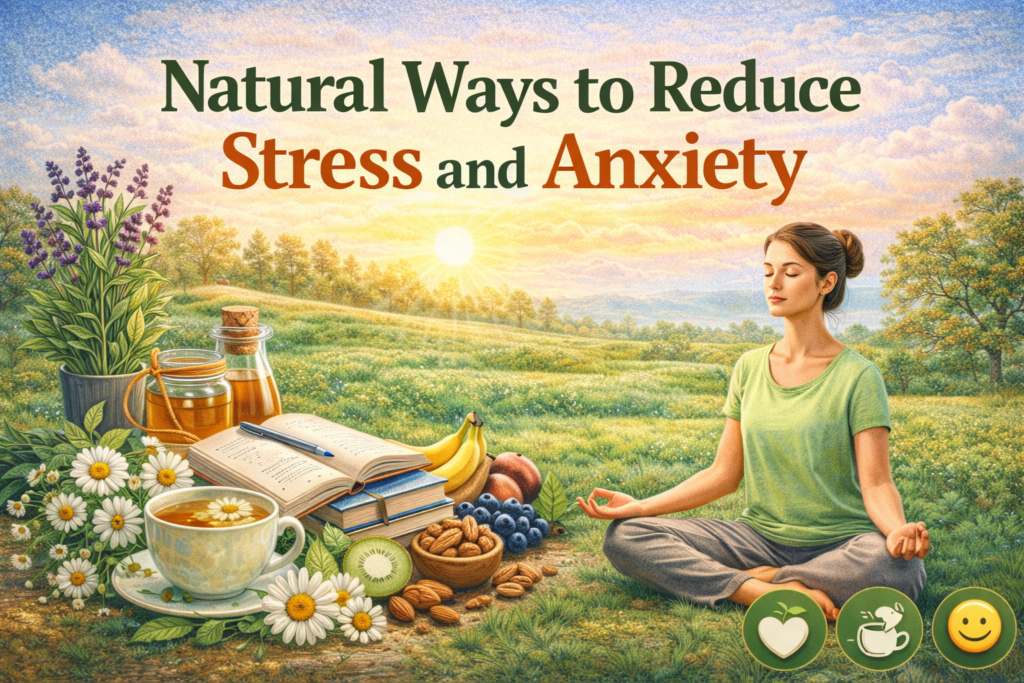
Best Natural Ways to Reduce Stress and Anxiety
1. Deep Breathing
Breathing is the fastest way to calm your nervous system.
How it helps:
- Slows heart rate
- Reduces cortisol
- Improves oxygen flow
- Relaxes muscles
Try this:
Inhale for 4 seconds, hold for 4, exhale for 6. Repeat for 5 minutes.
2. Physical Activity
Movement releases feel-good hormones called endorphins.
Best activities:
- Walking
- Yoga
- Stretching
- Dancing
- Light jogging
Benefits:
- Reduces tension
- Clears the mind
- Improves mood
- Boosts energy
3. Nature Exposure
Spending time in nature calms the brain.
Examples:
- Walking in a park
- Sitting under sunlight
- Gardening
- Watching sunrise or sunset
Benefits:
- Lowers stress hormones
- Improves focus
- Enhances mood
4. Healthy Diet for a Calm Mind
What you eat directly affects how you feel.
Stress-reducing foods:
- Leafy greens
- Nuts and seeds
- Whole grains
- Fruits
- Yogurt
- Herbal teas
Avoid:
- Excess sugar
- Caffeine
- Junk food
- Packaged snacks
5. Proper Sleep
Lack of sleep increases stress and anxiety.
Tips:
- Sleep 7–8 hours
- Go to bed at the same time
- Avoid screens before bed
- Keep your room dark and quiet
6. Mindfulness and Meditation
Meditation trains your mind to stay in the present moment.
Benefits:
- Reduces overthinking
- Improves emotional control
- Calms the brain
- Improves focus
Start with just 5 minutes daily.
7. Limit Screen Time
Constant notifications and scrolling increase mental overload.
Try:
- Taking phone breaks
- Avoiding screens before sleep
- Spending more offline time
8. Herbal Support
Some herbs naturally calm the nervous system.
Examples:
- Ashwagandha
- Chamomile
- Tulsi
- Lavender
- Brahmi
Use them as teas or supplements (with guidance).
9. Journaling
Writing your thoughts helps release mental pressure.
Benefits:
- Clears your mind
- Reduces overthinking
- Improves emotional awareness
10. Positive Social Connection
Talking to loved ones reduces emotional burden.
Spend time with:
- Family
- Friends
- Supportive people
Avoid negative environments.
Foods That Reduce Stress and Anxiety
Certain foods support brain chemicals like serotonin and dopamine.
Best choices:
- Bananas
- Dark chocolate (small amount)
- Oats
- Almonds
- Walnuts
- Berries
- Green vegetables
Drinks That Calm the Mind
- Warm milk
- Chamomile tea
- Green tea
- Herbal teas
- Warm water
Avoid excessive coffee and energy drinks.
Signs You Are Too Stressed
- Constant worry
- Racing thoughts
- Poor sleep
- Mood swings
- Fatigue
- Lack of motivation
- Frequent headaches
If these signs continue, it is time to change your lifestyle.
Simple Daily Habits to Stay Calm
- Wake up early
- Drink warm water
- Stretch your body
- Eat on time
- Take short breaks
- Practice gratitude
- Avoid negative news overload
How Long Does Natural Stress Relief Take?
Natural methods take time but give long-lasting results. You may feel better in a few days, but true mental balance comes with consistency.
Final Thoughts
Stress is a part of life, but suffering from it is not. Your mind deserves rest, peace, and care.
By choosing natural ways, you allow your body and mind to heal gently and safely. Small daily habits can create powerful changes.
Start with one step today. Your mental health matters.