|
Getting your Trinity Audio player ready...
|
Digestive health plays a major role in your overall well-being. When digestion is weak, it leads to problems like bloating, gas, acidity, heaviness, and constipation. Constipation is one of the most common digestive issues today, caused by poor diet, lack of fiber, dehydration, stress, and sedentary lifestyle.
If you frequently feel bloated, struggle with bowel movements, or feel heavy after meals, your digestive system is asking for help.
The good news is that you don’t need medicines all the time. The right foods can naturally improve digestion and relieve constipation.
In this blog, you’ll learn which foods support gut health, how they work, and how to include them in your daily diet.
- What Causes Poor Digestion and Constipation?
- Why Food Is the Best Medicine for Digestion
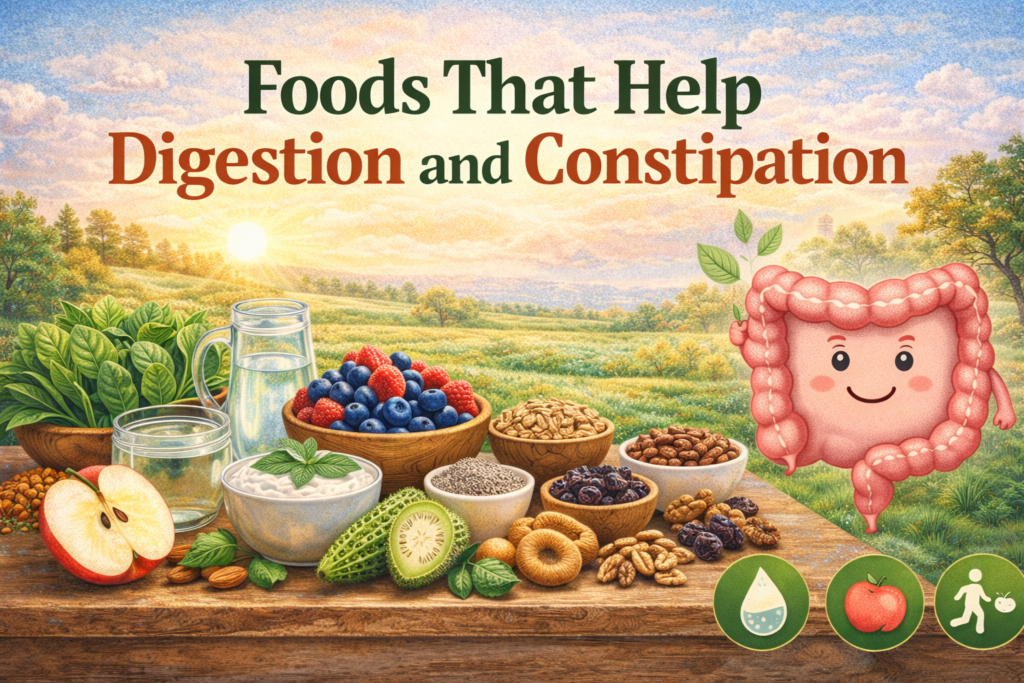
- Best Foods That Improve Digestion and Relieve Constipation
- Foods That Worsen Digestion and Constipation
- Daily Eating Habits for Good Digestion
- How Water Helps Digestion
- Signs Your Digestion Needs Help
- Lifestyle Tips for Better Gut Health
What Causes Poor Digestion and Constipation?
Before fixing the problem, it’s important to understand the cause.
Common reasons include:
- Low fiber intake
- Not drinking enough water
- Eating processed foods
- Skipping meals
- Eating too fast
- Lack of physical activity
- Stress and poor sleep
When digestion slows down, stool becomes hard and dry, making it difficult to pass.
Why Food Is the Best Medicine for Digestion
Your gut depends on fiber, water, good bacteria, and natural enzymes. When you eat the right foods, your body automatically:
- Softens stool
- Improves gut movement
- Feeds good bacteria
- Reduces bloating
- Prevents acidity
- Improves nutrient absorption
Best Foods That Improve Digestion and Relieve Constipation
1. Fiber-Rich Fruits
Fruits are one of the best natural laxatives.
Best fruits for digestion:
- Papaya
- Apple (with peel)
- Pear
- Guava
- Kiwi
- Orange
- Berries
Benefits:
- Soften stool
- Improve bowel movement
- Feed gut bacteria
- Reduce bloating
2. Vegetables That Support Gut Health
Vegetables contain fiber, water, and enzymes.
Best choices:
- Spinach
- Carrot
- Beetroot
- Broccoli
- Cabbage
- Bottle gourd
- Pumpkin
Benefits:
- Improve stool bulk
- Prevent constipation
- Support digestion
3. Whole Grains
Whole grains digest slowly and keep the gut active.
Best whole grains:
- Oats
- Brown rice
- Millets
- Whole wheat
- Barley
Benefits:
- Improve gut movement
- Keep stool soft
- Reduce acidity
4. Seeds That Relieve Constipation
Seeds are powerful for digestion.
Best seeds:
- Chia seeds
- Flaxseeds
- Psyllium husk (Isabgol)
- Pumpkin seeds
How to use:
- Soak chia or flaxseeds overnight
- Add to smoothies or curd
Benefits:
- Improve bowel regularity
- Reduce bloating
- Clean the gut
5. Probiotic Foods
Probiotics add good bacteria to your gut.
Best probiotic foods:
- Curd
- Buttermilk
- Yogurt
- Fermented foods
Benefits:
- Improve gut bacteria balance
- Reduce gas
- Improve digestion
6. Warm Liquids
Warm liquids stimulate digestion.
Best options:
- Warm water
- Herbal teas
- Ginger tea
- Cumin water
Benefits:
- Activate gut
- Improve bowel movement
- Reduce heaviness
7. Healthy Fats
Healthy fats lubricate the intestines.
Best sources:
- Ghee
- Olive oil
- Coconut oil
- Nuts
Benefits:
- Make stool soft
- Prevent dryness
- Improve digestion
8. Legumes and Pulses
High in fiber and protein.
Best choices:
- Lentils
- Chickpeas
- Moong dal
- Kidney beans
Benefits:
- Improve gut movement
- Keep you full
- Support gut health
9. Dry Fruits
Natural laxatives when used properly.
Best dry fruits:
- Soaked raisins
- Figs
- Prunes
- Dates
Benefits:
- Improve stool movement
- Reduce constipation
10. Herbal Helpers
Natural digestive boosters.
- Ginger
- Fennel seeds
- Cumin
- Ajwain
Benefits:
- Reduce gas
- Improve enzyme production
- Prevent bloating
Foods That Worsen Digestion and Constipation
Avoid or limit:
- White bread
- Fast food
- Fried snacks
- Bakery items
- Cheese
- Sugary drinks
- Packaged foods
These foods slow digestion and harden stool.
Daily Eating Habits for Good Digestion
What you eat is important, but how you eat matters too.
Follow these habits:
- Eat at fixed times
- Chew food properly
- Don’t overeat
- Drink enough water
- Avoid late-night heavy meals
- Walk after meals
How Water Helps Digestion
Without water, fiber cannot work.
Drink:
- 2.5–3 liters daily
- Warm water in the morning
- Water between meals
Hydration keeps stool soft and easy to pass.
Signs Your Digestion Needs Help
- Bloating
- Gas
- Hard stool
- Incomplete bowel movement
- Acidity
- Stomach pain
If these signs are frequent, it’s time to change your diet.
Lifestyle Tips for Better Gut Health
- Walk 20–30 minutes daily
- Practice yoga
- Sleep well
- Reduce stress
- Avoid holding bowel urges
Final Thoughts
Good digestion is the foundation of good health. If your gut is healthy, your body absorbs nutrients better, your immunity improves, and your energy stays high.
Instead of relying on laxatives, start feeding your gut the right foods. Simple changes can bring powerful results.
Eat more fiber, drink enough water, stay active, and your digestion will thank you.