|
Getting your Trinity Audio player ready...
|
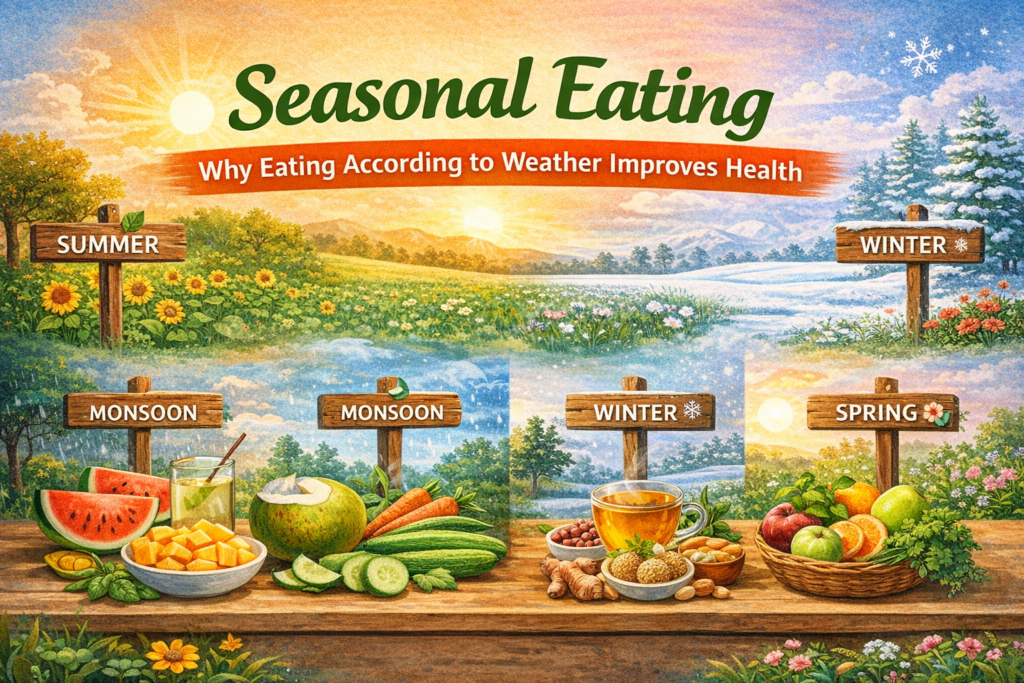
Seasonal eating means consuming foods that naturally grow during a specific time of the year. Our ancestors followed this practice for centuries, long before modern refrigeration and food processing existed. They understood that nature provides the right foods at the right time to support the body’s needs.
Today, we eat strawberries in winter and heavy fried foods in summer, often ignoring how food interacts with weather and body rhythms. This mismatch causes digestion issues, low immunity, weight gain, and chronic fatigue.
Eating according to the season helps your body stay balanced, energetic, and disease-resistant.
Why Seasonal Eating Matters
Your body changes with the weather. Metabolism, digestion, appetite, and hydration needs all vary by season. When you eat foods that grow naturally in a particular season, your body absorbs nutrients better.
Key benefits of seasonal eating
- Better digestion
- Stronger immunity
- Natural detoxification
- Balanced energy levels
- Improved skin health
- Better sleep
Seasonal Foods Are More Nutritious
Foods harvested in their natural season contain higher levels of vitamins, minerals, and antioxidants. Off-season produce is often grown artificially, stored for long periods, or treated with chemicals, which reduces its nutritional value.
For example:
- Summer fruits contain more water to keep you hydrated
- Winter vegetables are rich in vitamins that boost immunity
- Monsoon foods support digestion and prevent infections
How Seasons Affect Your Body
Each season influences your internal systems differently.
Summer
During summer, your body loses more water through sweat. Digestion becomes weaker, and dehydration risk increases.
Monsoon
Humidity slows digestion and increases the risk of infections.
Winter
Cold weather boosts appetite but slows circulation. Immunity needs extra support.
Understanding these changes helps you choose the right foods.
What to Eat in Summer
Summer foods should be light, cooling, and hydrating.
Best summer foods
- Watermelon
- Cucumber
- Coconut water
- Buttermilk
- Papaya
- Mint
- Leafy salads
- Citrus fruits
Benefits
- Prevent dehydration
- Cool body temperature
- Improve digestion
- Reduce acidity
Avoid in summer
- Deep-fried foods
- Excessive spices
- Sugary drinks
- Heavy dairy
What to Eat in Monsoon
Monsoon weakens digestion and increases the risk of bacterial infections.
Best monsoon foods
- Steamed vegetables
- Ginger tea
- Turmeric milk
- Moong dal
- Garlic
- Rice porridge
- Soups
Benefits
- Boost immunity
- Improve digestion
- Reduce bloating
- Fight infections
Avoid in monsoon
- Raw leafy vegetables
- Street food
- Seafood
- Fermented foods
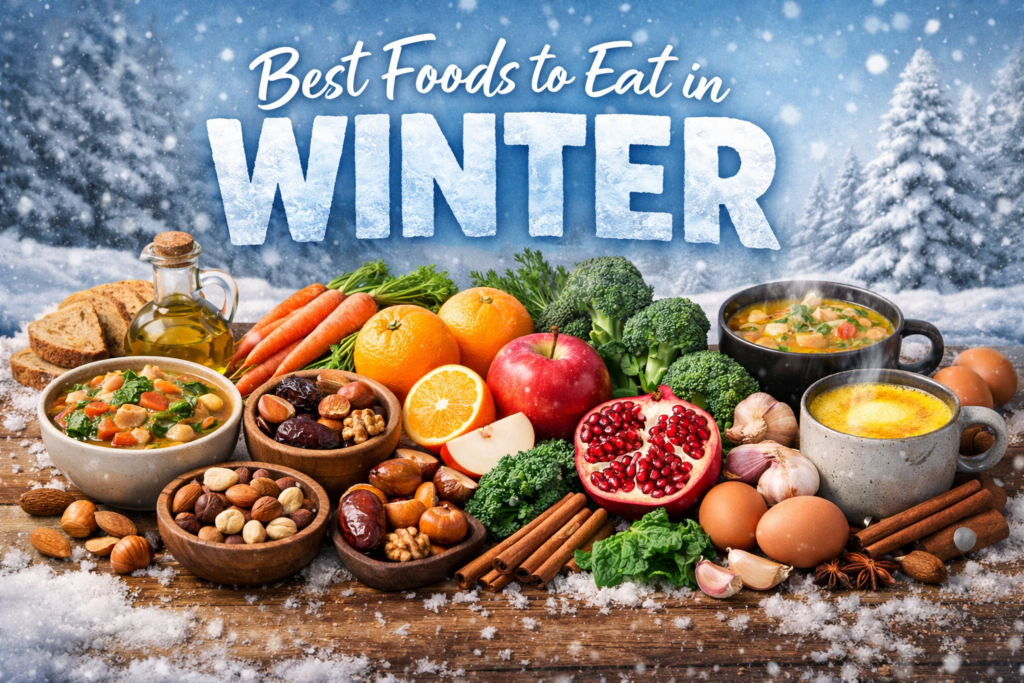
What to Eat in Winter
Winter increases appetite and energy needs. Your body requires warming and immunity-boosting foods.
Best winter foods
- Carrots
- Beetroot
- Sweet potatoes
- Peanuts
- Dates
- Jaggery
- Ghee
- Sesame seeds
- Green leafy vegetables
Benefits
- Improve circulation
- Strengthen immunity
- Provide warmth
- Support joint health
Avoid in winter
- Excessively cold foods
- Ice cream
- Too many raw foods
How Seasonal Eating Improves Digestion
Digestive strength changes with weather. Heavy foods in summer cause bloating, while light foods in winter leave you unsatisfied.
Seasonal eating aligns your meals with digestive capacity.
- Light foods in summer
- Easily digestible foods in monsoon
- Nourishing foods in winter
This balance prevents gas, acidity, and constipation.
Seasonal Eating Supports Natural Detox
Your body detoxifies naturally when you eat seasonal fruits and vegetables. These foods contain fiber, water, and antioxidants that cleanse the liver, kidneys, and intestines.
For example:
- Summer fruits flush toxins
- Monsoon herbs cleanse the gut
- Winter vegetables strengthen organs
Seasonal Eating and Immunity
Each season brings different viruses and bacteria.
- Vitamin C in winter fruits fights colds
- Antioxidants in summer fruits protect skin
- Spices in monsoon prevent infections
Seasonal Eating Helps Maintain Healthy Weight
Seasonal foods are less processed and more filling. They reduce cravings for junk food.
Fiber-rich seasonal produce improves satiety, prevents overeating, and keeps blood sugar stable.
Tips to Follow Seasonal Eating Easily
- Buy local produce
- Avoid imported fruits
- Eat fresh, not frozen
- Cook simple meals
- Follow traditional recipes
- Observe how your body reacts
Common Mistakes to Avoid
- Eating cold foods in winter
- Heavy meals in summer
- Too many raw foods in monsoon
- Ignoring hydration needs
Final Thoughts
Seasonal eating is not a trend. It is a natural lifestyle practice that aligns your body with nature’s rhythm. When you eat according to the weather, your digestion improves, immunity strengthens, and energy stays stable.
Instead of chasing fancy diets, start eating what nature provides each season. Your body already knows what it needs — you just have to listen.