
|
Getting your Trinity Audio player ready...
|
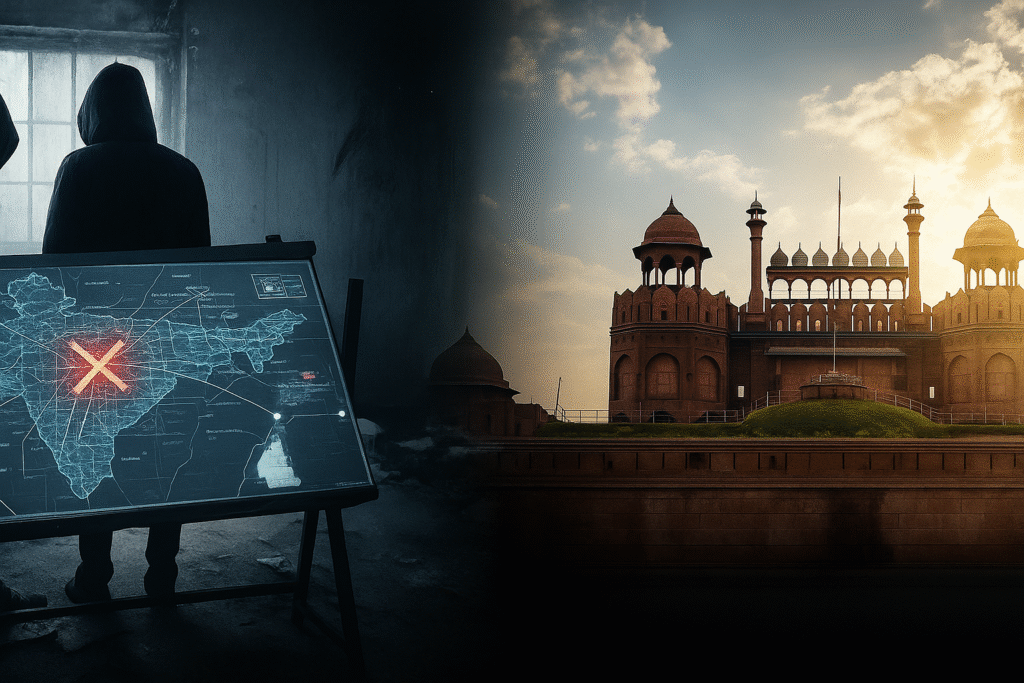
Investigators in Delhi have uncovered shocking details while probing the explosion near the iconic Red Fort. They discovered that the suspects surveyed the Red Fort area and planned a major strike on Republic Day.
The lead suspect, Muzammil, a medical professional, admitted during interrogation that he and his associate Umar conducted surveillance of the Red Fort before the explosion that killed nine people.
Officials confirm that the network did not intend a single attack but planned a larger spectacle for 26 January, aiming to create widespread chaos and panic.
“White-collar terror ecosystem” surfaces
Investigators describe the case as a disturbing evolution of terrorism. The accused include educated individuals working in medical and academic institutions. The group used encrypted communication, raised funds through legitimate platforms, and hid their operations under the guise of charity and education.
Authorities have labelled it a “white-collar terror ecosystem” — a network where professionals use their skills and credentials to mask extremist motives. The operatives moved funds across channels, arranged logistics, and carried out reconnaissance well before initiating the plan.
From Diwali to Republic Day: the evolving threat
Investigators established that the group first planned to attack during Diwali in a crowded public area. When that attempt failed, they shifted their focus to the Red Fort. They completed reconnaissance and scheduled a larger operation for Republic Day.
The choice of 26 January was deliberate. The suspects targeted a day of national pride and heavy symbolism to maximize impact and media attention. Fortunately, the security agencies intercepted critical evidence — including digital communication, GPS data, and financial traces — before the plot reached its final stage.
The implications for national security
This case exposes hard realities about modern terrorism and India’s evolving security challenges:
- Terrorists now exploit professional covers — using universities, hospitals, and NGOs to avoid suspicion.
- Encrypted technology and legitimate fundraising tools help them operate discreetly and avoid digital detection.
- Landmarks and heritage sites remain attractive targets because of their symbolic and emotional significance.
These findings highlight the urgent need for advanced surveillance, data intelligence, and inter-agency coordination.
For ordinary citizens, this serves as a wake-up call. If a group could plan a major strike at a national monument on a public holiday, then constant vigilance and civic awareness become essential parts of national defence.
What happens next
Investigators are now tracking every layer of the network — identifying how many individuals got radicalised, where the funding originated, and who provided external support. The team is also analysing how the group procured explosives and executed reconnaissance missions so close to a high-security site.
Authorities plan to strengthen the security framework around key national events and heritage sites like the Red Fort. They will also audit academic and professional institutions to ensure extremist groups cannot use them as recruitment or operational hubs.
In conclusion
The Delhi blast suspects acted with precision and strategy, not impulse. They plotted a strike on a national day at a national monument to inflict maximum psychological and political damage.
While Delhi escaped a potential catastrophe, the investigation reveals the face of modern terrorism — one that hides behind respectability, education, and technology.
India’s security forces must continue evolving, because this war now depends as much on intelligence and awareness as on strength and defence. The nation’s safety lies not just in its weapons but in its ability to stay alert, informed, and united.