|
Getting your Trinity Audio player ready...
|
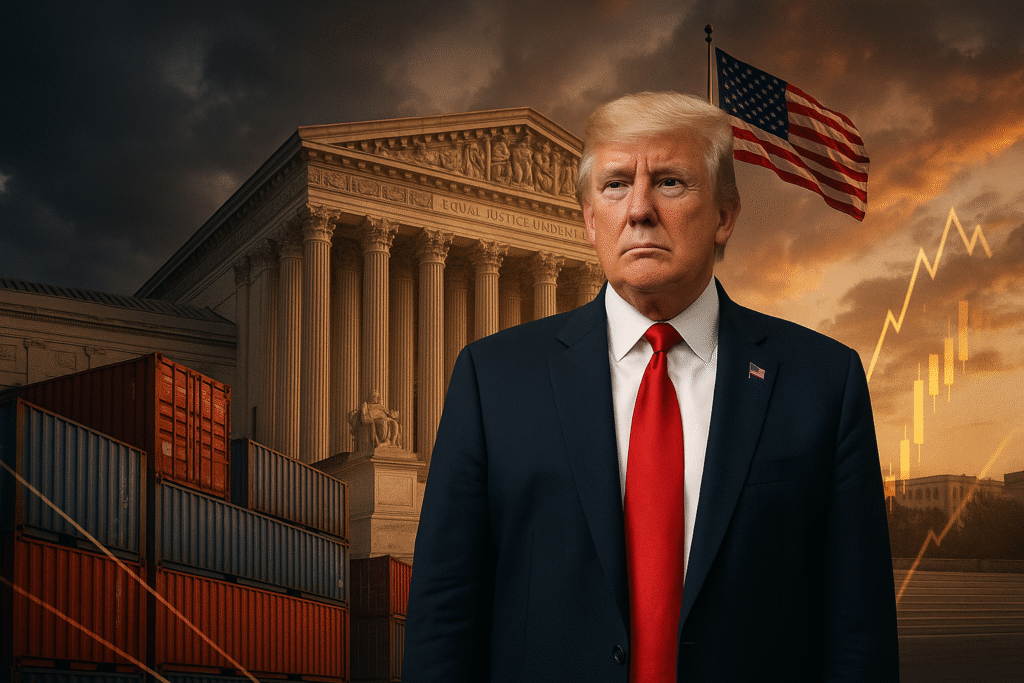
A crucial Supreme Court hearing is set to determine whether Donald Trump had the legal authority to impose wide-ranging import tariffs during his presidency. The issue centres around the International Emergency Economic Powers Act (IEEPA), a law originally meant for national security crises, not broad trade restructuring.
While Trump himself will not appear, his Treasury Secretary, Scott Bessent, has publicly stated he will attend the hearing in person, calling it an economic emergency for the United States. His presence sends a clear message: the administration views this case as pivotal.
What’s Actually Being Challenged?
The core question is simple but politically explosive:
Did a president overstep his authority by using emergency powers to reshape trade policy?
Lower courts have suggested that these tariffs went beyond what IEEPA allows. The Supreme Court now has the final word. The ruling will not only judge a past decision — it could redefine how much power any future president has over tariffs and trade.
This is no small administrative detail. It touches constitutional limits on executive power and whether Congress — not the White House — should control economic policy of this scale.
Why This Case Matters Politically and Economically
This case has serious real-world consequences:
- Potential Refunds: If the tariffs are ruled unlawful, the US government may have to return a significant portion of money collected from importers. That could reach tens of billions.
- Business Impact: Companies that depend on imported goods are watching closely. Tariffs raise costs — and uncertainty makes investment harder.
- Power Balance: A ruling against the tariffs would shift power back to Congress. A ruling in favour would expand presidential trade authority dramatically.
- Global Reactions: Other countries are watching too. The outcome will influence how they negotiate with the US in the future.
In short: this is not just a courtroom debate. It’s a global economic signal.
Bessent’s Attendance: A Strategic Move
Scott Bessent’s decision to sit in the front row is not about mere optics. It’s strategic. It reinforces the administration’s narrative that these tariffs are necessary for national security and economic protection.
Critics argue his presence could be interpreted as an attempt to apply pressure or influence perception. Supporters say it simply underscores the stakes.
Either way, the symbolism is unmistakable.
What to Watch Next
When the hearing begins, pay attention to:
- The tone of the justices’ questions — are they sceptical or supportive?
- Whether the Court frames the issue as trade policy or constitutional authority.
- Any signals that the decision may be narrow or sweeping.
A narrow decision changes the practical effects. A broad decision changes the future of presidential power.
Conclusion
This case is not simply about tariffs. It’s about how far a president can go when reshaping the economy, and who gets to set the rules: Congress or the White House.
A ruling in Trump’s favour would strengthen the executive branch and make future trade interventions easier. A ruling against him would constrain presidential power and potentially cost the government substantial refund obligations.
Either outcome will be historic — and the global economic landscape will feel the results.