|
Getting your Trinity Audio player ready...
|
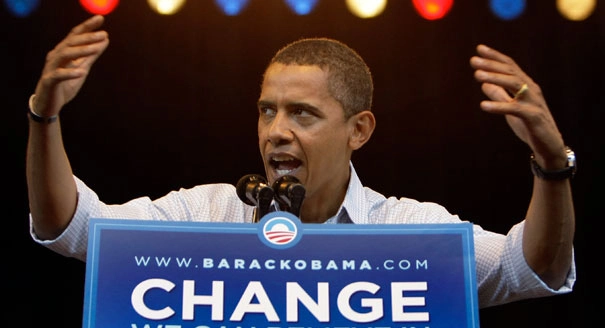
Barack Obama, the 44th President of the United States, is often hailed as a symbol of hope, progress, and diplomacy. His presidency marked a turning point in American and global politics — not only because he broke racial barriers, but because he redefined what leadership could mean in an age of polarisation and change.
Obama’s legacy remains one of ambition and balance — rebuilding a struggling economy, expanding healthcare, fostering global cooperation, and inspiring a new generation to believe in civic engagement and humanity’s shared future.
1. What He’s Done for His People
Economic Recovery and Growth
When Obama took office in 2009, the U.S. economy was in freefall following the global financial crisis. His administration launched the American Recovery and Reinvestment Act, injecting nearly $800 billion into infrastructure, renewable energy, and social programmes.
By 2016, unemployment had dropped from 10% to below 5%, and consumer confidence had largely rebounded. Critics argue that growth was slow and uneven, but Obama’s steady, long-game approach restored economic stability without further collapse.
Healthcare Transformation
The Affordable Care Act (ACA), or “Obamacare,” stands as his signature domestic achievement. It expanded access to healthcare for millions of uninsured Americans, banned denial of coverage for pre-existing conditions, and subsidised private insurance.
While Republicans fought fiercely against it, and some costs rose, the ACA permanently shifted America’s healthcare debate toward universal access and patient protection — a generational policy shift.
Education and Social Reform
Obama pushed initiatives like Race to the Top, incentivising innovation and accountability in schools. His administration promoted community colleges, student loan reform, and STEM education — laying the foundation for a modern, skilled workforce.
On social fronts, his presidency saw the legalisation of same-sex marriage, the end of “Don’t Ask, Don’t Tell,” and stronger protections for women and minorities. For millions, Obama’s era symbolised progress and representation.
My Take
Obama’s domestic record blends compassion with pragmatism. He wasn’t a revolutionary; he was a reformer. His policies modernised healthcare, steadied the economy, and advanced social justice. Yet, his measured approach sometimes frustrated those craving faster change — proof that diplomacy can heal, but it can’t always transform overnight.
2. What He’s Done for the USA
Global Image and Soft Power
Obama restored America’s global reputation after years of war and division. His calm diplomacy and multilateral tone rebuilt trust with allies and re-engaged with international institutions.
His administration pursued nuclear disarmament talks, led the Paris Climate Agreement, and opened diplomatic relations with Cuba for the first time in 50 years.
This shift from hard power to smart power — diplomacy, alliances, and soft influence — helped reposition America as a cooperative global leader rather than a dominant enforcer.
Military and Security Balance
While Obama campaigned on ending wars, his strategy focused on precision rather than withdrawal. He reduced troop numbers in Iraq and Afghanistan, but expanded drone warfare to target terrorist networks with minimal American casualties.
The operation that killed Osama bin Laden was one of his presidency’s defining moments — a symbolic victory that reinforced U.S. resolve against terrorism.
Technology and Future Readiness
Obama was the first truly digital-era president. He promoted net neutrality, cybersecurity initiatives, and clean energy innovation — laying early groundwork for tech-driven governance.
His administration saw the rise of social media politics, data transparency, and digital outreach — tools that redefined public communication for every administration to follow.
My Take
Obama was the architect of modern American diplomacy — calm, articulate, and strategic. His foreign policy wasn’t about dominance; it was about durability. He understood that power without credibility is temporary, and credibility without empathy is meaningless.
3. What He’s Done for the World
Climate Leadership
Obama made climate change a global priority. The Paris Agreement (2015) became his crowning environmental achievement, uniting nearly every nation in committing to emission reductions.
He pushed renewable energy innovation, clean tech investment, and international cooperation — inspiring a generation of green entrepreneurs and activists.
Global Diplomacy and Multilateralism
Obama’s belief in collective action reshaped how nations collaborated. From nuclear non-proliferation with Iran to the Trans-Pacific Partnership (TPP), he championed rules-based global order.
Critics argue he over-relied on diplomacy and under-delivered on enforcement, but his leadership rebuilt trust where confrontation had failed.
Humanitarianism and Global Development
His initiatives in Africa — such as Power Africa and Feed the Future — focused on sustainable energy and food security rather than dependency aid. This developmental diplomacy positioned the U.S. as a long-term partner, not just a donor.
My Take
Obama’s world view was visionary — not about dominance, but about interdependence. He understood that global progress requires cooperation, and that America’s strength lies in leading with others, not over them.
4. What He Plans for the Future
Though no longer in office, Obama continues to wield significant global influence. His post-presidency is defined by thought leadership, mentorship, and advocacy.
Key Focus Areas Ahead:
- Climate Action: Promoting sustainable economies and renewable energy through the Obama Foundation.
- Democracy & Misinformation: Defending truth and transparency in an age of digital manipulation.
- Leadership Development: Training young global leaders through programmes across Africa, Asia, and Europe.
- Artificial Intelligence & Future Work: Supporting ethical technology policies that balance innovation with humanity.
Obama’s vision isn’t political — it’s generational. He’s shaping the next century’s leaders, not just the next election.
How It Will Change Things
- For Americans:
- Obama’s influence sustains optimism in democracy, diversity, and equality — ideals now challenged by division.
- For the USA:
- His post-presidency pushes America to lead through example — sustainable, inclusive, and globally minded.
- For the World:
- He continues to inspire cooperation and climate action, serving as a moral compass in a time of nationalism and disinformation.
5. What Happens After His Decisions
Positive Outcomes:
- Millions gained healthcare and civil rights protections.
- Renewed global cooperation on climate and peace.
- Youth-led innovation and social movements inspired worldwide.
Negative Outcomes:
- Some policies proved fragile under political shifts.
- Over-reliance on consensus led to slower domestic change.
- Drone warfare and Middle East strategies drew ethical criticism.
Still, Obama’s leadership built a foundation of possibility — where progress might pause, but never reverses.
6. Strong Opinions and Forward Thinking
- Obama led with intellect over impulse. His power was persuasion, not domination.
- He redefined patriotism as inclusion. His version of America was plural, progressive, and global.
- He was the prototype of future leadership — empathetic, tech-aware, and globally conscious.
- His greatest gift wasn’t policy; it was belief. The idea that politics can still serve humanity, not just power.
Final Thoughts
Barack Obama’s legacy transcends politics. He represents a mindset — one that values cooperation, compassion, and long-term vision over short-term wins.
His leadership rebuilt faith in diplomacy, equality, and the human spirit’s resilience. The Obama era didn’t just change the world; it challenged us to believe that change is always possible — if led with purpose and hope.